

 US Dollar

Role of Batik in Decor: Adding Texture and Heritage
Posted by BLG on 2025 Dec 28th
Posted by BLG on 2025 Dec 28th

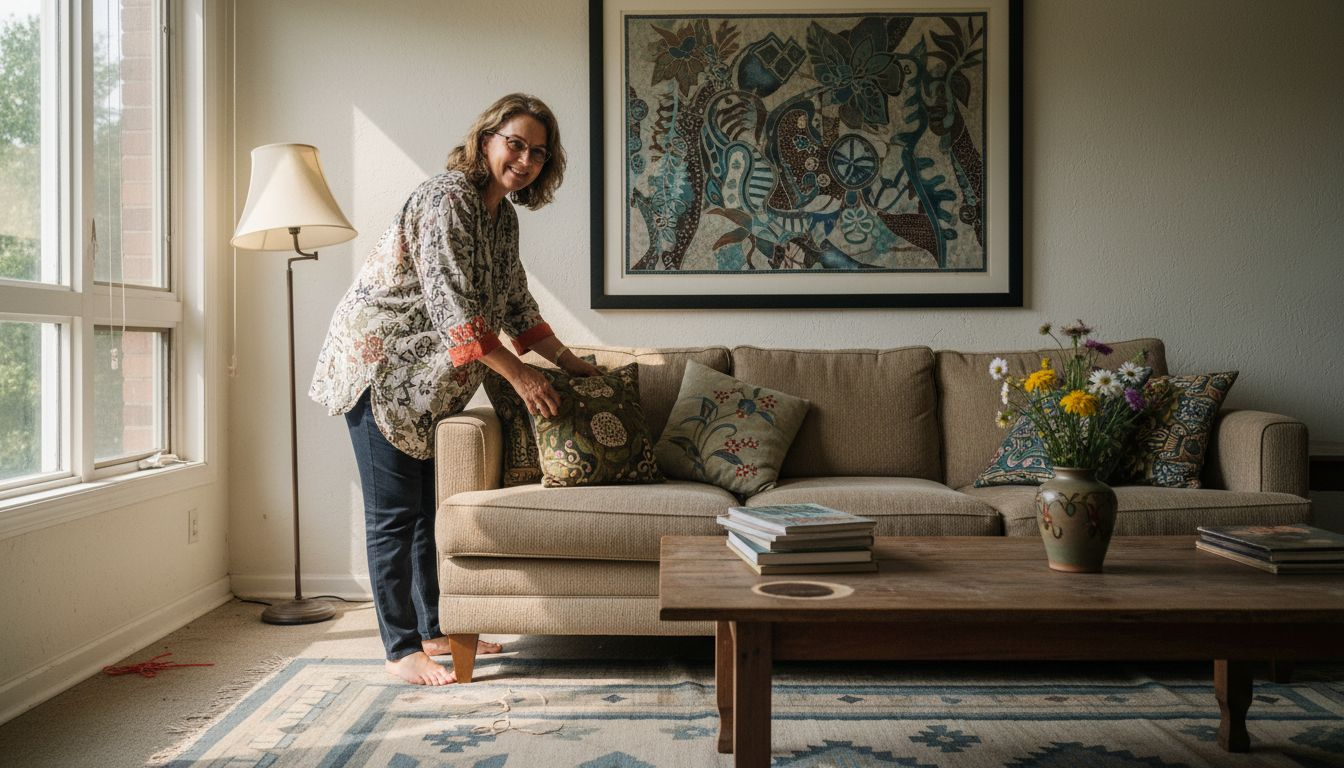
Nearly 50 percent of American homes now feature artisan textiles, reflecting a growing passion for unique global design. As more American decor enthusiasts explore new ways to personalize their space, batik stands out for its history, artistry, and endless possibilities. Discover how integrating authentic batik textiles can bring unexpected color, texture, and cultural richness that truly sets your interior apart.
| Point | Details |
|---|---|
| Batik as Cultural Art | Batik is a unique textile art form from Indonesia, known for its intricate designs that convey cultural stories and heritage. |
| Techniques and Variations | Two primary Indonesian batik techniques, batik tulis and batik cap, showcase different artistic methods and production speeds. |
| Design Impact in Interiors | Batik patterns enhance interior spaces by adding depth, color, and cultural narratives, transforming rooms into dynamic environments. |
| Sustainable Practices | Batik production emphasizes sustainability and fair trade, making it a responsible choice that supports artisan communities. |
Batik represents a sophisticated textile art form that transforms fabric into a canvas of intricate storytelling and cultural expression. Originating in Indonesia, this ancient technique involves carefully applying wax resist patterns to fabric, creating mesmerizing designs through multiple dyeing cycles. The process allows artisans to craft textiles with extraordinary depth and complexity, making batik a remarkable decorative medium that goes far beyond simple fabric design.
The fundamental technique of batik involves strategically applying hot wax to fabric using specialized tools like tjanting needles and copper stamps. As the wax resists dye penetration, artists can create stunning multilayered patterns with rich color variations. These intricate designs often incorporate symbolic motifs representing cultural heritage and traditional narratives, transforming each textile into a unique artistic statement.
Batik’s decorative appeal stems from its extraordinary versatility and visual complexity. Unlike mass-produced textiles, each batik piece carries unique characteristics reflecting the artisan’s skill and cultural background. The handcrafted nature means no two batik fabrics are exactly alike, offering interior designers and home decor enthusiasts an opportunity to introduce genuine artistry and cultural narrative into their living spaces. From throw pillows and wall hangings to upholstery and curtains, batik can add remarkable texture, color, and storytelling potential to any room.
Pro tip: When incorporating batik into home decor, choose pieces with patterns that complement your existing color palette and consider the cultural significance behind the specific design motifs to create more meaningful interior spaces.
Batik textile art exhibits remarkable diversity across different regions, with each geographical area developing unique techniques and aesthetic expressions. Indonesian batik remains the most sophisticated and culturally significant form of this textile tradition, representing a complex artistic heritage that varies dramatically between different provinces and cultural groups.
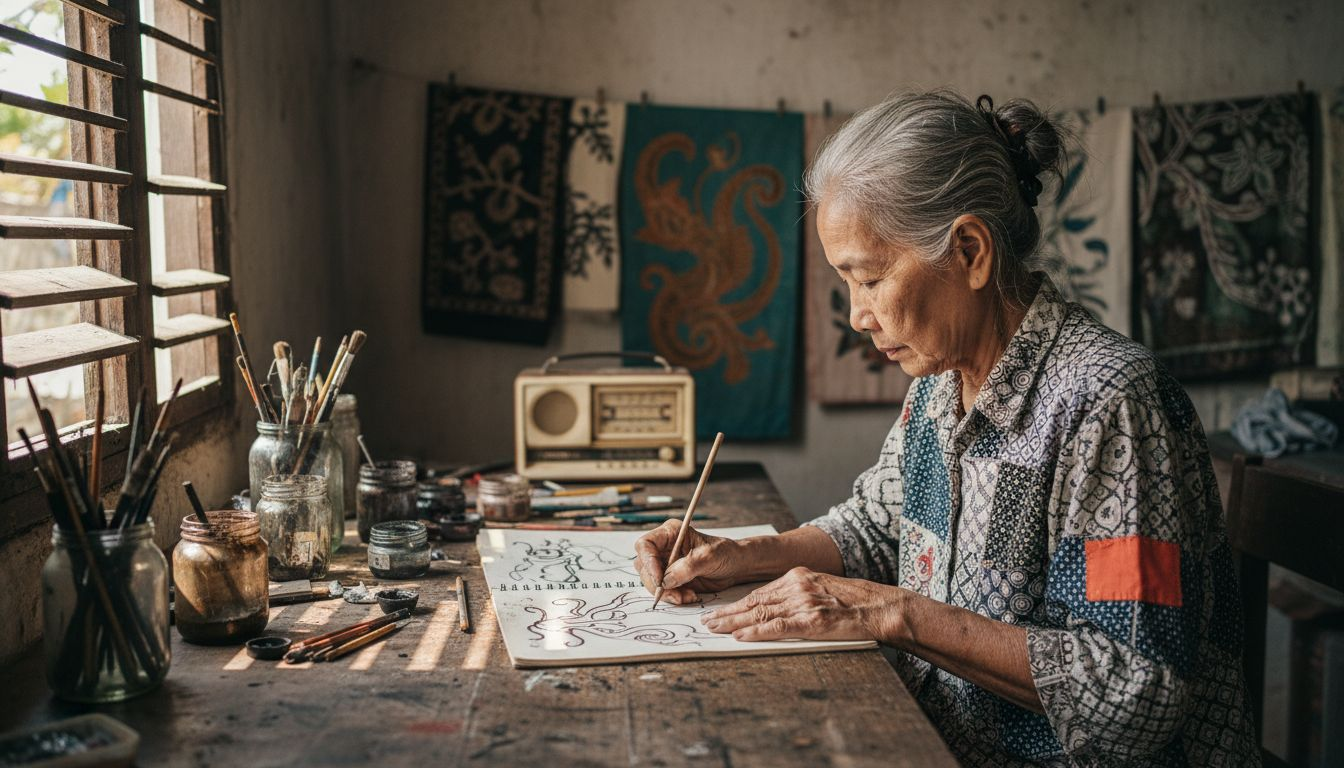
Two primary Indonesian batik techniques dominate the landscape: batik tulis (hand-drawn batik) and batik cap (stamped batik). Batik tulis represents the most labor-intensive method, where artisans meticulously hand-draw intricate wax patterns using a specialized tool called a tjanting. In contrast, batik cap involves using copper stamps to create more standardized and quickly produced designs, allowing for faster textile production while maintaining artistic integrity.
Here is a comparison of main Indonesian batik techniques:
| Technique | Method | Time Requirement | Typical Design Style |
|---|---|---|---|
| Batik Tulis | Hand-drawn with tjanting | Very labor-intensive | Highly detailed, unique |
| Batik Cap | Stamped with copper stamps | Faster to produce | Repetitive, standardized |
Regional variations reveal fascinating cultural nuances. Javanese batik typically features dense, symbolic patterns with deep philosophical meanings, often incorporating geometric shapes and naturalistic motifs that reflect spiritual beliefs. Malaysian batik, by comparison, demonstrates a distinctly different approach, utilizing lighter color palettes and larger, more simplified designs influenced by Islamic artistic traditions. These regional differences highlight how batik serves not just as a textile art form, but as a dynamic cultural expression that adapts to local aesthetics and social contexts.
Pro tip: When collecting batik pieces, research the specific regional style and its cultural significance to appreciate the unique storytelling embedded in each textile design.
Batik patterns offer far more than mere visual decoration, serving as powerful design elements that transform interior spaces through rich cultural narratives and sophisticated aesthetic techniques. Geometric transformations in batik motifs create rhythm and harmony within living environments, introducing layers of visual complexity that go beyond traditional textile applications.
The strategic placement of batik textiles can dramatically alter a room’s character. Throw pillows, wall hangings, or upholstery featuring intricate batik patterns can become immediate focal points, drawing the eye and creating visual interest through their complex geometric shapes and symbolic designs. Different color palettes and pattern densities allow designers to modulate the emotional temperature of a space - from vibrant and energetic to calm and contemplative.
Beyond aesthetic appeal, batik patterns carry deep cultural significance that enriches interior design. Each motif tells a story, representing historical traditions, spiritual beliefs, or regional identities. By incorporating these textiles, homeowners and designers do more than decorate - they introduce narrative elements that spark conversation and create meaningful connections to cultural heritage. The textures and patterns become visual storytellers, transforming blank walls and neutral spaces into dynamic, emotionally resonant environments.
Pro tip: When selecting batik textiles for interior spaces, consider the room’s existing color scheme and choose patterns that either complement or thoughtfully contrast with your current decor.
Batik production represents a remarkable intersection of cultural preservation and sustainable textile practices, rooted in traditional techniques that inherently support environmentally conscious manufacturing. Sustainable fashion practices in contexts like Indonesia emphasize reusing materials and prioritizing ethical production methods, reflecting growing global concerns about textile industry environmental impact.
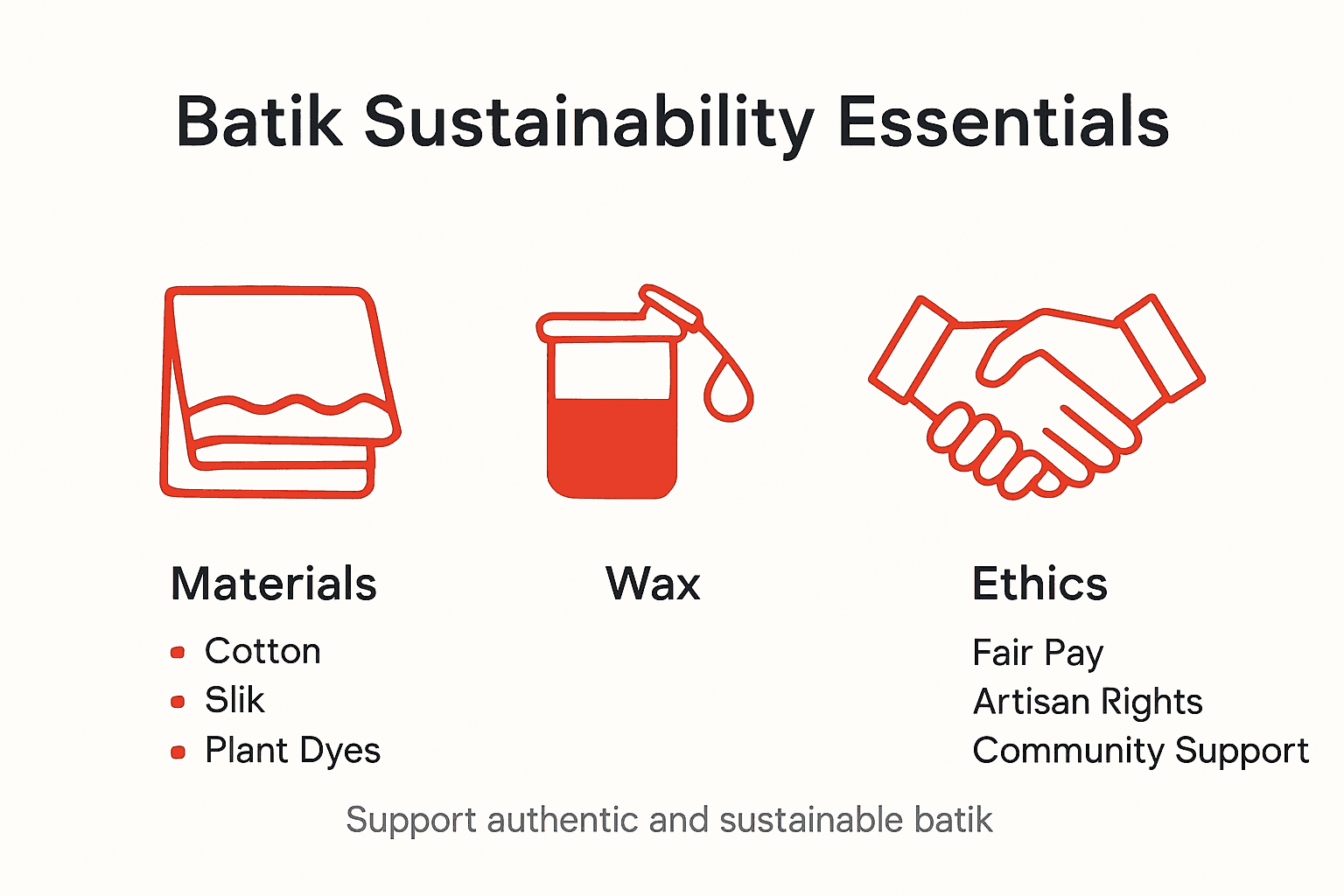
Traditional batik crafting relies on natural materials like cotton, silk, beeswax, and plant-based dyes, creating a production process that naturally minimizes industrial waste. Artisan communities play a crucial role in maintaining these sustainable practices, with each handcrafted piece representing not just a textile, but a commitment to ecological responsibility and cultural heritage. The intricate techniques passed down through generations ensure that every batik textile carries both environmental consciousness and deep cultural significance.
Ethical sourcing in batik goes beyond environmental considerations, encompassing fair compensation, worker rights, and the preservation of traditional craftsmanship. By supporting fair trade practices, consumers and designers can directly contribute to maintaining the economic viability of artisan communities. This approach transforms batik from a mere decorative textile into a powerful tool for social and economic empowerment, ensuring that traditional skills continue to thrive in a rapidly changing global marketplace.
Pro tip: When purchasing batik textiles, look for certifications or direct relationships with artisan cooperatives to ensure your purchase supports fair labor practices and sustainable production.
Batik textiles represent a significant investment in cultural artistry, requiring nuanced understanding of their maintenance and value. Authentic batik requires specialized care to preserve its intricate wax resist patterns and vibrant colors, with costs varying dramatically based on production complexity and craftsmanship.
The pricing of batik reflects its production method, with hand-drawn batik (batik tulis) commanding premium prices due to the intensive labor and skill required. Mass-produced or stamped batik (batik cap) offers more affordable options, but discerning buyers should understand the key differences. Prices can range from $20 for simple machine-produced pieces to several hundred dollars for museum-quality, hand-crafted artisan textiles, depending on intricacy, material quality, and cultural significance.
Maintaining batik requires gentle care to preserve its unique characteristics. Recommended practices include hand washing with mild detergents, avoiding direct sunlight to prevent color fading, and storing pieces flat or rolled to maintain the wax resist pattern. Common pitfalls include using harsh chemicals, machine washing, or improper storage that can damage the delicate wax patterns and compromise the textile’s integrity. Vintage or particularly delicate pieces often require professional cleaning to maintain their historical and artistic value.
Consider the following factors when preserving batik textiles:
| Care Aspect | Recommended Practice | Potential Risk If Ignored |
|---|---|---|
| Washing | Hand wash with mild detergent | Color fading, wax pattern damage |
| Sunlight Exposure | Keep out of direct sunlight | Significant color degradation |
| Storage | Store flat or rolled with tissue | Creasing, pattern distortion |
Pro tip: Always store batik textiles in cool, dry spaces away from direct sunlight, and use acid-free tissue paper when folding to prevent permanent creasing and color degradation.
Discover the transformative power of batik’s intricate patterns and rich cultural heritage to add unique texture and storytelling to your interior spaces. If you want to incorporate meaningful design elements that balance visual complexity with sustainable craftsmanship, explore our diverse fabric selection geared towards home decor projects. Whether you seek bold focal points or subtle accents, our curated textiles help bring your creative vision to life.
Start your journey with high-quality, ethically sourced fabrics at Fabric-Fabric. Take advantage of our seasonal sales and free shipping offers to invest in exclusive batik-inspired textiles today. Visit Fabric-Fabric’s homepage and browse tailored options to complement your existing color schemes and enhance your living space. Don’t wait – enrich your home with authentic artistry that tells your story now.
Batik is a traditional textile art form that involves applying wax resist patterns to fabric, resulting in intricate designs. In decor, batik can be used for various items such as throw pillows, wall hangings, and upholstery, adding texture and cultural storytelling to interior spaces.
The two primary batik techniques are batik tulis (hand-drawn batik) and batik cap (stamped batik). Batik tulis is more labor-intensive and features highly detailed, unique patterns, while batik cap is faster to produce with standardized designs, yet still maintains artistic integrity.
To incorporate batik patterns effectively, choose pieces that complement your existing color palette. Consider the symbolic meanings behind specific designs to enhance the cultural narrative of your decor, making each piece meaningful in the context of your interior space.
To maintain batik textiles, hand wash them with mild detergents, avoid direct sunlight to prevent color fading, and store pieces flat or rolled. These practices will help preserve the intricate wax patterns and vibrant colors unique to batik.