

 US Dollar

What is Tapestry Fabric? Understanding Its Beauty and Use
Posted by BLG on 2025 Aug 30th
Posted by BLG on 2025 Aug 30th

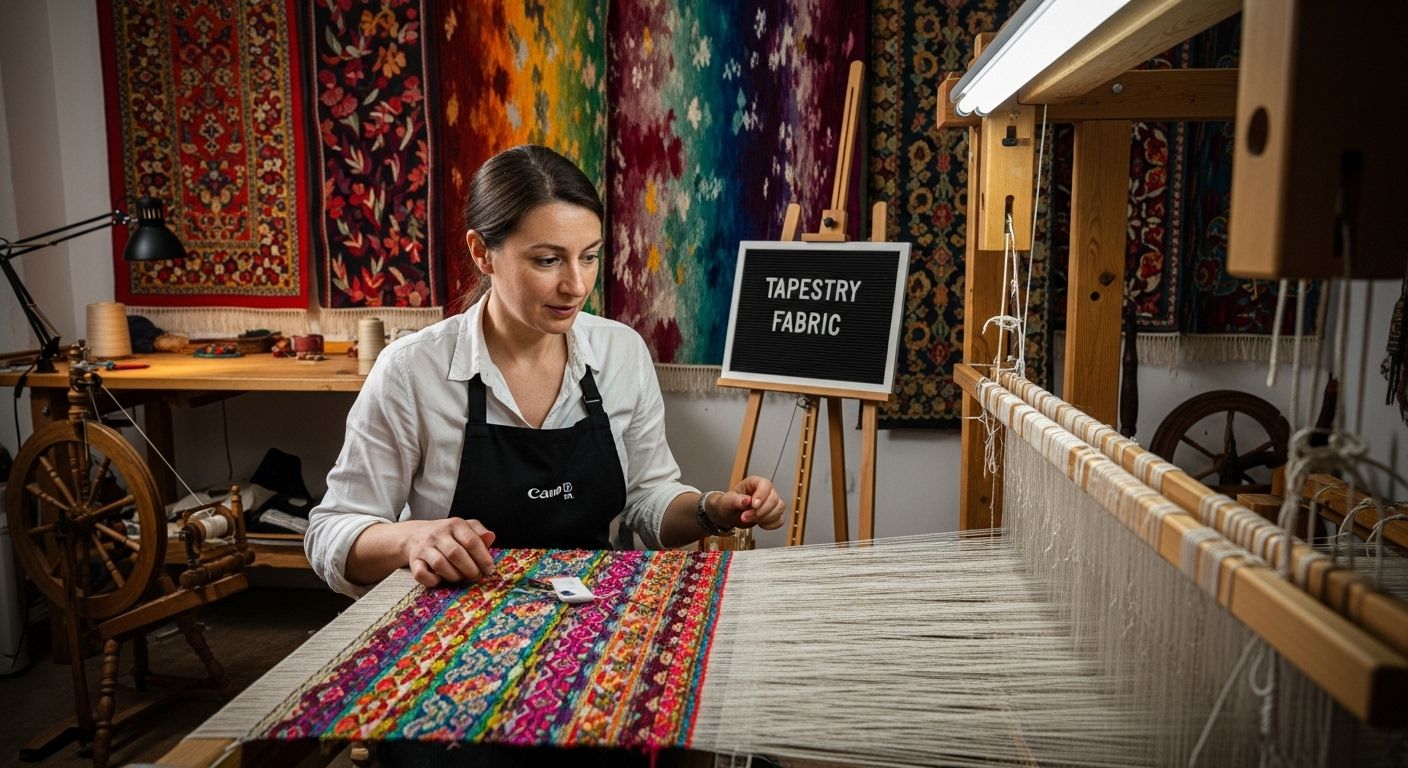
Tapestry fabric stands out as one of the most visually striking and complex textiles in history, woven with layers of story and tradition. Teams of artisans could spend months or even years crafting a single piece, resulting in wall hangings that were so valuable they were used as diplomatic gifts by royalty across Europe. Most people think of tapestries as simple decorations or old-fashioned art, but they play a much bigger role in fashion, interior design, and even cultural storytelling than most realize.
| Takeaway | Explanation |
|---|---|
| Tapestry fabric uses intricate weaving techniques. | Tapestry fabric is made using a weft-faced plain weave, allowing for detailed designs and smooth surfaces. |
| It carries historical and cultural significance. | Throughout history, tapestries have symbolized wealth and power, serving as narrative art forms and diplomatic gifts. |
| Tapestries enhance fashion and interior design. | This fabric adds depth and character, making it suitable for high-fashion garments and sophisticated home decor. |
| Natural and synthetic fibers are used. | While traditional tapestries used natural fibers, today’s versions also incorporate synthetic materials for versatility. |
| Consider performance characteristics when using tapestry. | Tapestry’s weight and maintenance needs must be evaluated to ensure suitability for specific projects and environments. |
Tapestry fabric represents a sophisticated textile art form with unique structural and visual characteristics that distinguish it from other woven materials. Understanding what is tapestry fabric requires exploring its complex composition, historical significance, and intricate manufacturing process.
Below is a table summarizing the structural and visual characteristics that make tapestry fabric unique compared to standard woven textiles.
| Feature | Tapestry Fabric | Standard Woven Textile |
|---|---|---|
| Weaving Technique | Weft-faced plain weave with colored, discontinuous wefts | Typically continuous weft or warp |
| Surface Texture | Dense, rich, smooth, pictorial | Uniform, often less dense |
| Visual Design Potential | Complex images and narratives; multi-colored | Simple patterns, stripes, or solids |
| Warp Visibility | Completely hidden beneath weft threads | Usually visible as part of pattern |
| Reversibility | Often reversible with similar designs on both sides | Typically single-sided designs |
| Material Types | Traditionally natural; now includes synthetic fibers | Wide range including natural and synthetics |
| Durability | Thick and durable, suitable for long-term display and use | Varies depending on weave and material |
At its core, tapestry fabric is defined by a specialized weaving technique where multiple colored weft threads are meticulously interlaced to create elaborate designs and patterns. Unlike standard fabric production, tapestry weaving allows artisans to introduce different colors and images within the same textile piece. According to The Metropolitan Museum of Art, this weaving method results in a distinctive textile where warp threads remain completely hidden beneath the weft threads, creating a dense, rich surface texture.
Key characteristics of tapestry fabric include:
Traditionally, tapestry fabrics were crafted using natural fibers like wool, silk, and cotton. Modern interpretations incorporate synthetic materials, expanding design possibilities while maintaining the fundamental weaving principles. The selection of fiber types significantly influences the fabric’s texture, durability, and visual appearance.
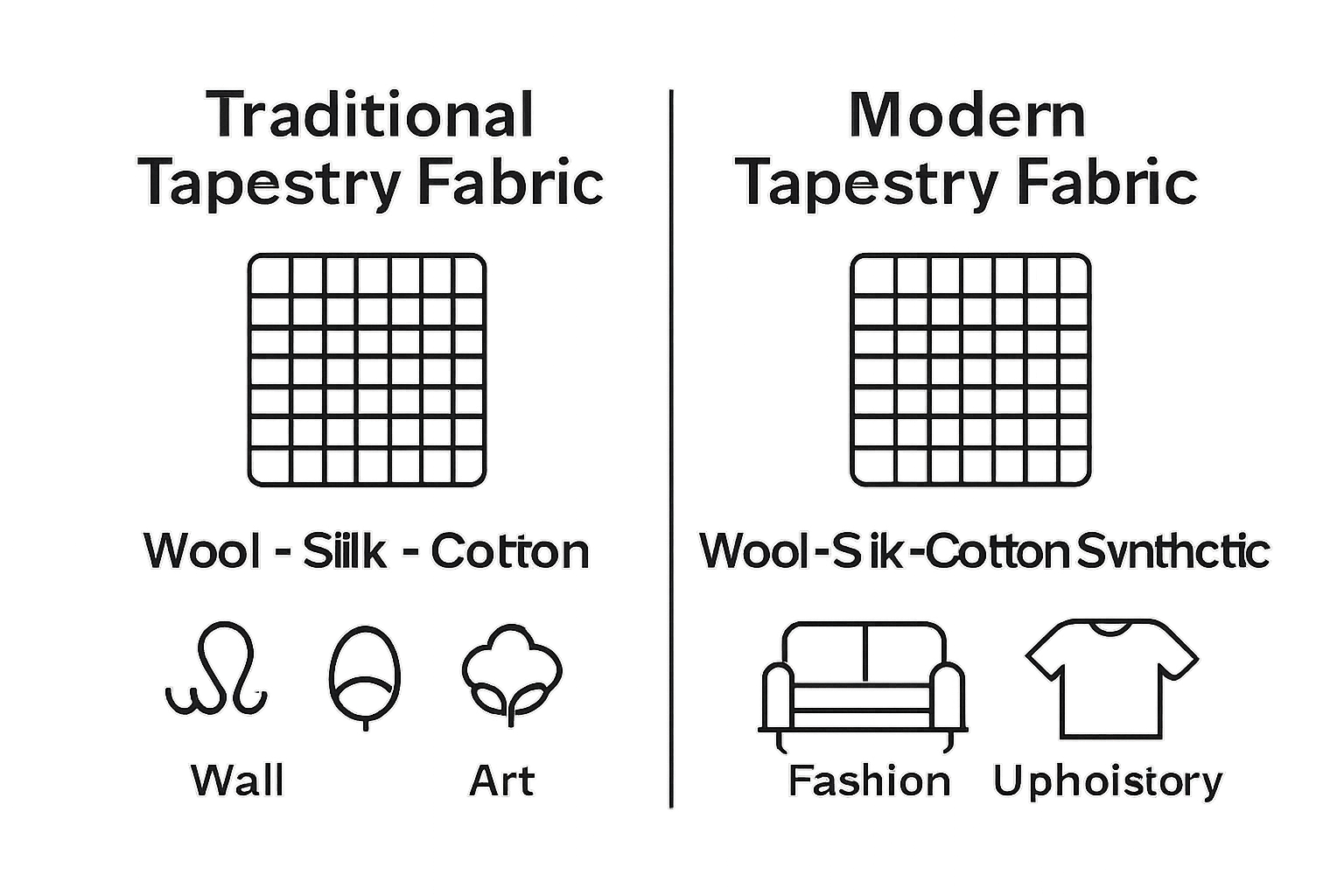
The intricate weaving process requires extraordinary skill, with weavers carefully managing multiple colored threads to create seamless, picture-like representations. Each section of color is individually introduced and integrated, making tapestry production a meticulous art form that demands precision and artistic vision.
While historically associated with decorative wall hangings and aristocratic interior design, contemporary tapestry fabrics have evolved to serve diverse applications. From high fashion to upholstery, these textiles continue to represent a remarkable intersection of artistic expression and functional textile design.
Tapestry fabric transcends mere textile production, representing a profound artistic and cultural medium that has shaped human expression for centuries. Its rich historical narrative reveals how these intricate woven artworks served far more than decorative purposes, functioning as powerful storytelling platforms and symbols of social status.
During medieval and Renaissance periods, tapestries were extraordinarily valuable possessions that signified wealth, political power, and cultural sophistication. According to The Metropolitan Museum of Art, these elaborate textiles were not simply wall coverings but complex narrative art forms that communicated complex stories, religious allegories, and historical events.
Key cultural roles of tapestries included:
The production of tapestries represented a remarkable intersection of technological skill and artistic creativity. Skilled artisans spent months or even years creating single pieces, with workshops in regions like Flanders becoming internationally renowned for their exceptional craftsmanship. These textile productions required extraordinary technical expertise, with weavers meticulously managing hundreds of colored threads to create intricate, picture-like representations.
This table organizes the primary cultural and functional roles of tapestry fabric throughout history for quick comparison and reference.
| Historical Role | Description |
|---|---|
| Diplomatic Gifts | Exchanged between royalty as prestigious symbols of alliance |
| Portable Narratives | Easily transported artworks depicting epic and religious stories |
| Status Markers | Demonstrated wealth, power, and cultural sophistication |
| Artistic Storytelling | Served as narrative art forms communicating historical events |
| Visual Communication | Functioned as visual tools in royal and religious settings |
Tapestry fabric’s artistic significance extended beyond mere decoration. These textiles captured historical moments, mythological scenes, and complex social narratives with remarkable detail and emotional depth. From royal palaces to ecclesiastical institutions, tapestries served as critical visual communication tools that preserved cultural memories and artistic expressions.
By the Renaissance, tapestry production had become a sophisticated international industry, with workshops in France, Belgium, and Italy competing to produce the most extraordinary and technically complex textile artworks. The evolution of tapestry fabric reflects not just artistic development but also the complex social, economic, and technological transformations of human civilization.
Tapestry fabric has seamlessly transitioned from historical wall hangings to a versatile design element that enriches both contemporary fashion and interior spaces. Its intricate patterns, rich textures, and narrative potential make it a unique textile with profound aesthetic and functional applications.
In modern fashion, tapestry fabric serves as a transformative material that elevates garment design beyond traditional textile boundaries. Designers leverage its unique weaving technique to create clothing pieces that blur the lines between art and wearable fashion. According to The Metropolitan Museum of Art, tapestry fabrics offer designers unprecedented opportunities for storytelling and visual complexity.
Key fashion design characteristics include:
In interior design, tapestry fabric transcends traditional decorative roles, emerging as a sophisticated design element that adds warmth, character, and visual narrative to living spaces. Contemporary designers utilize tapestry materials for upholstery, wall coverings, curtains, and accent pieces, transforming rooms into immersive artistic environments.
The versatility of tapestry fabric allows designers to create multifunctional spaces that communicate aesthetic and emotional narratives. Whether used as statement furniture upholstery or elegant wall hangings, these textiles bring depth, texture, and historical resonance to modern interior design.

From haute couture runways to minimalist home interiors, tapestry fabric continues to demonstrate its remarkable ability to bridge historical craftsmanship with contemporary design sensibilities, offering designers and consumers a textile that is simultaneously functional, artistic, and profoundly expressive.
Tapestry fabric represents a sophisticated textile art form distinguished by its complex and intricate weaving techniques. Unlike standard fabric production, tapestry weaving demands extraordinary precision, artistic vision, and technical mastery to transform individual threads into elaborate visual narratives.
The core of tapestry fabric production lies in its unique weaving methodology. According to The Metropolitan Museum of Art, traditional tapestry weaving utilizes a weft-faced plain weave where discontinuous weft threads are meticulously interlaced to create complex designs. This technique requires weavers to follow a detailed cartoon or design template, ensuring precise image reproduction.
Key weaving characteristics include:
Weaving a tapestry involves an extraordinary level of technical skill. Artisans must carefully manage multiple colored threads, introducing and integrating each color section individually. The process requires an intimate understanding of thread tension, color placement, and structural integrity.
Each tapestry represents a complex choreography of threads, where weavers navigate intricate design requirements while maintaining the fabric’s structural stability. The weaver’s ability to create seamless color transitions and maintain consistent thread tension determines the final artwork’s visual and tactile quality.
Modern tapestry techniques have expanded beyond traditional methods, incorporating advanced technologies and synthetic materials. However, the fundamental principles of careful thread manipulation and design interpretation remain consistent, preserving the artistic essence of this remarkable textile craft.
Tapestry fabric offers a unique combination of aesthetic beauty and functional versatility that sets it apart from traditional textile materials. Understanding its strengths and potential limitations is crucial for designers, fashion professionals, and interior decorators seeking to leverage this sophisticated textile.
Tapestry fabric provides unparalleled design opportunities that transform ordinary spaces and garments into extraordinary visual experiences. According to The Metropolitan Museum of Art, these textiles offer remarkable narrative potential, allowing creators to incorporate intricate designs, complex color schemes, and rich visual storytelling directly into the fabric.
Key design advantages include:
Beyond aesthetic appeal, tapestry fabric demonstrates significant practical performance characteristics. Its dense weaving structure provides enhanced durability, making it suitable for high-traffic areas and demanding design applications. The fabric’s inherent structural integrity allows for excellent wear resistance and long-term visual preservation.
However, potential users should consider specific performance factors such as weight, maintenance requirements, and potential limitations in stretch and flexibility. The intricate weaving technique that provides tapestry’s unique visual appeal can also result in a relatively heavier textile compared to standard woven fabrics.
While tapestry fabric offers extraordinary design potential, successful implementation requires careful consideration of intended use, environmental conditions, and specific performance requirements. Designers and creators must balance aesthetic vision with practical functionality to maximize the textile’s inherent strengths.
Are you inspired by the rich visual stories and timeless durability of tapestry fabric, but unsure where to find the right textile for your next design? Many creators and designers face the challenge of sourcing quality fabrics that truly capture the intricate artistry, texture, and structural strength highlighted in our article. If you want to transform your interiors, fashion pieces, or art projects with authentic materials, you deserve a fabric source that meets your creative standards.
This is the perfect time to explore an extensive collection at https://fabric-fabric.com. Discover a full range of specialty textiles ideal for both statement upholstery and artistic apparel. Whether you are searching for vibrant fibers for storytelling design or sturdy material for everyday elegance, our platform connects you to fabrics that reflect the true essence of tapestry as described above. Visit https://fabric-fabric.com now and find the inspiration and product selection you need to make your vision a reality.
Tapestry fabric is traditionally made from natural fibers like wool, silk, and cotton. However, modern versions also utilize synthetic materials, offering a range of textures and durability options.
Tapestry fabric is known for its pictorial designs, dense structural integrity, and reversible surfaces. It allows for intricate narratives and detailed patterns woven directly into the fabric.
Unlike standard woven fabrics, tapestry uses a special weaving technique that keeps the warp threads hidden beneath the weft, allowing for complex images and rich textures. This results in a thicker and more durable fabric compared to regular woven textiles.
Tapestry fabric is versatile and used in various applications, including high fashion garments, upholstery, wall hangings, curtains, and other interior design elements, reflecting its artistic and functional qualities.