

 US Dollar

Three Weaves Sewists Must Know to Shop Fabrics Confidently
Posted by BLG on 2026 Sep 4th
Posted by BLG on 2026 Sep 4th

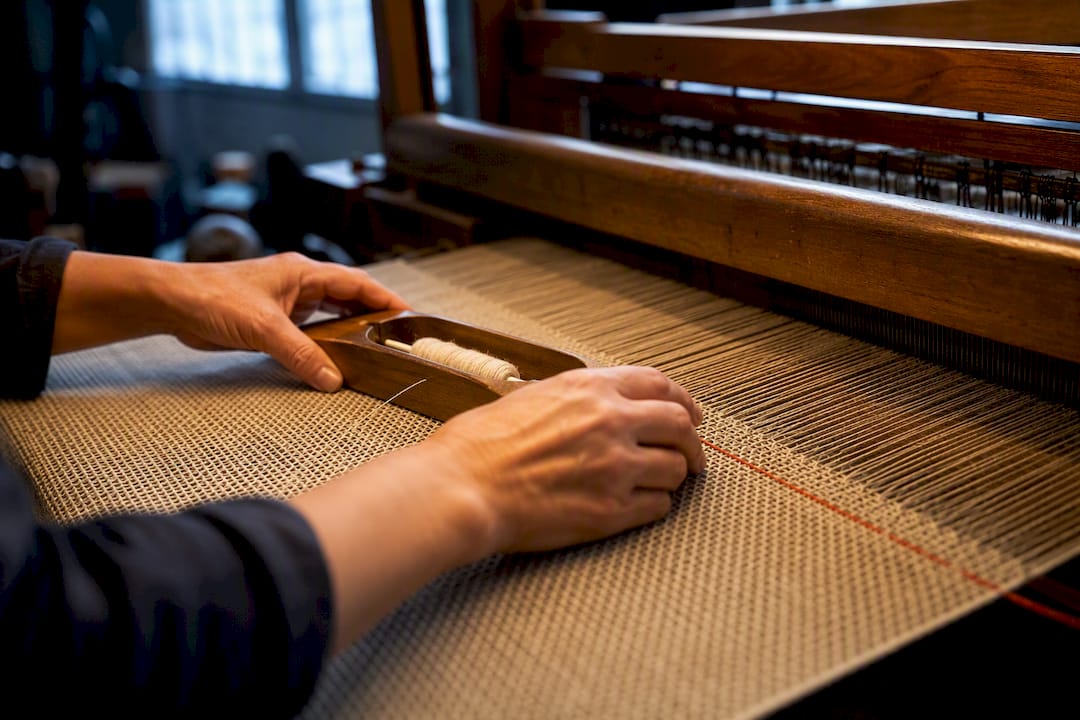
Almost every woven fabric you will ever cut, pin, or press comes from one of three weave families: plain, twill, or satin. Plain weave gives you stability and a flat, printable surface. Twill gives you a diagonal texture built for durability and drape. Satin gives you shine and fluid movement at the cost of some toughness. Everything else on the bolt, from oxford cloth to herringbone to jacquard, is a variation built on top of those three.
TL;DR:
- The choice of fabric weave affects durability, drape, sheen, and printability, with plain weave being the most stable and satin offering the most shine.
- Fabric fiber content dramatically influences the final characteristics, as silk satin drapes differently from polyester satin, and cotton sateen is softer than silk satin.
- Recognizing weave patterns like twill, satin, or plain by simple visual cues allows for better prediction of a fabric’s behavior, such as fraying, draping, or handling.
- Weave variations such as herringbone, gabardine, or dobby are built on the basic structures and impact performance, not separate skills.
- Understanding weaving fundamentals helps makers confidently select fabrics suitable for specific projects, regardless of brand or detailed label info.
A fabric weave is the pattern in which two sets of yarn cross each other on a loom. The lengthwise yarns are the warp, held under tension on the loom. The crosswise yarns are the weft, carried back and forth through the warp by a shuttle or rapier. Where a weft yarn passes over one or more warp yarns without interlacing, that unsecured stretch is called a float. Longer floats catch light differently and feel smoother, but they also snag more easily.
The weave repeat is the smallest block of interlacement that, repeated over and over, produces the whole cloth. Mills use it to keep printed plaids and woven stripes lined up batch after batch, according to Textile Engineering. The selvage, the tightly finished edge running parallel to the warp, tells you which direction is lengthwise grain, a detail that matters the moment you start laying out a pattern.
Weight matters just as much as structure. Fabric weight is typically measured in grams per square meter, or GSM, and that number sorts cloth into light, medium, or heavy categories that roughly predict how a fabric will drape or hold shape, per this textile weaves and fabric weight resource. A few quick reference points:
If you want a deeper walkthrough of how these terms map onto real fabric labels, Fabric-fabric’s guide to fabric weave basics covers the three foundational structures with side-by-side examples.
Plain weave is the over-one, under-one interlacement, the most basic pattern a loom can produce and also the most stable. Every warp yarn crosses every weft yarn at a right angle with no floats at all, which is why plain weave has the highest interlacement frequency of the three basic structures. That density of crossings is exactly why it resists stretching and holds a printed design so cleanly.
Two everyday variants build on the same grid. Basket weave groups two or more warp and weft yarns together and weaves them as a pair, producing a looser, more textured surface, as seen in Oxford cloth shirting. Rib weave uses thicker yarns in one direction only, creating the fine horizontal ridges you see in poplin or broadcloth. Balanced plain weaves, where warp and weft yarns are the same size and count, look identical on both faces, which is part of why muslin and quilting cotton are so forgiving to sew with. Unbalanced versions, common in chiffon and some sheers, use finer yarns in one direction to create a slightly different hand front to back.
Because interlacement points are so frequent, plain weave fabric handles printing, embroidery, and stabilizer application better than looser structures, a point textile weave education resources confirm when comparing basic weave behavior. It also wrinkles more readily than twill because there is no diagonal give in the structure to absorb crushing.
Pro Tip: If you’re prepping muslin for a garment mockup, press it hard before cutting. Plain weave holds a crease well, which makes grainlines easy to see and mark accurately.
Twill weave creates a visible diagonal line, called a wale, by staggering each row’s interlacement point one step over from the row before it. That offset is what separates twill from plain weave’s straight grid, and it is described using float notation like 2/1 or 3/1, where the first number is how many warp yarns the weft floats over and the second is how many it goes under, according to construction research from the Pratt Textile Research Lab. A 3/1 twill has longer floats than a 2/1, which means more sheen and a smoother hand, but slightly less abrasion resistance where those floats sit exposed.
Twill fabrics have a distinct technical face and back. The face shows the pronounced diagonal wale; the back is flatter and less defined, unless the fabric is woven as a reversible twill, which some workwear and suiting fabrics are. The direction of the wale also matters: a right-hand twill runs from lower left to upper right, a left-hand twill runs the opposite way, and denim is traditionally woven as a right-hand twill for slightly better wear resistance along the diagonal.
Herringbone breaks that diagonal on purpose. By reversing the twill direction at set intervals, it produces the zigzag pattern you see in tweed jackets and some upholstery fabrics. It is still built on twill mechanics, just alternated for visual effect.
Twill sits in the middle of the durability spectrum: fewer interlacements than plain weave, but far more than satin, which is part of why it resists abrasion better than satin while still draping more than plain weave. If you sew a lot of outerwear or bags, Fabric-fabric’s breakdown of twill fabric types walks through specific weights and finishes worth stocking.
Satin weave gets its glow from long floats. Instead of crossing every other yarn, satin construction floats the warp yarn over four or more weft yarns before a single interlacement, then staggers that point across the row so no diagonal line forms, unlike twill. That staggered, minimal interlacement is what produces the smooth, light-reflecting surface, and it typically requires five or more harnesses on the loom to execute properly, according to Textile School’s overview of major weaving patterns.
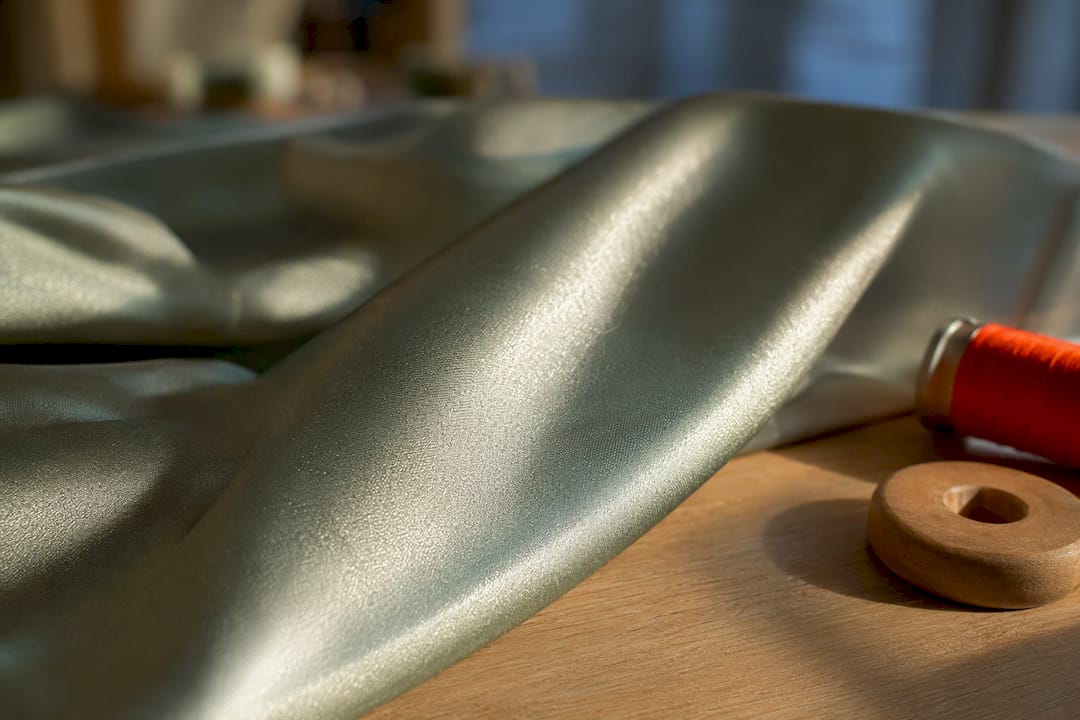
Satin is warp-faced, meaning the lustrous floats sit on the warp side and the fabric is traditionally woven from filament fibers like silk or polyester. Sateen flips that: it is weft-faced, using the same long-float principle but built with spun fibers like cotton, which gives it a softer, slightly less brilliant sheen than true satin but a much more washable, everyday character.
Fiber choice changes the outcome dramatically here. Silk satin drapes like liquid and takes dye beautifully but frays at raw edges and demands French seams or a serger. Cotton sateen holds a crease better, presses easily, and is far more forgiving for bedding or lightweight garments where a subtle glow, not full shine, is the goal.
Weave structure alone can shift how a fabric behaves even with identical yarns. Changing plain weave to satin construction using the same thread noticeably alters both luster and drape, a distinction the Pratt Textile Research Lab documents in its weave construction materials. That is the whole story of satin in one sentence: it is not a different fiber, it is a different geometry.
Beyond the three basic structures, most fabric names you see in a shop are variations layered on plain, twill, or satin mechanics. Grouping them by family makes them much easier to remember.
1. Basket weave (plain-family). Groups multiple warp and weft yarns and weaves them as a unit instead of one at a time, producing a looser, more textured surface than standard plain weave. Common in Oxford cloth shirting and some heavier home decor cottons.
2. Rib weave (plain-family). Uses a heavier yarn in one direction to create fine ridges, giving fabrics like poplin and broadcloth their subtle texture without sacrificing plain weave’s stability.
3. Herringbone (twill-family). Reverses twill direction at intervals to form a zigzag. Standard in wool coating, tweed jackets, and some structured bags.
4. Broken twill and gabardine (twill-family). Broken twill interrupts the diagonal for a mottled visual effect, while gabardine tightens the twill angle for a dense, hard-wearing cloth used in trousers and uniforms.
5. Sateen (satin-family). The weft-faced, cotton-based cousin of true satin. Softer sheen, easier care, common in bedding and lightweight drapery.
6. Charmeuse (satin-family). A lightweight silk or polyester satin with exceptional drape, used for slip dresses, linings, and eveningwear where movement matters more than structure.
7. Dobby weave (figure/attachment). Uses a dobby attachment on the loom to create small geometric figures, like dots or stripes, woven directly into the cloth rather than printed on. Popular for shirting with subtle texture.
8. Jacquard weave (figure/attachment). Uses a Jacquard mechanism to control individual warp yarns, enabling large, complex patterns like brocade florals or damask motifs. Dobby handles small repeating figures; Jacquard handles far more intricate, large-scale designs, a distinction confirmed by Textile School’s weaving pattern overview. Jacquard looms cost more to run, which is why jacquard fabrics carry a price premium over dobby cloth.
9. Pile weave. Creates a raised surface of loops or cut yarns standing up from the base structure. Terry toweling uses uncut loops for absorbency; velvet and corduroy use cut pile for texture and warmth.
10. Leno weave. Twists pairs of warp yarns around the weft instead of crossing straight through, locking an open, stable mesh in place. Used in curtain sheers, mosquito netting, and some marquisette fabrics where an airy structure still needs to hold its shape.
If you are shopping for swimwear-weight synthetics, weave and fiber choice affect stretch recovery and chlorine resistance just as much as they affect drape in natural fibers, something Doll House’s guide to swimwear fabric selection covers well for that specific use case.
Start with what the finished piece needs to do, not with which fabric looks prettiest on the bolt. A dress that needs to move differently than a tote bag that needs to survive five years of grocery runs.
Run through this checklist before you buy:
Weight guidance follows the same logic. Apparel generally runs in the 100 to 200 GSM range for shirting and dresses, medium home decor fabrics sit closer to 200 to 400 GSM, and heavy-duty upholstery or backdrop fabrics can run well past that, according to Fabric-fabric’s GSM weight guide. If you are outfitting a living room, Fabric-fabric’s home decor fabric collection groups mid to heavy weaves by intended use, which saves a lot of guesswork at the cutting table.
Before you commit to a bolt, ask the seller (or check the listing) three things: fiber content, weight in GSM, and whether it is a natural or synthetic blend. A red flag on the bolt itself is inconsistent sheen across the surface, which usually signals an uneven weave or a damaged section.
Pro Tip: When in doubt between two weights for the same project, size down slightly on GSM for garments and up for anything load-bearing, like curtains or bag linings. A too-heavy garment fabric is much harder to fix than a too-light upholstery fabric backed with interfacing.
You do not need a lab to figure out what you are looking at. A few seconds of inspection tells you almost everything.
Fabric-fabric has spent years listing and describing woven goods, from seersucker to satin to specialty upholstery weaves, which means the descriptions here are grounded in how these fabrics actually behave once they leave the bolt, not just how they look in a swatch photo. Author kev covers fabric weave structure and textile selection for the Fabric-fabric blog, drawing on the same product categorization that organizes the site’s fabric weave guide and weight resources.
The technical claims throughout this guide are backed by textile construction research and standards references, including the Pratt Textile Research Lab and Britannica’s textile entry, rather than casual assumption. That combination, retail-level familiarity with how fabric performs after cutting and washing, paired with citations to real construction science, is what separates a shopping guide from an academic one.
Twill predates industrial weaving by centuries. Wool twills appear in archaeological textile finds across ancient Europe, prized because the diagonal structure resisted wear on working garments long before synthetic fibers existed. Herringbone, a twill variant, became a hallmark of British tailoring in the 19th century and still signals tailored formality on a suit jacket today.
Satin traces its name to Quanzhou, a Chinese port city once known by the name Zaitun in medieval trade records, where lustrous silk textiles were exported along trade routes into the Middle East and Europe. That long float structure was originally possible only on draw looms complex enough to manage individual warp threads, which made satin a luxury fabric reserved for nobility and religious vestments for generations before mechanized looms made it accessible.
Plain weave, by contrast, has no single origin story because it is the default structure nearly every early culture arrived at independently. Basket weave variants show up in archaeological textile fragments from multiple continents, largely because it is the most intuitive interlacement a person weaving by hand would naturally produce.
Jacquard’s story is more recent but no less significant. The Jacquard attachment, developed in early 19th century France, used punched cards to control individual warp yarns and made complex figured weaves affordable at scale for the first time. That punched card mechanism is frequently cited as a conceptual predecessor to early computing, since it stored a repeatable pattern as physical, readable data.
A handloom relies on a weaver’s foot pedals and hand-thrown shuttle to create each interlacement, which limits speed but allows for subtle, deliberate variation, slightly irregular texture, small design adjustments mid-cloth, and the ability to weave complex figured patterns without reprogramming a machine. Handloom cloth often carries a slightly uneven hand that many makers specifically seek out for artisanal or heritage projects.
Power looms mechanize that same interlacement process using motor-driven shuttles or rapiers, producing fabric at dramatically higher speed and with far greater consistency from yard to yard. That consistency matters most for weave repeat accuracy: a power loom holds a plaid or stripe pattern in exact alignment across an entire bolt in a way that is much harder to guarantee by hand.
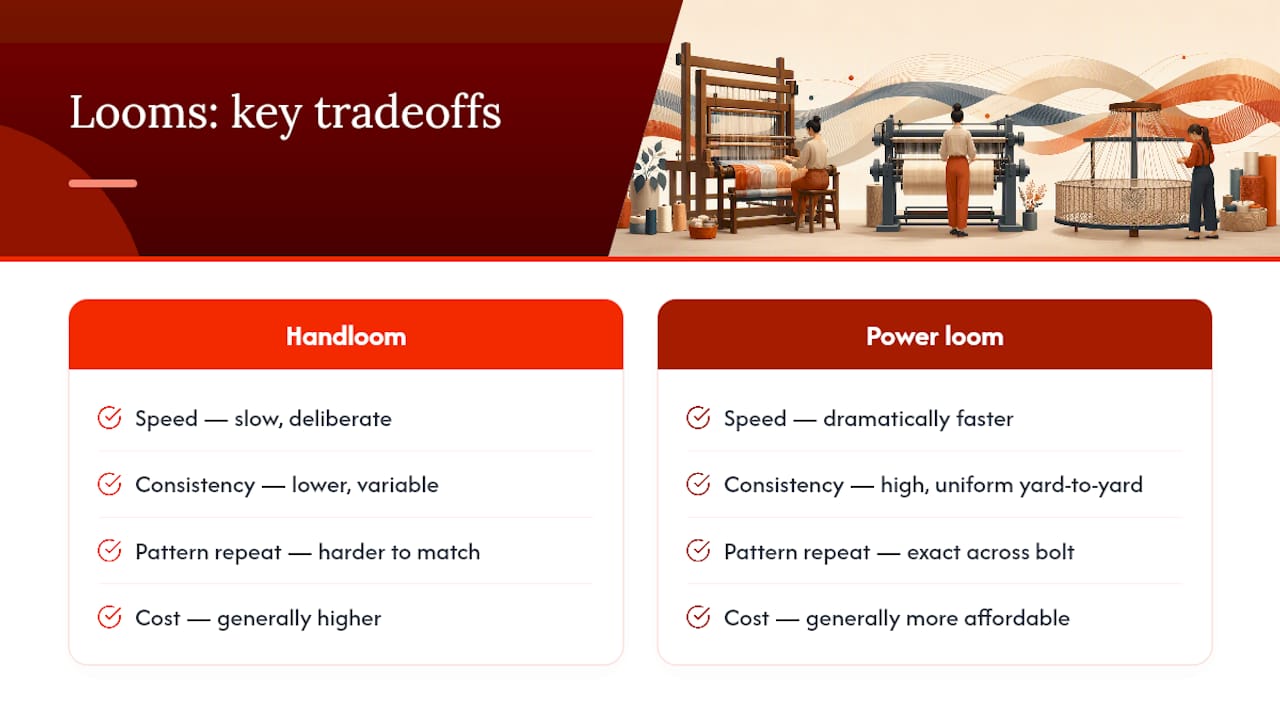
The tradeoff is character versus uniformity. Power loom fabric is generally more affordable and more predictable for pattern matching, which is why most quilting cotton, apparel yardage, and home decor fabric on the market today comes off power looms. Handloom textiles still dominate certain specialty and heritage categories, where slight irregularity is part of the appeal rather than a flaw to engineer out. Neither method changes the underlying weave family, plain, twill, or satin remain the same structures either way, but the loom does change consistency, cost, and how much hand-variation shows up in the final yard.
The same weave structure behaves very differently depending on what it is woven from. A plain weave in cotton feels crisp and holds a press; the same plain weave structure in silk turns into something closer to a soft, slightly slippery chiffon. Twill woven from cotton yields the familiar sturdiness of denim, but twill woven from wool produces the fluid drape of a fine wool gabardine trouser fabric instead.
Satin is the clearest example of fiber dependency in the entire weave family. True satin traditionally uses filament fibers, silk or polyester, because those smooth, continuous fibers reflect light evenly across the long floats and produce genuine shine. Switch to a spun fiber like cotton in that same long-float structure and you get sateen: softer, more matte, and far more washable, but noticeably less lustrous than filament satin.
Synthetic fibers add another layer. Polyester satin holds its sheen through repeated washing better than silk, which is part of why it dominates lining fabric and budget eveningwear. Blended yarns, cotton-polyester twills, for instance, borrow durability from one fiber and easy care from the other, which is why so much workwear on the market today is a blend rather than pure cotton twill.
Weave and fiber are not separate decisions. They are two variables working together, and changing either one changes the final cloth, sometimes more dramatically than most shoppers expect.
Weave knowledge only matters once it changes what ends up in your cart. If your next project needs serious structure, think stage backdrops, photo booths, or heavy decorative panels, a tightly woven, heavier-weight fabric outperforms a lightweight plain weave every time, and Fabric-fabric’s backdrop fabric collection is organized specifically around that kind of heavy-use woven goods. Match the weave to the job first, then let the color and print be the fun part.
Most weave guides teach plain, twill, and satin as if they are trivia, three names to memorize and forget. That misses the point entirely. The real value of knowing these three structures is being able to stand at a fabric counter and predict, before you buy a single yard, whether a fabric will fray on you, hold a press, or drape the way your pattern needs it to.
The conventional advice oversells novelty weaves like jacquard and dobby as if they are separate skills to master. They are not. They are plain, twill, or satin logic with an attachment on top, and once you see the three basic structures clearly, every derivative reads as a variation rather than a mystery.
Prioritize the interlacement logic over memorizing fabric names. A maker who understands why fewer interlacements mean more drape and less abrasion resistance can walk into any fabric shop, unfamiliar labels and all, and make a confident call within thirty seconds of touching the cloth. That instinct, not a glossary, is what actually saves projects.
— kev