

 Canadian Dollars

What Is Tencel and Why It Matters for Sustainable Sewing
Posted by BLG on 2026 Jan 1st
Posted by BLG on 2026 Jan 1st

More than half of American sewers say sustainability now guides their fabric choices. With so many new options on the market, eco-friendly sewing can feel overwhelming for anyone determined to avoid greenwashing. Tencel stands out for its blend of luxury, performance, and environmental responsibility, appealing to those who want both soft, high-quality fabrics and a genuinely sustainable supply chain. This guide helps American home sewists explore what makes Tencel unique and how it compares to traditional fabric choices.
| Point | Details |
|---|---|
| Sustainable Production | Tencel is produced using a closed-loop process that recaptures 99% of solvents and water, minimizing environmental impact. |
| Performance Characteristics | Tencel offers exceptional moisture-wicking, breathability, and softness, making it suitable for a variety of clothing applications. |
| Different Fibers | Tencel includes Lyocell and Modal, each with distinct properties; Lyocell is stronger and moisture-wicking, while Modal is notably soft and durable. |
| Care Requirements | When sewing with Tencel, special care is needed to maintain fabric integrity, including pre-washing and using gentle washing cycles. |
Tencel represents an innovative textile solution emerging from sustainable textile engineering. Developed in the 1990s, this fabric represents a groundbreaking approach to creating environmentally responsible textiles derived from wood pulp. Unlike traditional synthetic fabrics, Tencel offers a unique combination of ecological responsibility and superior performance characteristics.
The core of Tencel’s production process involves transforming wood cellulose into fabric through an advanced closed-loop manufacturing system. Primarily sourced from eucalyptus, beech, and spruce trees, these wood fibers undergo a sophisticated chemical process that recaptures and reuses 99% of solvents and water. This method dramatically reduces chemical waste and environmental impact compared to conventional textile production techniques, making Tencel a standout choice for environmentally conscious sewers.
Tencel fibers possess remarkable properties that set them apart from traditional textiles. The fabric boasts exceptional moisture-wicking capabilities, breathability, and a remarkably soft texture. Its molecular structure allows for superior absorption and temperature regulation, making it an ideal fabric for clothing that demands both comfort and performance. Unlike synthetic alternatives, Tencel fibers are biodegradable and sourced from renewable wood certified through responsible forestry management.
Sewing Pro Tip: When working with Tencel, use sharp needles and a slightly longer stitch length to prevent fabric fraying and maintain the delicate fiber structure.
Tencel offers two primary fiber variations that have revolutionized sustainable textile production: Lyocell and Modal. Lyocell fibers are manufactured through an advanced closed-loop process that recovers an impressive 99.8% of chemical solvents, making them an environmentally responsible choice for fabric production. These fibers are renowned for their high tenacity, exceptional moisture management, and remarkable skin-friendly characteristics.
While both Lyocell and Modal originate from sustainable wood pulp, they differ significantly in their manufacturing techniques and performance attributes. Modal fibers undergo a modified viscose production process that ensures high chemical recovery rates and delivers extraordinary softness. The key distinction lies in their molecular structure and processing: Lyocell tends to be more robust and moisture-wicking, while Modal specializes in providing unparalleled softness and exceptional fabric durability after multiple wash cycles.
Home sewers and textile enthusiasts will find unique advantages in each Tencel variant. Lyocell works brilliantly for performance wear, activewear, and garments requiring moisture management, whereas Modal excels in creating luxuriously soft intimate apparel, loungewear, and lightweight clothing that maintains its softness over time. The choice between Lyocell and Modal depends on the specific project requirements, desired fabric characteristics, and intended garment functionality.
Here’s how Lyocell and Modal differ in key characteristics:
| Characteristic | Lyocell Tencel | Modal Tencel |
|---|---|---|
| Production Process | Closed-loop solvent system | Modified viscose process |
| Best Use Cases | Activewear, tailored pieces | Loungewear, soft draped garments |
| Notable Feature | Superior moisture management | Exceptional long-lasting softness |
| Durability After Wash | Maintains stability | Softness increases over time |
Sewing Pro Tip: When selecting between Lyocell and Modal for your sewing project, consider the garment’s intended use and desired performance characteristics to choose the most appropriate Tencel fiber variant.
Tencel fibers represent a groundbreaking approach to textile production, offering exceptional performance characteristics with remarkable environmental credentials. These innovative textiles demonstrate an extraordinary balance between functional excellence and ecological responsibility, delivering superior performance while minimizing environmental impact. The fibers are engineered to provide natural softness, outstanding moisture management, and impressive durability across various textile applications.
From an environmental perspective, Tencel stands out as a leader in sustainable textile production. The manufacturing process utilizes a closed-loop system that recycles water and chemical solvents, consuming significantly less resources compared to traditional fabric production methods. Independent certifications like the EU Ecolabel validate Tencel’s reduced environmental footprint, with these fibers generating at least 50% less carbon emissions and water consumption than conventional textile materials. This commitment to sustainability extends beyond production, as Tencel fibers are fully biodegradable and sourced from responsibly managed wood forests.
The performance properties of Tencel fibers are equally impressive, offering home sewers and textile enthusiasts a fabric that combines luxury with functionality. These fibers provide a silky softness comparable to silk, with exceptional moisture-wicking capabilities that keep the wearer cool and dry. The hypoallergenic nature of Tencel makes it particularly suitable for sensitive skin, while its resistance to pilling and shrinkage ensures long-lasting garment quality. Whether creating activewear, intimate apparel, or everyday clothing, Tencel delivers a superior textile experience that doesn’t compromise on environmental principles.
Sewing Pro Tip: When working with Tencel fabrics, always pre-wash the material and use a gentle wash cycle to maintain its unique performance characteristics and preserve its sustainable qualities.
Home sewers are discovering Tencel as a versatile and sustainable fabric that transforms creative projects across multiple garment categories. Sustainable textile choices are revolutionizing home sewing practices, and Tencel emerges as a premier option for crafters seeking both performance and environmental responsibility. The fabric’s unique properties make it suitable for everything from lightweight summer dresses and breathable activewear to comfortable loungewear and delicate undergarments.
The adaptability of Tencel allows sewists to explore diverse project types with confidence. Its exceptional moisture-wicking properties make it ideal for creating athletic wear and performance clothing that keeps the wearer cool and comfortable. For summer garments, Tencel’s lightweight and breathable nature creates flowing dresses, airy blouses, and relaxed shirts that provide excellent temperature regulation. Sewists working with intimate apparel appreciate Tencel’s soft texture and hypoallergenic qualities, making it perfect for creating underwear, pajamas, and sleepwear that feel gentle against sensitive skin.
Understanding Tencel’s specific characteristics helps sewists select the right version for their project needs. Lyocell Tencel works best for structured garments requiring more stability, such as tailored pants, jackets, and work-appropriate attire. Modal Tencel, with its exceptional softness, excels in creating draped garments like flowing skirts, relaxed tops, and lightweight layers. Home sewers can also combine Tencel with other sustainable fabrics like organic cotton or hemp to create unique, eco-friendly clothing that balances performance, comfort, and environmental consciousness.
Sewing Pro Tip: When cutting Tencel fabric, use sharp scissors or a rotary cutter, and consider stabilizing the fabric with lightweight interfacing to prevent stretching and ensure precise garment construction.
Sustainable textile enthusiasts are increasingly comparing Tencel with traditional fabrics like cotton and rayon, recognizing its superior performance and environmental attributes. Scientific research comparing fabric mechanical properties reveals Tencel’s remarkable advantages over conventional textile materials. While cotton has long been the standard for comfortable clothing, Tencel offers a more advanced and environmentally responsible alternative that meets modern performance requirements.
Tencel demonstrates significant improvements over both cotton and rayon in several critical areas. Unlike traditional cotton, which requires extensive water and pesticide use during cultivation, Tencel is produced from sustainably managed wood forests with minimal environmental impact. The fabric outperforms cotton in mechanical properties, including superior tensile strength, tear resistance, and abrasion durability. Rayon, another regenerated cellulose fiber, typically involves harsh chemical processing, whereas Tencel uses a more eco-friendly closed-loop system that recaptures and reuses chemical solvents.
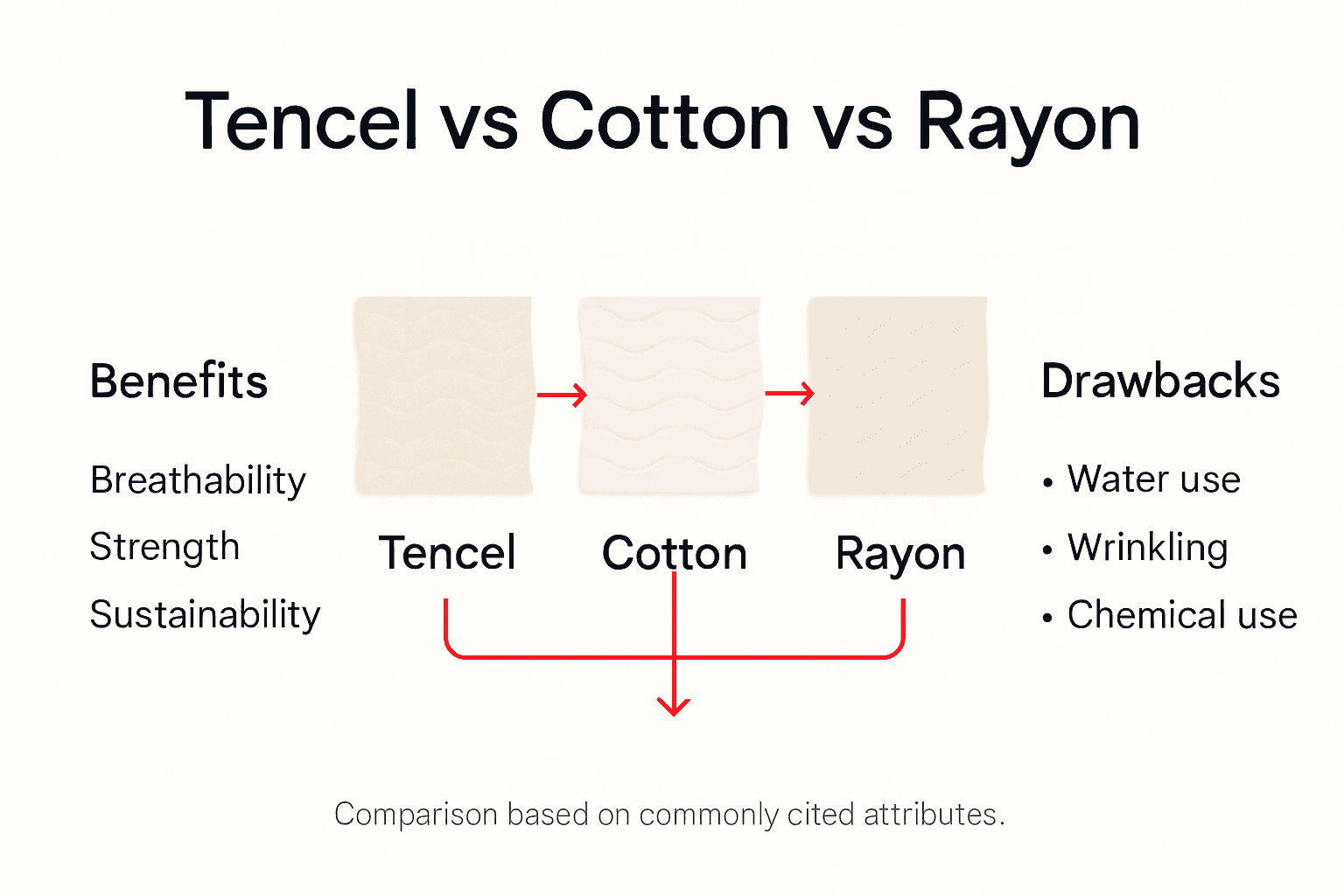
From a performance perspective, Tencel surpasses both cotton and rayon in comfort and functionality. Its advanced molecular structure provides exceptional moisture-wicking capabilities, superior air permeability, and enhanced thermal regulation. While cotton tends to retain moisture and can feel heavy during physical activity, Tencel keeps the wearer cool and dry. Rayon often lacks durability and can be prone to shrinkage, but Tencel maintains its shape and softness through multiple wash cycles. For home sewers seeking a fabric that combines sustainability, comfort, and performance, Tencel represents a compelling alternative to traditional textile options.
Compare the performance and sustainability of Tencel, cotton, and rayon at a glance:
| Attribute | Tencel | Cotton | Rayon |
|---|---|---|---|
| Environmental Impact | Low, closed-loop process | High water and pesticide use | Harmful chemical solvents |
| Moisture Management | Excellent, fast-drying | Moderate, can retain moisture | Decent, less than Tencel |
| Durability | Resists pilling, strong wet | Can shrink, moderate durability | Prone to shrinking/damage |
| Biodegradability | Fully biodegradable | Biodegradable | Sometimes biodegradable |
Sewing Pro Tip: When substituting Tencel for cotton or rayon in sewing projects, adjust your pattern and construction techniques to accommodate its unique drape and lightweight characteristics.
Home sewers and textile enthusiasts must carefully navigate the complexities of Tencel fabric selection, understanding both its remarkable benefits and potential limitations. Consumer shopping mistakes often stem from misunderstandings about sustainable textile claims and performance characteristics, making informed purchasing decisions critical for successful projects. The allure of Tencel’s eco-friendly reputation can sometimes overshadow practical considerations that impact fabric performance and longevity.
Cost remains a significant factor when working with Tencel, as its advanced production methods and sustainable sourcing typically result in higher prices compared to conventional fabrics. The material requires specialized care, including cold gentle washing to prevent shrinking and maintain structural integrity. Home sewers should be aware that Tencel can lose strength when wet and may be more prone to snagging during construction or wear. Its cool-touch feel, while excellent for warmer climates, might not provide sufficient warmth in cooler environments, limiting its versatility for certain seasonal projects.
Potential buyers must also exercise caution when purchasing Tencel fabrics, particularly regarding blend compositions. Many consumers mistakenly assume they are purchasing 100% sustainable Tencel, when in reality, blends with synthetic fibers can significantly reduce the fabric’s biodegradability and environmental benefits. Understanding the precise fiber content becomes crucial for sewists committed to sustainable textile practices. Additional risks include potential fabric damage from improper washing techniques and the need for careful handling during cutting and construction to prevent fraying or weakening of the delicate fibers.
Sewing Pro Tip: Always request a detailed fiber content breakdown and care instructions when purchasing Tencel fabrics to ensure compatibility with your specific sewing project and maintenance capabilities.
Are you looking to embrace sustainable sewing but feel overwhelmed by fabric choices and their true environmental impact The article highlights the challenges of selecting authentic eco-friendly textiles like Tencel and avoiding costly mistakes such as buying blends that compromise sustainability or fabrics hard to care for. With concerns like durability, moisture management, and fiber content top of mind the goal is to create garments that feel luxurious while respecting the planet.
At Fabric-Fabric we understand these pain points and offer a curated selection of high-quality Tencel fabrics perfect for your next project. From moisture-wicking Lyocell ideal for activewear to ultra-soft Modal perfect for loungewear you can choose the precise fiber type that matches your sewing goals. Plus our detailed product descriptions and care instructions empower you to make confident choices that protect your investment and the environment. Start transforming your sustainable sewing vision into reality by exploring our premium fabrics now. Visit Fabric-Fabric to find your ideal Tencel and experience eco-friendly sewing the right way.
Tencel is made from sustainably sourced wood pulp, primarily from eucalyptus, beech, and spruce trees, and is produced through an advanced closed-loop manufacturing system.
Tencel offers lower environmental impact, superior moisture management, and enhanced durability compared to cotton and rayon. It is also fully biodegradable, while cotton often requires high water usage, and rayon is processed using harmful chemicals.
Tencel is versatile and is ideal for various sewing projects, including activewear, lightweight summer dresses, loungewear, and intimate apparel, due to its exceptional softness, moisture-wicking properties, and comfort.
When sewing with Tencel, use sharp needles and consider a longer stitch length to prevent fraying. Always pre-wash the fabric and use a gentle wash cycle during care to maintain its unique performance characteristics.