Canadian Dollars

What is Quilting Cotton? Understanding Its Importance
Posted by BLG on 2025 Sep 10th
Posted by BLG on 2025 Sep 10th


Quilting cotton is everywhere in the world of crafting and home decor. This fabric is not just soft and stable, but packs a hidden punch: high-quality quilting cotton can have up to 120 threads packed into every square inch. You might expect fabrics this strong to be stiff or coarse, but the real surprise is how smooth and vibrant they feel in your hands. That’s because behind the comfort and color, there’s some serious science and tradition woven right in.
| Takeaway | Explanation |
|---|---|
| Quilting cotton is ideal for crafting. | Its tightly woven structure and durability make it perfect for precise sewing and quilting. |
| Selecting the right cotton varies by project. | Technical attributes such as weight and thread count should align with specific design needs to ensure the best results. |
| Sustainability is a growing trend in cotton production. | The industry increasingly focuses on organic materials and eco-friendly processes to meet consumer demand for environmentally responsible textiles. |
| Quilting cotton supports creative expression. | It offers diverse colors and patterns, allowing designers to create visually rich and meaningful textile art. |
| Technological advancements enhance fabric quality. | Innovations in weaving and printing technologies are improving durability, color retention, and design opportunities in quilting cotton. |
Quilting cotton represents a specialized textile designed specifically for creating high-quality quilts and intricate sewing projects. Unlike standard cotton fabrics, quilting cotton offers unique properties that make it ideal for precise crafting and decorative textile work.
Quilting cotton is manufactured from 100% pure cotton fibers with a tight, consistent weave that provides exceptional stability and durability. University of Nebraska Extension research indicates that these fabrics are carefully constructed to minimize stretching and distortion during cutting and sewing processes.
Key characteristics of quilting cotton include:
Manufacturers of quilting cotton prioritize precise production techniques that ensure fabric uniformity. The weaving process involves creating a medium-weight fabric with a thread count typically ranging between 68 to 120 threads per square inch. This density provides strength without compromising the fabric’s soft texture.
Professional quilters and textile designers specifically select quilting cotton for projects requiring predictable fabric behavior. The fabric’s consistent quality allows for accurate piecing, intricate pattern work, and reliable color retention through multiple washings.
Quilting cotton excels in various crafting and design applications beyond traditional quilting. Its stable structure makes it perfect for creating decorative home textiles, clothing accessories, and precision sewing projects. Crafters appreciate its ability to hold sharp edges, maintain crisp lines, and provide a professional finish to complex textile designs.
Quilting cotton has become a cornerstone textile in both fashion design and interior decorating, offering versatility and aesthetic appeal that transcends traditional craft applications. Its unique characteristics enable designers and homemakers to create stunning visual narratives through fabric.
Fashion and decor professionals leverage quilting cotton for its exceptional adaptability.
 According to Kent State University’s Fashion Research, cotton textiles represent a critical medium for creative expression across multiple design disciplines.
Key advantages of quilting cotton in design include:
Quilting cotton carries profound cultural meaning beyond mere aesthetic value. Kansas Historical Society research highlights how factory-produced cotton democratized textile access, transforming quilting from an exclusive craft to a widespread artistic practice among middle-class communities.
The fabric’s ability to preserve storytelling through pattern and design makes it more than just a functional material. Quilting cotton serves as a canvas for personal narratives, family histories, and cultural traditions, connecting generations through textile art.
Contemporary designers utilize quilting cotton across diverse applications. Interior decorators appreciate its versatility in creating throw pillows, wall hangings, table linens, and lightweight upholstery. Fashion designers incorporate quilting cotton into summer wear, lightweight jackets, children’s clothing, and accessories that require breathable, comfortable fabric.
Beyond aesthetic considerations, quilting cotton offers practical benefits including easy maintenance, wrinkle resistance, and the ability to showcase complex design elements with remarkable clarity and precision.
Quilting cotton production represents a sophisticated textile manufacturing process that transforms raw cotton fibers into precisely engineered fabric designed for crafting and design applications. The journey from cotton field to finished fabric involves multiple intricate stages of processing and quality control.
National Cotton Council research highlights the critical importance of initial fiber selection. Manufacturers carefully choose high-quality cotton varieties known for their strength, consistency, and minimal imperfections. These fibers undergo extensive cleaning processes to remove seeds, debris, and potential contaminants.
Key stages of fiber preparation include:
The weaving process for quilting cotton demands exceptional precision. Textile manufacturers use specialized looms designed to create a tight, uniform weave with minimal stretch. The fabric is typically constructed using plain weave techniques that produce a smooth, stable surface ideal for quilting and detailed sewing projects.
Modern weaving involves computer-controlled machinery that ensures:
Final fabric production involves multiple finishing treatments that enhance the cotton’s performance. Manufacturers apply specialized processes to improve color retention, reduce shrinkage, and create a soft yet stable textile surface. Rigorous quality control measures ensure each fabric panel meets exacting standards for quilting and textile design applications.
These finishing techniques transform raw woven fabric into a premium material ready for creative use in quilting, fashion, and home decor projects.
Quilting cotton encompasses a diverse range of fabric types, each offering unique characteristics that cater to specific design requirements and creative applications. Understanding these variations helps crafters and designers select the most appropriate textile for their projects.
University of Utah Genetic Science Learning Center research reveals fascinating insights into cotton diversity. Two primary cotton species dominate textile production: Upland cotton (Gossypium hirsutum) and Pima cotton (Gossypium barbadense), each presenting distinct qualities that influence fabric performance.
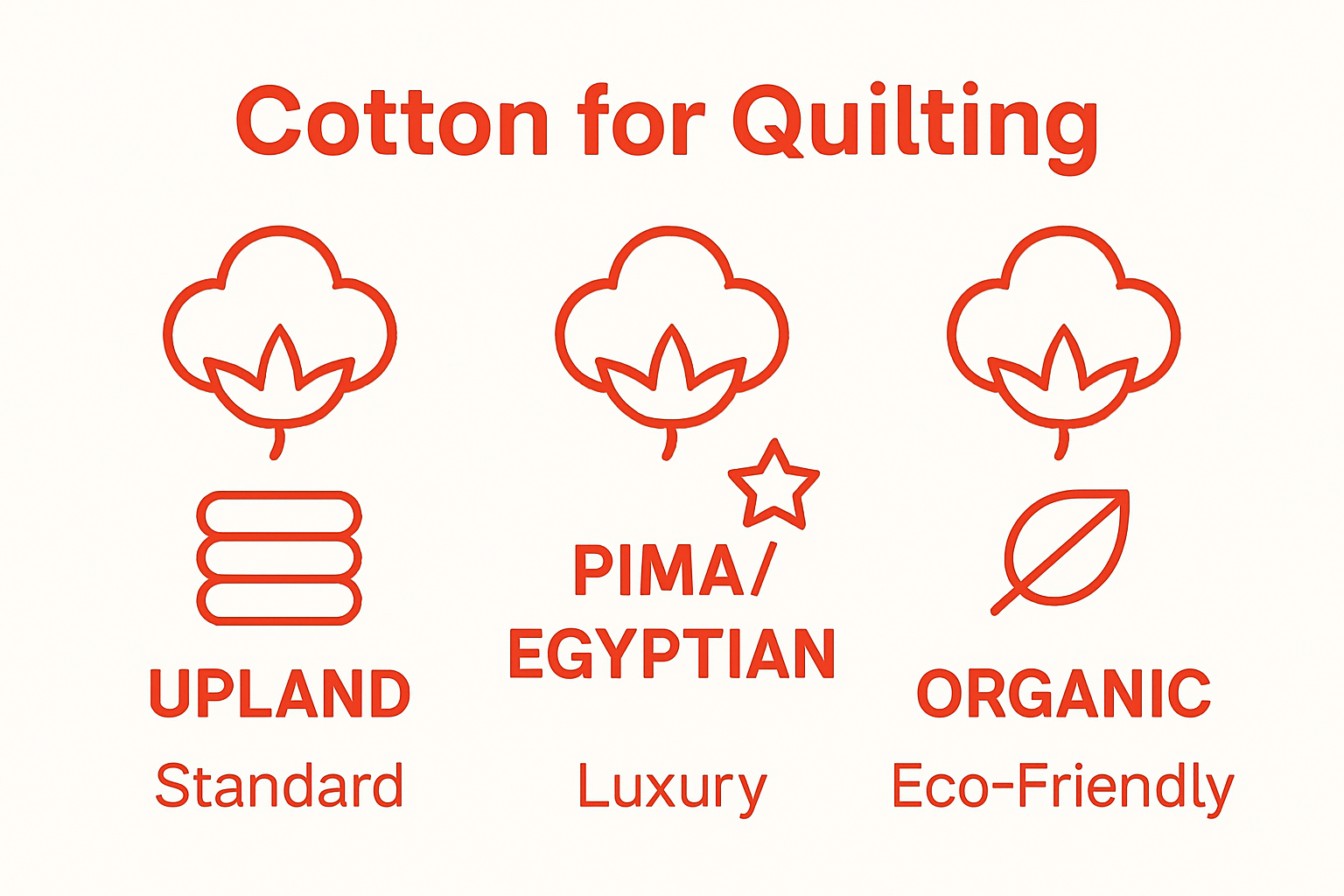
Key cotton varieties include:
Different quilting cotton types offer specialized properties that make them suitable for specific design applications. Standard quilting cotton typically features a medium weight with tight weave, providing stability for piecing and patchwork. Organic cotton varieties appeal to environmentally conscious crafters, while high-end Pima cotton delivers exceptional softness and durability.
Specialized quilting cotton characteristics encompass:
Selecting the appropriate quilting cotton requires understanding project requirements. Lightweight cotton works best for delicate wall hangings and intricate quilting designs, while medium-weight fabrics suit traditional bed quilts. Designers and hobbyists must consider factors like color retention, fabric weight, and intended use when choosing their textile.
Professional quilters recommend matching cotton type to specific project needs, ensuring optimal performance and aesthetic appeal in the final textile creation.
Below is a comparison table summarizing the key types of quilting cotton mentioned in the article along with their main features and suitable uses.
| Type of Quilting Cotton | Main Features | Suitable Uses |
|---|---|---|
| Upland (Standard) Cotton | Medium weight, tight weave | Traditional quilts, general sewing projects |
| Pima/Egyptian Cotton | Luxury grade, very soft, durable | High-end quilts, fine textile crafts |
| Organic Cotton | Environmentally friendly, chemical-free | Eco-conscious projects, baby quilts |
| Recycled Cotton | Made from repurposed fibers | Sustainable crafts, decor, accessories |
| Combed Cotton | Smoother, stronger fibers | Projects needing extra softness and strength |
Quilting cotton fabrics continue to evolve, reflecting technological advancements, changing design aesthetics, and emerging consumer preferences. Contemporary textile innovations are transforming traditional quilting practices, introducing new possibilities for creativity and functionality.
Murray State University’s Textile Research highlights the significant technological improvements in quilting cotton manufacturing. Modern production techniques now enable more precise weaving, enhanced color retention, and innovative fabric treatments that expand the creative potential for designers and crafters.
Key technological innovations include:
The quilting cotton industry is experiencing a substantial shift towards sustainable and environmentally conscious production methods. Manufacturers are increasingly focusing on organic cotton cultivation, recycled fiber integration, and reduced chemical processing. These developments respond to growing consumer demand for environmentally responsible textile options.
Emerging sustainable practices encompass:
Contemporary quilting cotton fabrics reflect broader design trends, incorporating digital printing technologies, complex geometric patterns, and more diverse color palettes. Designers are experimenting with hybrid fabric compositions, blending traditional cotton with performance materials to create more versatile and functional textiles.
The intersection of technology, sustainability, and creative design continues to reshape the quilting cotton landscape, offering unprecedented opportunities for innovation and artistic expression.
If you have ever struggled with finding truly high-quality quilting cotton that holds its shape, delivers vibrant colors, and brings your creative ideas to life, you are not alone. This article highlights the importance of choosing the right fabric—tight weaves, consistent thread counts, and stable construction are all critical for achieving professional results in both quilting and home decor. But searching for the perfect material can be overwhelming, especially when you need specific types, like organic or luxury-grade cotton. At Fabric-Fabric.com, you gain access to a curated selection of quilting cotton and related materials, serving everyone from passionate DIY crafters to seasoned designers.
Ready to transform your next project with reliable, vibrant, and expertly sourced textiles? Visit Fabric-Fabric.com today. Browse our extensive range of fabrics perfectly suited for precise pattern work, detailed quilting, and creative expression. Do not wait—upgrade your fabric supply now and enjoy the difference that true quality makes in your crafting.
Quilting cotton is a specialized textile made from 100% pure cotton fibers, designed for high-quality quilting and intricate sewing projects. It features a tight weave, minimal stretch, and a consistent thread count, making it ideal for precise crafting.
Quilting cotton offers several advantages, including durability, color retention, and a smooth surface that allows for accurate cutting and sewing. Its medium weight also provides stability for piecing and patches, making it perfect for various fabric applications.
Quilting cotton differs from regular cotton fabric in its tighter weave and consistent quality standards. It is specifically manufactured to minimize stretching and distortion during cutting and sewing processes, ensuring a more reliable performance for quilting and other projects.
There are various types of quilting cotton, including standard quilting cotton, Pima cotton, organic cotton, and recycled cotton. Each type has unique characteristics, such as softness, weight, and environmental impact, making them suitable for different projects like quilts, clothing, and home decor.