

 US Dollar

What Is Organza: Fabric Properties and Uses Explained
Posted by BLG on 2026 May 20th
Posted by BLG on 2026 May 20th

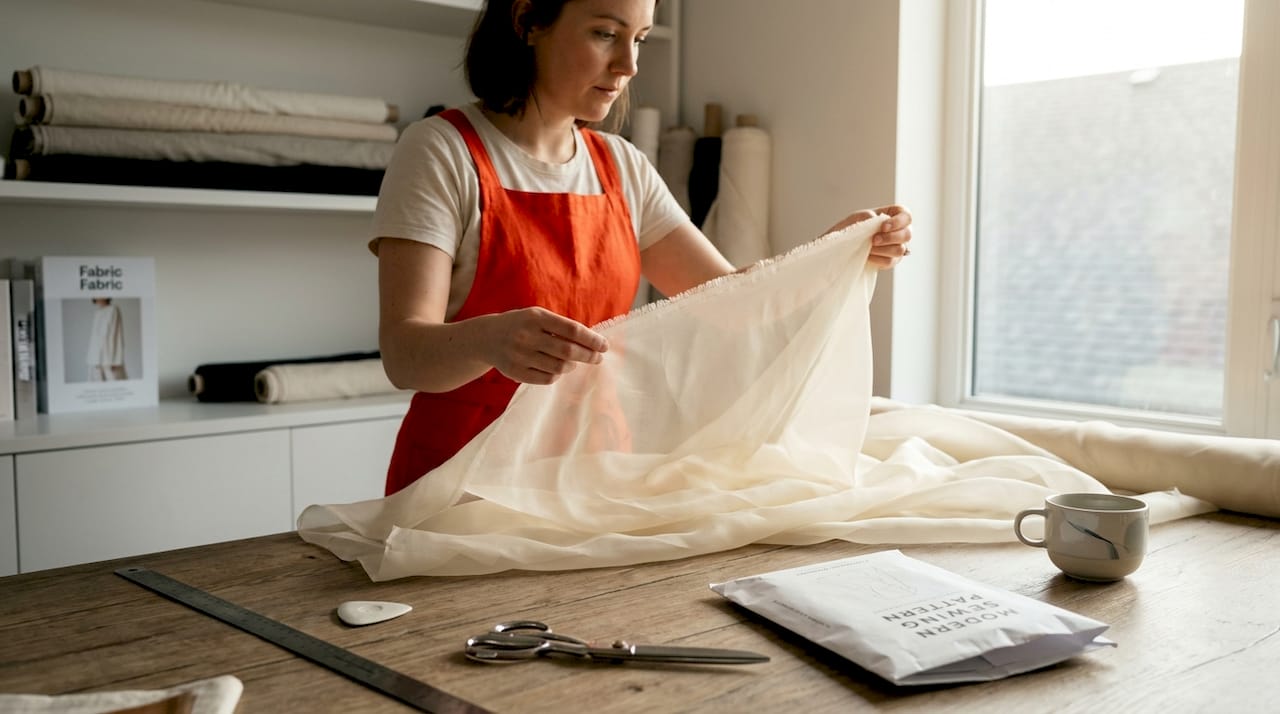
TL;DR:
- Organza is a crisp, sheer fabric made from tightly twisted filament yarns that hold shape and reflect light. Originally derived from Silk Road trade, it is now produced from silk or synthetic fibers like polyester, offering versatility in fashion and home décor. Proper handling involves precise cutting, fine needles, and gentle finishing techniques to maintain its structural elegance.
Organza often gets dismissed as just another pretty sheer fabric, but that undersells what makes it genuinely interesting to work with. What is organza, really? It’s a plain-weave textile with a structural crispness that chiffon and tulle simply cannot replicate. That stiffness is not a flaw. It’s the whole point. Organza holds shape, catches light, and layers beautifully without adding weight. Whether you’re planning a bridal gown, a set of sheer curtains, or a decorative craft project, understanding this fabric’s properties changes how you approach every decision, from fiber choice to final seam.
| Point | Details |
|---|---|
| Organza is structurally crisp | Its tight filament yarn weave creates stiffness that sets it apart from other sheer fabrics. |
| Silk vs. synthetic matters | Silk organza offers natural luster; polyester organza is more durable and budget-friendly. |
| Uses go beyond fashion | Organza works in event backdrops, sheer curtains, table runners, and interior decor. |
| Sewing requires precision | Fine needles and French seams are necessary to prevent snagging and fraying. |
| History runs deep | Organza traces back to the Silk Road, with roots in ancient Persian and Central Asian trade. |
Most people recognize organza by sight — that gossamer sheen, the slight stiffness, the way it floats just above the body instead of draping against it. But the properties that create that look come directly from how the fabric is constructed.
Organza is a plain-weave fabric made from tightly twisted filament yarns. That tight twist is the key detail. It creates tension in every thread, which gives the finished cloth its characteristic crispness. The yarn density stays low, meaning there are relatively few threads per inch, which is what makes the fabric sheer and lightweight. You get transparency and structure at the same time, which is a genuinely unusual combination.
Originally, organza was made exclusively from silk filaments. Today, most organza on the market uses polyester or nylon yarns, which replicate the plain weave and sheer quality while keeping costs accessible. Some blends combine silk with synthetic fibers to split the difference between luxury and practicality.
Here’s how organza compares to two fabrics it often gets confused with:
Pro Tip: Hold organza up to a light source before buying. Quality organza should show a consistent, even sheer with a slight shimmer, not cloudy patches or uneven weaving.
The word “organza” carries its origins right in its name. The name likely comes from Urgang, a Persian city in what is now modern Uzbekistan, which sat along the Silk Road trade routes connecting East Asia with Europe and the Middle East. Silk fabrics from that region, including early versions of organza, traveled west through merchant caravans for centuries.
“Organza was prized by European aristocrats for court and ceremonial garments from the 17th century onward, a testament to how its sheer elegance communicated wealth and status without excessive weight or embellishment.”
By the time organza reached European courts, it had already been refined into a luxury textile reserved for royalty and high-ranking nobility. The fabric appeared in formal gowns, ruffled collars, and ceremonial robes precisely because its stiffness held decorative shapes that softer fabrics could not.
The shift to synthetic fibers in the 20th century changed organza’s accessibility entirely. Polyester versions brought the fabric’s distinctive sheer, crisp quality to mass production. What once cost a fortune is now available by the yard for craft and fashion projects at nearly every price point. Silk organza, however, still commands a premium and remains the gold standard for couture work, largely because its natural fiber luster and breathability cannot be fully replicated in polyester.
Organza’s ability to hold volume while remaining lightweight makes it one of the most versatile fabrics in both fashion and interior design. That combination is rarer than it sounds. Most stiff fabrics are also heavy. Most lightweight fabrics drape rather than stand. Organza does neither. It floats and holds at the same time.
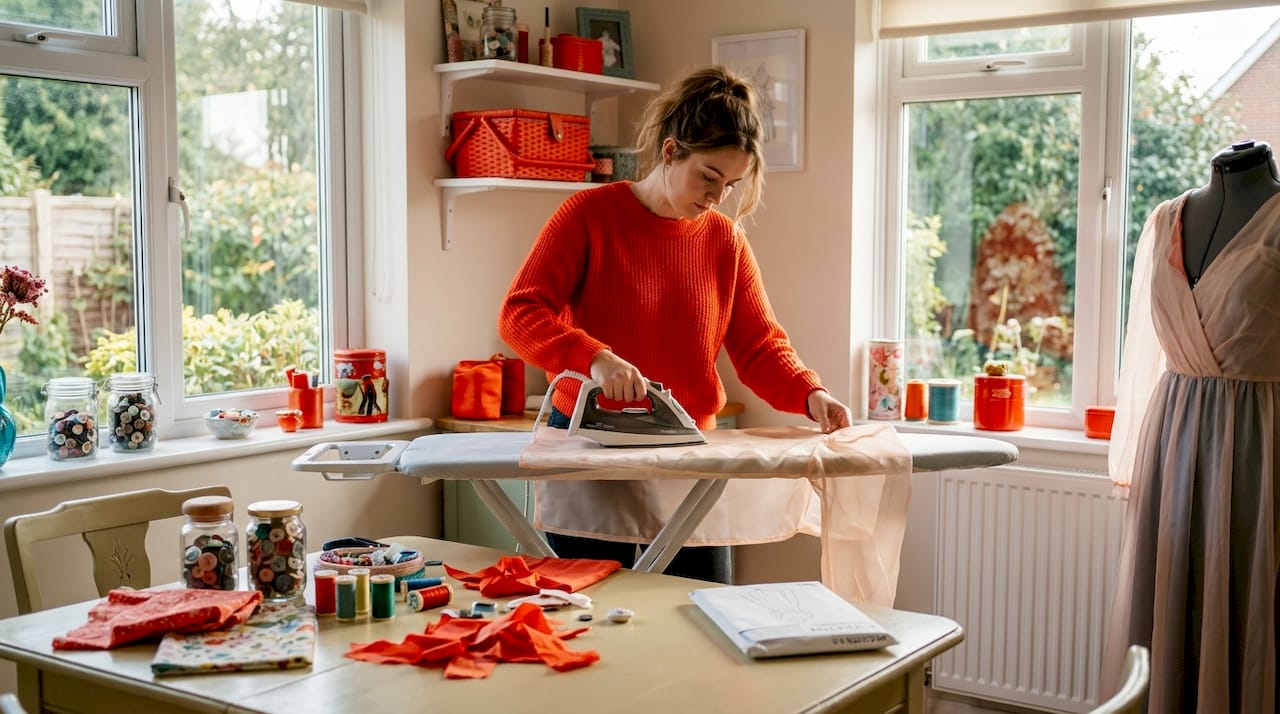
Organza is used in bridal gowns, evening wear, and sheer curtains as well as table runners and event backdrops, all because of that light-filtering, shape-holding quality. Here’s a breakdown of where you’ll see it used most:
Fashion applications:
Home décor and event applications:
One application that beginners often overlook: organza as internal structural support inside couture tailoring. Cut into precise pieces, organza gets sewn inside collars, cuffs, and bodice panels to give structure without the bulk of traditional interfacing. It shapes the garment invisibly, adding definition where you want it without visible stiffness from the outside.
You can browse organza fashion fabric at Fabric-fabric to see the range of colors and finishes currently available for both apparel and décor projects.
Choosing between silk and synthetic organza is not just about budget. It’s about which properties matter most to your specific project.
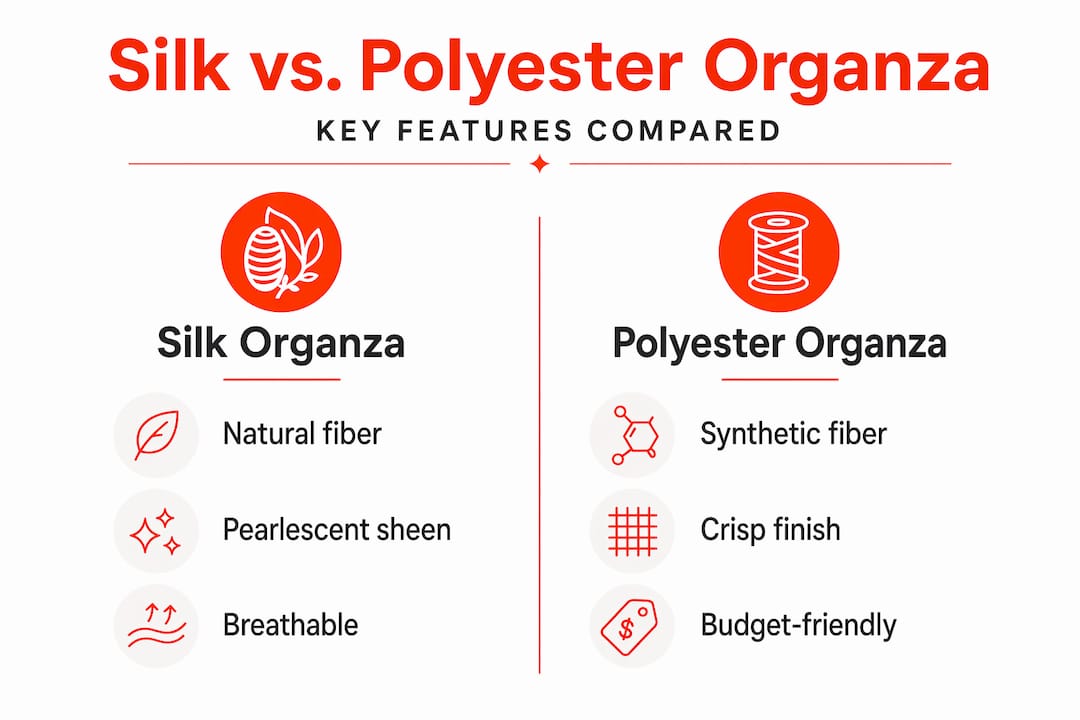
Silk organza offers natural pearlescent luster and breathability that synthetic versions approximate but cannot fully match. The subtle glow in silk has depth and variation that reads as luxurious under both artificial and natural light. Polyester, on the other hand, produces a brighter and more uniform sheen that can look slightly plastic in some lighting conditions, though many designers prefer it for bold, saturated color projects.
Here’s a direct comparison to help you decide:
| Feature | Silk organza | Polyester organza |
|---|---|---|
| Fiber type | Natural silk filament | Synthetic polyester or nylon |
| Sheen | Soft, pearlescent, varied | Bright, uniform, consistent |
| Breathability | High | Low |
| Texture | Slightly rougher, natural feel | Smoother, more uniform |
| Durability | Delicate, requires careful handling | More durable and forgiving |
| Typical uses | Couture, bridal, luxury eveningwear | Craft projects, décor, everyday fashion |
| Price | Premium | Affordable |
| Care | Dry clean recommended | Hand or gentle machine wash |
Many designers regard silk organza as irreplaceable for couture work, even when budgets allow for alternatives, because the texture and breathability affect how the garment feels against the skin and moves with the wearer. For purely decorative applications like event backdrops or table runners, polyester organza makes excellent practical sense.
Pro Tip: If you are comparing fabric samples in a store, breathe lightly on both. Silk organza warms quickly from body heat. Polyester stays cool longer. That difference tells you immediately which is which.
Organza rewards careful handling and punishes impatience. The fabric is prone to snagging because of its tightly twisted yarns, which catch on rough surfaces, dull tools, and the wrong type of needle with very little encouragement.
Follow these steps when working with organza to get clean results:
Reviewing a guide on caring for delicate fabrics before starting any organza project will help you avoid common mistakes that even experienced sewers make.
Pro Tip: Before sewing, place organza between two sheets of tissue paper and stitch through all three layers. Tear the tissue away after sewing for clean, stable seam lines without any feed dog distortion.
I’ve worked with both silk and polyester organza across fashion and décor projects, and the biggest mistake I see people make is treating them identically. They look similar on a spool. They behave very differently under a needle.
In my experience, the combination of delicacy and structural strength is what makes organza so satisfying to use once you understand it. You’re working with a fabric that wants to hold form. That means when you cut it precisely and sew it cleanly, the results look intentional in a way that softer fabrics cannot replicate.
My most unconventional use of organza was as a photography backdrop layered in three colors for an outdoor shoot. Polyester held up to the wind in a way silk never would have. The light transmission created depth in the images that solid fabric couldn’t. I’ve also seen silk organza used as an underlining inside a tailored jacket shoulder, invisible from outside but responsible for that sharp, structured silhouette. Most beginner guides don’t mention this, but it’s one of the most effective ways to use the fabric.
If you are new to organza, start with a polyester version for practice. Get comfortable with the needle handling and seam finishing. Then try a silk version for your serious project. The skill transfers. The results are noticeably different.
— kev
If this guide has clarified what organza is and how it fits your next craft or design project, the next step is getting your hands on the right material. Fabric-fabric carries a curated selection of organza in multiple colors and finishes, suited for everything from bridal overlays to sheer event draping.

For event and décor work, the backdrop fabric collection at Fabric-fabric includes sheer and structured options that work beautifully alongside or in place of organza. If you’re exploring home décor applications, the home décor fabric range offers affordable yardage ideal for window panels, table runners, and seasonal decorating projects. Browse by project type to find exactly what you need without guesswork.
You can also pair organza with bridal satin options for layered formal garments that combine structure and sheen.
Organza is made from tightly twisted filament yarns in a plain weave. It was traditionally made from silk, but most organza today uses polyester or nylon filaments.
Yes, organza is semi-transparent due to its low yarn density. The sheer quality varies slightly by weight and fiber, but all organza allows light to pass through to some degree.
Organza is a plain-weave fabric with a crisp, structured feel, while tulle is a soft net fabric with a hexagonal mesh. Organza holds shape on the outside of a garment; tulle adds volume underneath.
Organza works best in garments that benefit from structured volume, including puff sleeves, tiered skirts, ballgown bodices, and layered bridal gowns. It holds shape without requiring heavy boning or lining.
Polyester organza can typically be hand washed in cool water with a gentle detergent. Silk organza is more delicate and dry cleaning is generally recommended to preserve fiber integrity and luster.