

 US Dollar

What is Fabric Width? Understanding its Importance in Textile Design
Posted by BLG on 2025 Sep 23rd
Posted by BLG on 2025 Sep 23rd


Fabric width shapes every project from intricate quilts to sweeping drapes and can literally make or break a designer’s vision. Some fabrics measure just 36 inches wide while others stretch to an incredible 108 inches across. Most people expect the widest fabric to always be the best choice but the real advantage often lies in picking the perfect width for your specific design. The numbers might surprise you.
| Takeaway | Explanation |
|---|---|
| Fabric width directly impacts project design. | The width of fabric significantly influences planning, layout, and material requirements for various projects. |
| Standard widths affect manufacturing processes. | Fabrics typically come in standardized widths, which enhance production efficiency and material usage across different applications. |
| Wider fabrics offer design flexibility. | Using wider fabrics allows for fewer seams and more creative design configurations, enhancing the overall aesthetic and functional outcomes. |
| Choose width based on project needs. | Selecting the right fabric width should align with specific project requirements and desired design outcomes to optimize results. |
| Narrow widths are ideal for detailed techniques. | Fabrics that are 36 to 45 inches wide are often preferred for intricate design work, ensuring precision in smaller projects. |
Fabric width represents the horizontal measurement of a textile from one selvage edge to the other, serving as a fundamental characteristic that determines how materials can be utilized in various design and manufacturing processes. This crucial dimension varies across different fabric types and directly influences project planning, material requirements, and overall design potential.
Fabric width is determined during the weaving or manufacturing process and typically standardized within specific ranges for different textile categories. In most instances, fabric widths range from 36 inches to 108 inches, with common standard measurements including:
According to Utah State University’s Extension, these standardized widths emerge from industrial manufacturing processes that optimize production efficiency and material usage. Manufacturers carefully calibrate their looms and production equipment to create consistent fabric widths that meet industry standards.
Understanding fabric width becomes critical when planning sewing, quilting, or manufacturing projects. The width directly impacts:
Professional designers and makers must always check the specific width of their chosen fabric to ensure accurate project planning. A miscalculation in fabric width can lead to insufficient material, increased waste, or compromised design execution.
The following table outlines how fabric width affects different aspects of textile project planning and performance, providing a concise overview for readers considering fabric width in their design work.
| Aspect Affected | Impact of Fabric Width |
|---|---|
| Pattern Layout | Wider fabrics allow for larger pattern pieces and fewer seams |
| Material Requirement | Incorrect width calculation can lead to excess waste or insufficient fabric |
| Design Flexibility | Wider widths offer more configuration options; narrower require strategic layout |
| Project Cost | Optimal width selection minimizes material costs |
| Structural Performance | Width influences drape, stretch, stability, and seam frequency |
The width of a fabric also influences its drape, stretch, and overall performance in different applications. Wider fabrics often provide more flexibility in design, allowing for fewer seams and more creative pattern placement, while narrower fabrics might require more strategic cutting and piecing techniques.
Fabric width transcends a simple measurement. It represents a critical technical parameter that influences design possibilities, manufacturing efficiency, and functional performance across multiple textile applications. This dimension serves as a foundational element that determines how textiles can be transformed into clothing, home decor, industrial materials, and specialized products.
Manufacturers carefully select fabric widths based on intricate production requirements and intended end-use. Standard fabric widths are not arbitrary but result from complex engineering decisions that balance production efficiency, material utilization, and product performance.
According to The National Academies Press, industrial textile production involves sophisticated calculations to optimize fabric width, which impacts:
The selection of fabric width directly correlates with manufacturing machinery specifications, with modern looms capable of producing textiles across diverse width ranges to meet specialized market demands.
Fabric width plays a pivotal role in determining design potential and functional characteristics. Different width measurements enable unique design strategies across various textile sectors. Designers must consider width when conceptualizing:
Wider fabrics offer more design flexibility, allowing for reduced seam lines and more creative pattern configurations. Conversely, narrower fabrics might require more strategic cutting and piecing techniques to achieve desired aesthetic and functional outcomes.
The relationship between fabric width and design is particularly nuanced in specialized fields like haute couture, industrial textiles, and technical fabric development. Professional designers leverage precise width measurements to optimize material usage, reduce waste, and create innovative textile solutions that push the boundaries of traditional manufacturing constraints.
Fabric width serves as a critical design parameter that directly influences the structural integrity, aesthetic potential, and practical usability of textile products. This dimensional characteristic determines how materials can be cut, configured, and transformed into functional designs across multiple industries and applications.
Fabric width fundamentally shapes design possibilities, presenting both opportunities and constraints for textile professionals. The available horizontal measurement impacts pattern placement, cutting strategies, and overall design efficiency. Designers must strategically approach fabric width to maximize material potential and minimize waste.
According to Oxford Learners Dictionary, fabric width influences critical design elements such as:
For instance, a 45-inch wide fabric might require more intricate piecing for a full-length dress, while a 60-inch wide fabric could allow for more seamless pattern development with fewer interruptions.
Beyond aesthetic considerations, fabric width significantly impacts the functional performance of textile products. Different width measurements can alter fabric characteristics, affecting how materials drape, stretch, and perform under various conditions.
Textile designers must consider width when evaluating:
Wider fabrics often provide enhanced structural integrity and more design flexibility, allowing for complex garment constructions and innovative product developments. Narrower fabrics, conversely, might require more strategic engineering to achieve desired performance outcomes.
The relationship between fabric width and functionality is particularly pronounced in specialized sectors like athletic wear, medical textiles, and industrial applications. Professional designers leverage precise width measurements to create textiles that meet exacting performance requirements, balancing material characteristics with intended use.
Fabric widths represent a critical technical specification that varies across different textile categories, with each width range serving specific design and functional purposes. Understanding these variations helps designers, crafters, and manufacturers select the most appropriate material for their specific project requirements.
Narrow width fabrics typically range between 36 to 45 inches and are predominantly used in apparel and quilting applications. These narrower textiles offer precise control for intricate design work and smaller scale projects. Quilting cotton, for instance, usually comes in 44-45 inch widths, providing optimal dimensions for creating precise quilt blocks and intricate piecing techniques.
According to SewGreen, narrow width fabrics are ideal for:
These narrower fabrics often require more strategic cutting and planning, making them popular among hobbyists and professional designers working on smaller, detail-oriented projects.
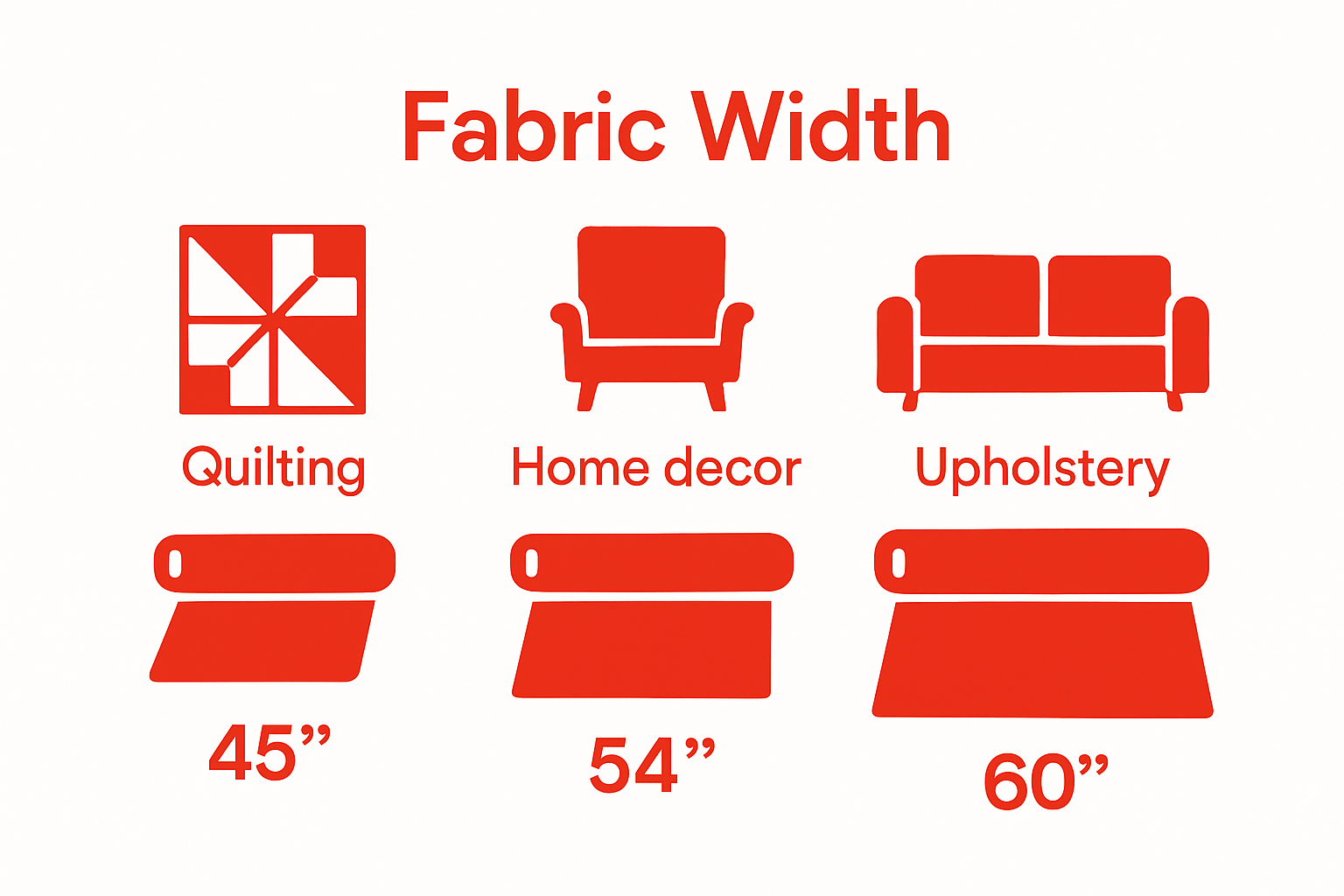
Medium width fabrics, ranging from 54 to 60 inches, offer increased versatility for home decor and more complex garment construction. Wide width fabrics extending beyond 60 inches provide expansive design possibilities, particularly in upholstery, drapery, and industrial textile applications.
Designers and manufacturers select fabric widths based on specific project requirements, considering factors such as:
For example, upholstery fabrics often utilize wider widths to minimize seam lines and create more seamless furniture coverings. Home decor textiles like curtains and bedding benefit from wider fabric dimensions that allow for more expansive, uninterrupted design surfaces.
Professional textile developers carefully engineer fabric widths to balance manufacturing efficiency, material performance, and design potential. The selection of fabric width represents a nuanced decision that impacts the final product’s aesthetic appeal, functional performance, and overall manufacturing process.
Here is a comparison table summarizing common fabric widths, their typical uses, and key characteristics to help readers quickly evaluate the best choice for their projects.
| Fabric Width Range | Typical Uses | Key Characteristics |
|---|---|---|
| 36-45 inches (Narrow) | Apparel, quilting, crafts | Allows precise, detailed design work; may require piecing for larger projects |
| 54 inches (Medium) | Home decor, garments | Versatile for more expansive projects, fewer seams for mid-size designs |
| 60+ inches (Wide) | Upholstery, drapery, bedding | Enables seamless large designs, ideal for minimizing waste and seam lines |
| 108 inches (Extra Wide) | Large quilts, industrial use | Best for projects requiring large, uninterrupted fabric surfaces |
Selecting the appropriate fabric width requires a nuanced understanding of design objectives, material properties, and project-specific requirements. Textile professionals must evaluate multiple factors to ensure optimal material selection that balances aesthetic potential, functional performance, and manufacturing efficiency.
Fabric width directly influences design possibilities, making it essential to align width selection with project specifications. Designers must consider the intended end use, pattern complexity, and desired aesthetic outcome when evaluating textile dimensions.
According to Utah State University Extension, critical design considerations include:
For example, a wedding gown might require wider fabric to create flowing, seamless silhouettes, while a tailored business suit demands precise, narrower width fabrics that allow for structured pattern cutting.
Beyond aesthetic considerations, fabric width significantly impacts technical performance and material characteristics. Mechanical properties such as tensile strength, drape, and stretch are intimately connected to width selection.
Textile engineers evaluate width in relation to:
Wider fabrics often provide enhanced stability and reduced seam interference, making them preferable for applications requiring consistent performance. Narrower fabrics might offer more precise control and targeted structural support in specialized technical textiles.
Professional textile developers approach fabric width as a sophisticated engineering parameter, recognizing that seemingly minor dimensional variations can profoundly impact a textile’s ultimate performance, durability, and aesthetic potential across diverse applications.

Struggling to confidently choose the right fabric width for your project? The article highlighted how fabric width can impact everything, from pattern layout and design flexibility to waste and cost. Whether you are a quilter who needs a precise 45-inch cotton for intricate blocks or a home decor creator searching for wide fabrics to avoid extra seams, finding the right size really matters. At Fabric-Fabric.com, you do not have to gamble with your project results. Each of our products features clearly listed width details, letting you instantly filter and select the best fabric for every need. You can also explore our smart categories designed for apparel, crafts, and upholstery, making it easy to match fabric width with your design goals.
Take control of your next sewing project and avoid last-minute surprises. Visit Fabric-Fabric.com now to view accurate widths and choose from a wide range of textiles, including seersucker, velvet, and more. Your perfect fabric match is only one click away—shop now and experience stress-free fabric planning.
Fabric width is the horizontal measurement of a textile from one selvage edge to the other, typically ranging from 36 inches to 108 inches depending on the type of fabric.
Fabric width influences pattern layout, cutting strategies, quantity of material needed, and overall design potential, making it essential for accurate project planning.
Standard fabric widths include 45 inches for quilting cotton, 54 inches for home decor, 60 inches for upholstery, and 108 inches for larger projects, each serving different design purposes.
Considering fabric width is crucial to ensuring optimal material usage, minimizing waste, and achieving desired aesthetic and functional outcomes in textile applications.