

 US Dollar

What is Canvas Fabric? Understanding Its Importance
Posted by BLG on 2025 Sep 11th
Posted by BLG on 2025 Sep 11th

Canvas fabric does more than just hold up a painting or cover a tent. Some industrial canvas can weigh over 20 ounces per square yard, making it one of the heaviest and toughest textiles used today. What surprises most people is that canvas owes its legendary strength not to fancy materials but simply to the way its threads are woven together. This curious fact is why canvas keeps showing up everywhere from classic sailboats to high-end fashion runways.
| Takeaway | Explanation |
|---|---|
| Canvas is durable and versatile. | Canvas fabric’s exceptional strength and resilience make it ideal for various applications across multiple industries. |
| Diverse material options exist. | Traditional canvas is made from natural fibers, while modern varieties incorporate synthetic fibers or blends for specific uses. |
| Sustainability is a key advantage. | Canvas fabric’s long lifespan and low-maintenance needs promote environmentally conscious consumption and reduced waste. |
| Innovative fashion design potential. | Designers leverage canvas’s structural integrity to create unique silhouettes and complex designs without compromising on wearability. |
| Broad industrial applications. | Canvas is crucial for heavy-duty protective gear and industrial workwear, ensuring reliable performance in extreme conditions. |
Canvas fabric represents a robust, versatile textile with deep historical roots and remarkable structural integrity. This heavyweight fabric distinguishes itself through unique manufacturing processes and exceptional durability, making it a preferred material across numerous industries.
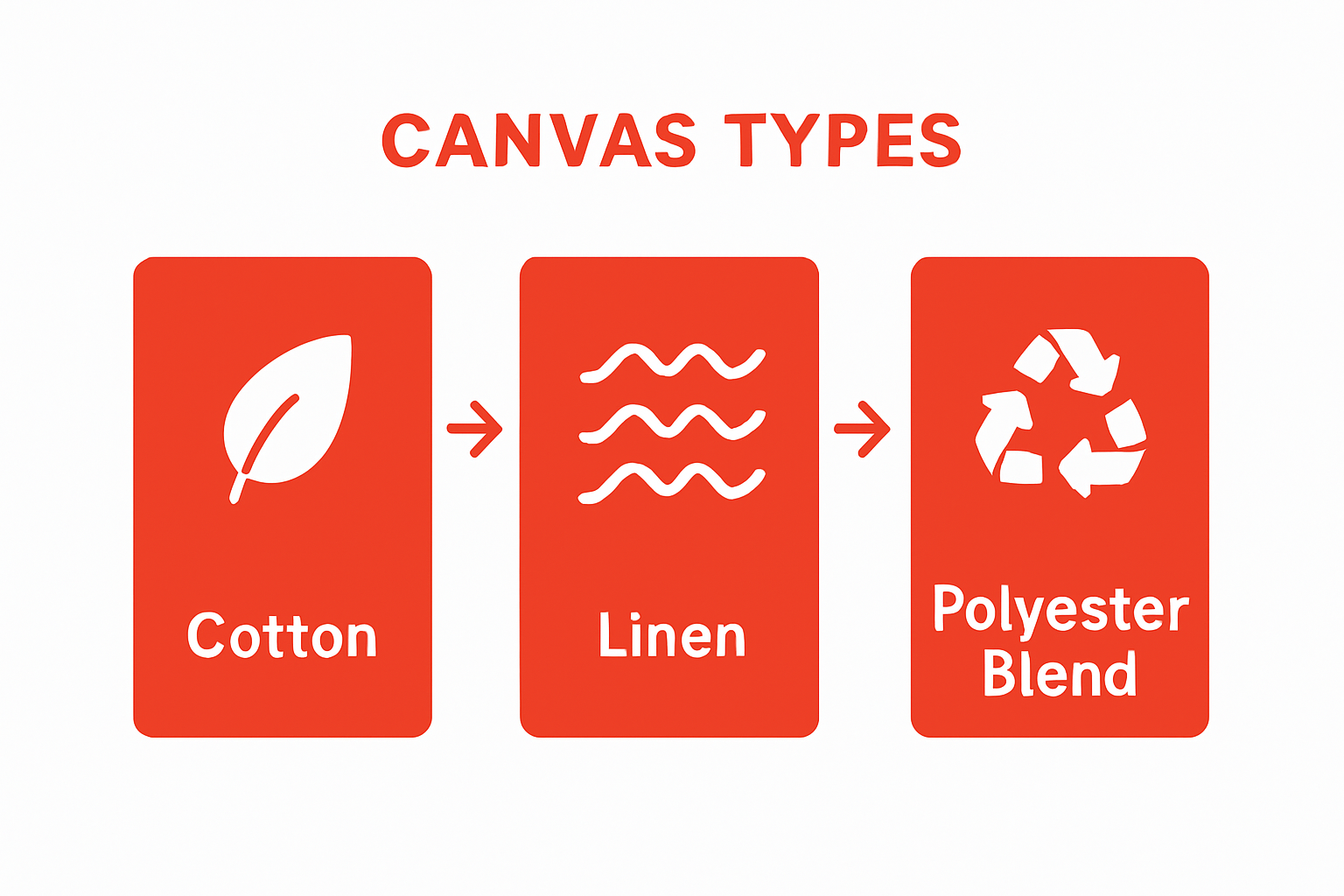
At its core, canvas fabric traditionally emerges from natural fibers like cotton or linen, though modern variations incorporate synthetic materials such as polyester and blended compositions.
 The fundamental characteristic of canvas is its dense, plain weave structure that creates exceptional strength and resilience.
The weaving technique involves tightly interlacing warp and weft threads, producing a fabric with minimal flexibility but maximum durability. According to National Textile Research Institute, canvas yarns are typically thicker and more tightly woven compared to standard fabric constructions, which contributes to its distinctive texture and performance capabilities.
Canvas fabric exhibits several remarkable physical properties that set it apart from other textiles:
These characteristics make canvas an exceptional material for applications requiring robust performance. Whether used in heavy-duty industrial settings, outdoor equipment manufacturing, or artistic contexts like painting canvases, the fabric consistently demonstrates remarkable adaptability.
The weight of canvas can vary significantly, typically ranging from lightweight (around 4 ounces per square yard) to heavyweight industrial grades (exceeding 20 ounces per square yard). This variation allows manufacturers to select precisely the right canvas specification for specific project requirements, ensuring optimal performance across diverse applications.
The following table summarizes the key differences between traditional and modern canvas fabric in terms of material composition and performance attributes.
| Type | Typical Materials | Weave Structure | Key Performance Attributes |
|---|---|---|---|
| Traditional Canvas | Cotton, Linen, Hemp | Dense Plain Weave | Natural feel, strong, durable |
| Modern Canvas | Polyester, Blends | Dense Plain Weave | Enhanced strength, weather resistance |
| Blended Canvas | Cotton-Poly, Mixed Fibers | Dense Plain Weave | Balance of durability and flexibility |
Canvas fabric represents more than just a textile material. Its rich historical legacy spans millennia, reflecting human innovation, technological advancement, and cultural adaptation across diverse civilizations and industries.
The term “canvas” originates from the Latin word “cannabis,” referencing its earliest production using hemp fibers. Ancient maritime civilizations were among the first to recognize canvas fabric’s exceptional durability and versatility. Sailors and merchants utilized canvas for sail manufacturing, creating robust maritime equipment that could withstand extreme oceanic conditions.
Traditional canvas production involved intricate hand weaving techniques, transforming raw natural fibers into incredibly strong textiles. According to Maritime History Museum, early canvas materials were critical for naval exploration, enabling long-distance maritime trade and global transportation networks during the Age of Exploration.
The Industrial Revolution marked a significant turning point for canvas fabric production. Mechanized weaving technologies dramatically transformed manufacturing processes, enabling mass production and standardization of canvas materials. Key developments included:
These technological advancements expanded canvas applications beyond maritime use, introducing the fabric into industrial, agricultural, military, and artistic domains. Canvas became instrumental in creating heavy-duty workwear, industrial protective equipment, artistic canvases, and specialized technical textiles.
Canvas fabric’s versatility transcended mere functional utility, becoming deeply embedded in cultural practices worldwide. From painters’ canvases capturing artistic expressions to rugged workwear representing industrial labor, the fabric symbolized human creativity, resilience, and technological progress. Its adaptability allowed it to seamlessly integrate into various economic and cultural contexts, demonstrating remarkable versatility that continues to define its significance in contemporary textile industries.
Canvas fabric transcends traditional textile boundaries, emerging as a fundamental material in contemporary fashion and design. Its unique properties enable designers to create garments and accessories that balance aesthetic appeal with exceptional functional performance.
Canvas fabric offers designers unprecedented structural integrity that allows for innovative clothing construction. The material’s dense weave and robust nature permit complex architectural silhouettes and sculptural designs that maintain their shape under various conditions. Designers appreciate canvas for its ability to hold structured forms while providing comfortable wearability.
From tailored jackets to architectural dresses, canvas enables fashion professionals to experiment with volume, proportion, and dramatic design elements. Its inherent stiffness allows for creating garments with deliberate geometric shapes that would be impossible with more fluid textiles.
According to Textile Research Institute, canvas fabric represents an increasingly important sustainable fashion material. Its durability means clothing and accessories require less frequent replacement, directly contributing to reduced textile waste and more environmentally conscious consumption patterns.
Key sustainable advantages of canvas include:
Canvas fabric brilliantly bridges utilitarian functionality with high-end design aesthetics. Contemporary fashion designers leverage its industrial heritage to create collections that celebrate both form and function. Luxury brands increasingly incorporate canvas into collections, transforming a traditionally workwear material into a sophisticated fashion statement.
From structured handbags to architectural outerwear, canvas demonstrates remarkable adaptability. Its texture, strength, and versatility make it an essential material for designers seeking to challenge traditional textile expectations and create innovative, performance-driven fashion pieces.

Canvas fabric extends far beyond traditional textile boundaries, serving critical functions across multiple industries and creative domains. Its exceptional durability, strength, and adaptability make it an indispensable material for diverse practical and artistic applications.
Canvas fabric plays a pivotal role in industrial and functional contexts, providing robust solutions for challenging environmental requirements. Manufacturing sectors leverage canvas for creating heavy-duty protective equipment, industrial workwear, and specialized technical applications that demand exceptional performance under extreme conditions.
Key industrial applications include:
The material’s resistance to wear, tear, and environmental stress makes it an ideal choice for industries requiring reliable, long-lasting protective solutions.
According to Museum of Fine Arts Conservation Institute, canvas has been fundamental in artistic practices for centuries. Painters have traditionally used prepared canvas as their primary painting surface, appreciating its smooth texture, structural stability, and ability to hold complex layers of paint and artistic treatments.
Beyond traditional painting, contemporary artists and designers explore canvas as a versatile medium for:
Canvas fabric’s weather resistance and durability make it exceptionally suitable for outdoor and recreational equipment. From camping gear to marine applications, the fabric provides reliable protection and performance in challenging environmental conditions.
Recreational sectors utilizing canvas include camping equipment manufacturers, marine supply companies, outdoor furniture producers, and adventure gear designers. Its ability to withstand harsh weather conditions while maintaining structural integrity positions canvas as a premier material for outdoor applications that require maximum reliability and minimal maintenance.
The table below highlights primary industrial, artistic, and outdoor uses of canvas fabric, showcasing the versatility described in this section.
| Application Area | Common Uses | Desired Properties |
|---|---|---|
| Industrial | Machinery covers, workwear, safety equipment | Durability, resistance, strength |
| Artistic | Painting canvases, installations, textile art | Smooth texture, stability, paint hold |
| Outdoor/Recreational | Tents, camping gear, outdoor furniture | Weather resistance, easy maintenance |
Weaving techniques represent the fundamental architectural process that transforms individual threads into cohesive, functional textiles. These intricate methods determine a fabric’s structural integrity, performance characteristics, and aesthetic qualities, making them crucial in textile engineering and design.
Plain weave represents the most fundamental weaving technique, characterized by threads alternating systematically over and under each other in a consistent 1x1 pattern. This straightforward yet robust method creates a balanced, stable fabric structure that forms the foundation for many textile productions.
The weaving process involves two primary thread systems:
The interaction between these thread systems determines the fabric’s fundamental characteristics, including strength, flexibility, and texture. Understanding these interactions allows designers and manufacturers to engineer textiles with precise performance specifications.
According to Textile Research Center, advanced weaving techniques expand beyond basic plain weave, introducing complex structural variations that significantly enhance fabric properties. Techniques like twill, satin, and jacquard weaves enable manufacturers to create textiles with specialized characteristics such as increased durability, enhanced visual texture, and unique dimensional properties.
Key advanced weaving considerations include:
Weaving techniques directly influence a textile’s mechanical and performance characteristics. The precise arrangement of threads determines critical properties like tensile strength, dimensional stability, breathability, and resistance to wear. Professional textile engineers carefully select and optimize weaving techniques to create materials tailored for specific applications.
From industrial protective gear to high fashion garments, weaving techniques serve as the foundational technology that transforms raw fibers into functional, purposeful textiles. The sophisticated interplay of threads creates materials that can withstand extreme conditions, provide comfort, and express artistic and functional design intentions.
Have you discovered just how essential canvas fabric is but still struggle to find the right supplier with a vast, reliable selection? Many designers and creative professionals know that not all fabrics provide the durability, structure, and versatility that canvas offers. If you need canvas for fashion, upholstery, or artistic innovation, settling for less can leave your ideas unfinished or your results less than professional. At https://fabric-fabric.com/categories/home-decor-fabric/canvas-fabric.html, you gain access to expertly sourced canvas and a broad range of textiles that meet industry standards for strength, resilience, and adaptability.

Your next breakthrough deserves high-quality materials that match your vision. Explore our extensive selection and let your designs stand the test of time. Visit https://fabric-fabric.com today to discover the canvas and specialty fabrics your project needs. Shop now for the perfect blend of performance and inspiration.
Canvas fabric is a robust and versatile textile traditionally made from natural fibers like cotton or linen, with modern variations including synthetic materials such as polyester. It features a dense, plain weave structure that provides exceptional strength and durability.
Canvas fabric is known for its high tensile strength, superior resistance to wear and tear, excellent durability under various environmental conditions, and relatively low maintenance requirements. Its weight varies from lightweight to heavyweight types, making it suitable for diverse applications.
Historically, canvas fabric originated from hemp fibers and was used by ancient maritime civilizations for sails and equipment. The Industrial Revolution introduced mechanized weaving, allowing for mass production and expanded applications in industrial, agricultural, military, and artistic contexts.
Canvas fabric is favored in fashion and design for its structural versatility, performance attributes, and sustainability benefits. It enables designers to create innovative garments with unique shapes while promoting environmentally conscious consumption due to its durability and extended product lifecycle.