

 US Dollar

What Does Deadstock Fabric Mean for Fashion Pros
Posted by BLG on 2026 Jun 15th
Posted by BLG on 2026 Jun 15th

TL;DR:
- Deadstock fabric is pristine, unused surplus material from mill or brand overproduction, not damaged or recycled textiles. It offers high-quality, first-production fabrics at 40–80% lower prices, but requires careful sourcing and provenance verification due to inventory variability. While environmentally beneficial by reducing new resource use, deadstock exists because of industry overproduction, highlighting the need for transparency and strategic inventory planning.
Deadstock fabric is defined as pristine, unused textile surplus left over from mill or brand production runs that was never incorporated into finished goods. The Council of Fashion Designers of America distinguishes it clearly from damaged goods, secondhand textiles, or recycled materials. Brands like Stella McCartney and Eileen Fisher have built sustainability narratives around it, and the textile waste recovery market is now valued at $6.7 billion and growing. If you work in apparel, home decor, or crafts, understanding what deadstock fabric means is the first step toward smarter, lower-cost sourcing.
Deadstock fabric originates at multiple points across the textile supply chain, not just at the mill level. Understanding where it comes from helps you evaluate its quality and traceability before you buy.
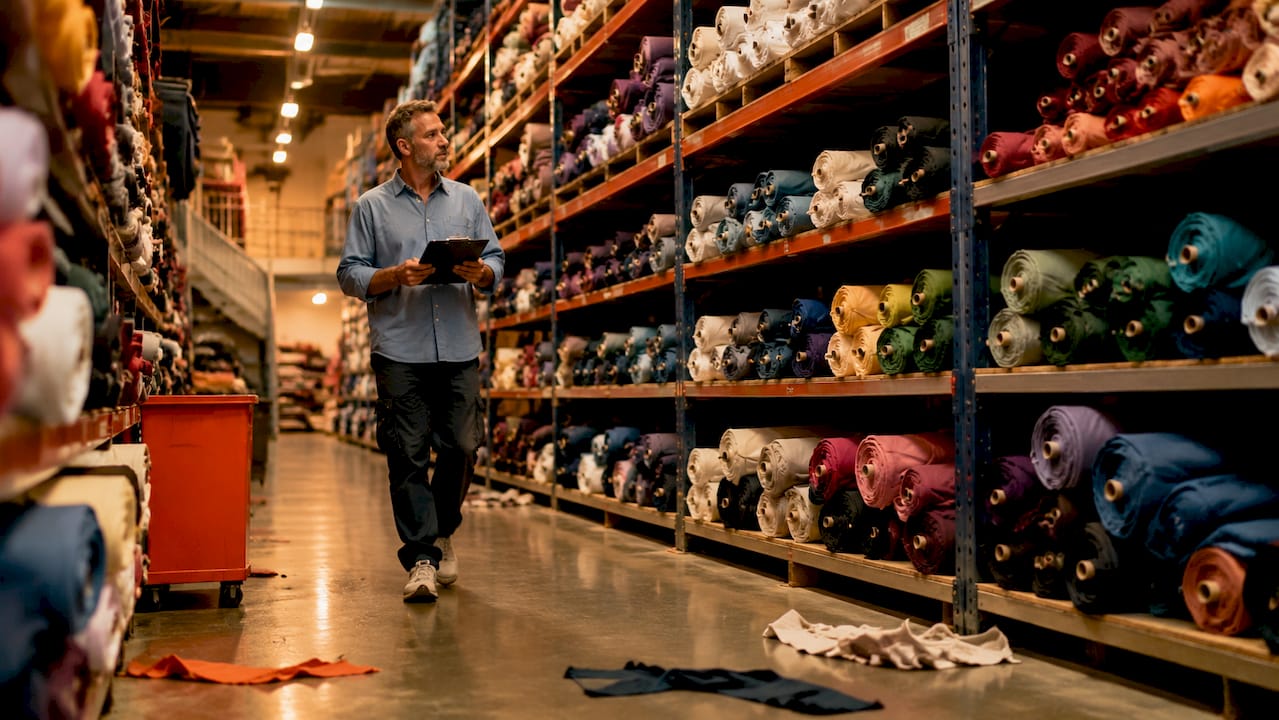
The most common source is mill overproduction. Factories produce extra yardage as a buffer against defects during weaving or dyeing. When the production run finishes without consuming that buffer, the surplus sits in a warehouse. Nearly 15% of global textile production ends up as unused waste, and mill overruns account for a significant share of that figure.
Canceled or reduced orders are the second major source. A brand places an order, the mill produces the fabric, and then the brand cuts the order due to budget changes or design pivots. The mill is left holding fabric it cannot sell through normal channels. Minimum order quantity (MOQ) remnants create a similar situation. A brand orders 500 meters but only uses 380. The remaining 120 meters become deadstock.
End-of-season inventory returns add another layer. Retailers send unsold fabric back to distributors, who then offload it to brokers or secondary markets. The result is a patchwork of surplus material accumulating at mills, brands, and third-party warehouses worldwide.
Pro Tip: Always ask a deadstock supplier for the fabric’s point of origin in the supply chain. Mill overruns from a single source carry far more consistent quality than consolidated lots assembled from multiple returns.
These three categories are not interchangeable, and confusing them leads to poor sourcing decisions. Each carries distinct trade-offs in quality, cost, environmental impact, and usability.
Deadstock fabric is first-quality, original production material. It has not been processed a second time, so its fiber integrity, hand feel, and color accuracy match what came off the loom or knitting machine. New fabric, by contrast, is produced on demand and offers full traceability, certifications like GOTS or OEKO-TEX, and guaranteed reorder availability. Recycled or upcycled fabric involves reprocessing post-consumer or post-industrial waste, which typically degrades fiber quality and introduces color inconsistency.
Cost is where deadstock stands out most sharply. Deadstock fabric is priced 40–80% below original retail cost, with premium salvage fabrics ranging from $1 to $20 per yard. That pricing gap gives smaller brands access to luxury-grade materials that would otherwise be financially out of reach. New fabric at full mill price can run $15 to $60 per yard for premium wovens, making deadstock a compelling alternative for limited-run collections.
The environmental picture is more nuanced. Deadstock reduces environmental impact by requiring no new water, energy, or dye inputs. That is a genuine benefit. However, it also exists because of systemic overproduction, so it addresses a symptom rather than the root cause.
| Category | Quality | Cost vs. New | Certifications | Reorder Availability |
|---|---|---|---|---|
| Deadstock | First-quality, original production | 40–80% lower | Broken chain-of-custody | Not guaranteed |
| New Fabric | Consistent, traceable | Full price | GOTS, OEKO-TEX available | Yes |
| Recycled Fabric | Variable, reprocessed | Moderate | Limited | Depends on source |
Pro Tip: When comparing deadstock to new fabric for a core product line, factor in the cost of sampling and quality inspection. Those steps are non-negotiable with deadstock and add time and money that the price discount partially offsets.
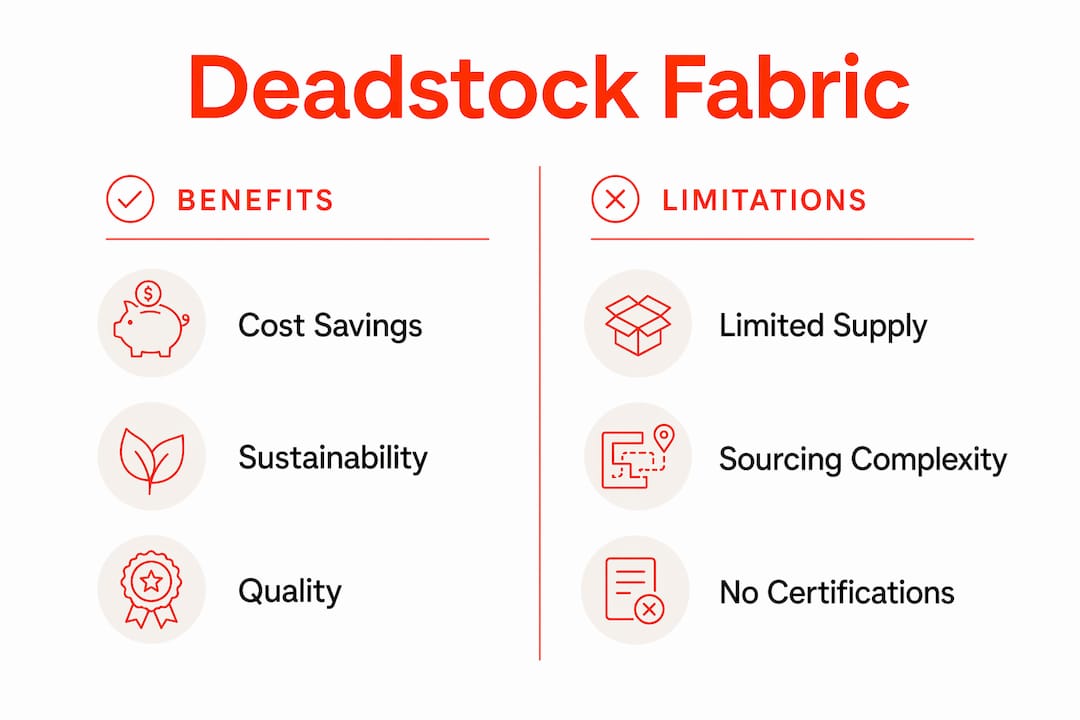
The benefits of deadstock fabric are real and well-documented, but so are the operational constraints. Treating it as a straightforward sustainability win without understanding the limitations leads to production problems and marketing credibility issues.
Cost savings are the most immediate advantage. Access to premium materials at 40–80% below retail allows emerging designers and small-batch producers to compete on material quality without the capital outlay of full mill orders. Fabric-fabric, for example, stocks discounted fabrics that give crafters and professionals access to quality textiles at prices that make small-run production viable.
The sustainability case is strong on a per-yard basis. Using deadstock diverts material from landfills and requires zero new resource consumption in production. For brands building a zero-waste narrative, it provides a credible, tangible story. Smaller brands gain access to premium fabrics otherwise financially out of reach, which levels design opportunities across the industry.
Certification continuity is the most overlooked problem. Original certifications like GOTS or OEKO-TEX cannot be maintained once fabric enters the deadstock market due to broken chain-of-custody. If your brand markets certified organic or Fair Trade products, deadstock cannot carry those claims regardless of the original fabric’s origin.
Inventory variability creates real production risk. Lot sizes typically run 100–1,000 meters, and reorders are not guaranteed. Dye-lot shifts between consolidated lots can cause color inconsistency across a single collection. Traceability is also inconsistent. Misuse of the term “deadstock” by brokers is documented, which means buyers must audit provenance closely to confirm they are purchasing genuine surplus material and not mislabeled seconds or damaged goods.
Sourcing deadstock well requires process discipline that most buyers underestimate. The price advantage disappears quickly if you skip quality controls or build a product line that cannot be restocked.
Identify reputable brokers and wholesalers. Work with suppliers who provide clear provenance documentation, including the original mill, production date, and reason for surplus. Fabric-fabric’s sourcing practices guide outlines what to look for when evaluating deadstock suppliers.
Request samples before committing to a lot. Dye-lot shifts, narrow widths, and quality variability are common with consolidated deadstock lots. A sample order of 2–5 meters lets you verify hand feel, color accuracy, and structural integrity before purchasing a full lot.
Audit provenance on every purchase. Ask for documentation that confirms the fabric is genuine surplus, not mislabeled damaged goods. Cross-reference the fiber content claim with a burn test or lab analysis for high-value purchases.
Build your collection around a hybrid model. Incorporating deadstock into collections works best when you blend limited-run capsule pieces with re-orderable core items. This protects your production schedule when a deadstock lot runs out unexpectedly.
Negotiate on lot size and price together. Deadstock suppliers often have flexibility on both. Reviewing a fabric pricing negotiation guide before you approach a supplier gives you leverage to secure better terms on minimum quantities and per-yard pricing.
Document everything for marketing transparency. Record the fabric’s origin, lot number, and any available production history. Customers and retail buyers increasingly ask for this information, and having it ready builds credibility for your sustainability claims.
Deadstock fabric is a cost-effective, first-quality surplus material that reduces textile waste but requires strict sourcing discipline, provenance auditing, and hybrid inventory planning to use successfully.
| Point | Details |
|---|---|
| Core definition | Deadstock is pristine, unused surplus fabric from mill or brand overproduction, not damaged or recycled material. |
| Cost advantage | Deadstock is priced 40–80% below retail, giving smaller brands access to premium materials. |
| Certification gap | GOTS and OEKO-TEX certifications cannot transfer to deadstock due to broken chain-of-custody. |
| Sourcing discipline | Always sample before buying a full lot and audit provenance to avoid mislabeled seconds. |
| Inventory strategy | Blend deadstock capsule pieces with re-orderable core items to protect production continuity. |
Every time I work with deadstock fabric, I feel two things at once: genuine satisfaction at diverting material from a landfill, and a quiet discomfort knowing that the fabric exists because someone overproduced in the first place. That tension is worth sitting with rather than glossing over in a marketing caption.
The brands I respect most are the ones who communicate both sides. They say, “We used deadstock because it reduces waste and gave us access to a beautiful fabric at a price that made this collection possible.” That is honest. What I find less credible is the brand that wraps deadstock in a zero-waste halo without acknowledging that the textile industry’s overproduction problem is what created the supply in the first place.
From a purely operational standpoint, deadstock has made some of my best work possible. The access to premium wovens and specialty prints at a fraction of full mill pricing is real. But I have also had production runs derailed by dye-lot inconsistencies that no amount of sampling fully predicted. The lesson I keep relearning is this: deadstock rewards preparation and punishes shortcuts. Sample everything. Document your sources. And never build a core product around a fabric you cannot reorder.
— kev
If you are ready to put deadstock sourcing into practice, Fabric-fabric stocks a wide selection of discounted and specialty fabrics suited for apparel, home decor, and craft projects. The catalog includes options across price points, making it practical for both small-batch designers and larger production runs.
Browse the home decor fabric collection for affordable, quality options that work for sustainable sourcing projects. For specialty and backdrop applications, the backdrop fabrics category offers a curated range at competitive prices. Whether you are building a limited capsule collection or sourcing for a larger project, Fabric-fabric gives you the variety and pricing to make deadstock-style sourcing work for your budget.
Deadstock fabric is pristine, unused textile surplus left over from mill or brand production runs that was never made into finished products. It is distinct from damaged goods, secondhand textiles, and recycled materials.
Deadstock fabric reduces environmental impact by requiring no new water, energy, or dye inputs, which diverts material from landfills. However, it exists because of industry overproduction, so it addresses a symptom rather than the root cause of textile waste.
No. Original certifications like GOTS or OEKO-TEX cannot be maintained once fabric enters the deadstock market because the chain-of-custody is broken. Buyers cannot make certified organic or Fair Trade claims based on the original fabric’s history.
Deadstock fabric is typically priced 40–80% below original retail cost, with premium salvage fabrics ranging from $1 to $20 per yard. New fabric at full mill pricing for premium wovens can run significantly higher.
Deadstock fabric is available through specialty brokers, wholesale suppliers, and online fabric retailers like Fabric-fabric. Always request provenance documentation and order samples before committing to a full lot to verify quality and authenticity.