

 Canadian Dollars

Sustainable Dyeing That Scales for Hobbyists, Studios, and Mills
Posted by BLG on 2026 Sep 13th
Posted by BLG on 2026 Sep 13th

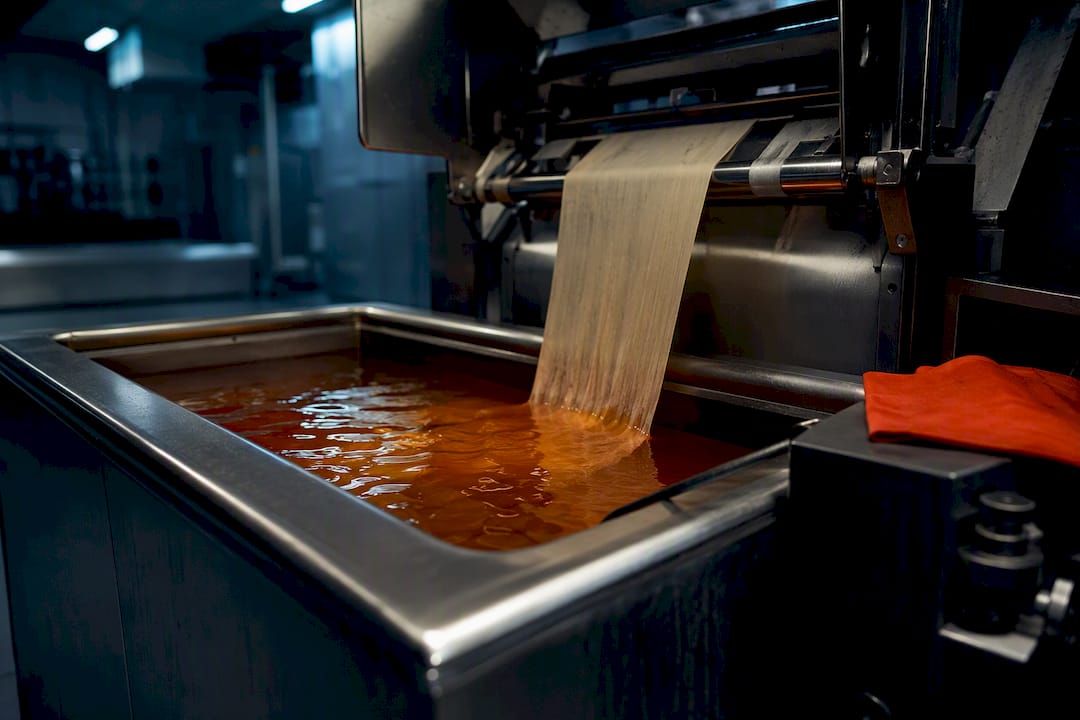
Sustainable dyeing means treating color as a system, not a chemical swap: the dye source, the water and energy the process demands, the fixation method, and how the fabric performs after fifty washes all count. Mills chasing real reductions should prioritize drop-in low-impact chemistries or waterless technologies that fit existing equipment. Makers and small studios get more mileage from tested natural dyes paired with biomordants. Neither path is automatically greener without independent testing behind it.
TL;DR:
- Low-impact dyeing technologies like waterless and low-water methods can significantly reduce resource use but often require specialized equipment or retrofitting to be practical at scale.
- Independent testing and full lifecycle assessments are essential to verify sustainability claims, especially regarding wastewater treatment, chemical hazards, and product durability.
- Biotech approaches like microbial dye production show promise but face challenges in cost, consistency, and safety testing, making them less immediate than existing retrofit-compatible solutions.
- Natural dyes paired with biomordants and physical fastness treatments provide eco-friendly options that work best for small-scale and niche applications rather than mass production.
- The environmental benefits of dyeing depend on the full system, including raw materials, fixation, and product longevity, not just water savings or natural source alone.
Most marketing around eco-friendly dyeing focuses on one variable, usually water. That’s a mistake. A dye process that saves water but relies on a toxic fixing agent, or that cuts chemical use but doubles energy input through longer cook times, hasn’t solved anything. It’s shifted the burden somewhere else.
The dyeing lifecycle runs through several stages, and sustainability has to be judged across all of them: the dye feedstock itself (synthetic, plant-derived, or microbial), auxiliary chemicals like leveling agents and reducing agents, the energy needed to heat baths or cure pigment, the application method, the wastewater that leaves the plant, and finally how long the finished product actually lasts before it’s discarded. A gorgeous plant-dyed scarf that fades in six washes isn’t more sustainable than a synthetic-dyed one that holds color for a decade. Durability is part of the environmental math, not a separate conversation.
Textile dyeing and finishing rank among the largest contributors to industrial water pollution worldwide, and the wastewater involved is often chemically complex, carrying salts, unfixed dye, surfactants, and heavy metals in combinations that are hard to treat with standard municipal systems, according to a 2025 review of textile contaminants. That single fact explains why so much of the innovation in this space targets effluent, not just the dye molecule.
When you’re comparing any two dyeing approaches, run the comparison across these metrics rather than picking one:
This is roughly the logic behind Safe and Sustainable by Design (SSbD), a framework that’s gaining traction in EU-funded textile research. SSbD insists that chemistry and process get evaluated together, because a “safer” dye applied through an energy-hungry process, or a clever low-water process that depends on a hazardous auxiliary, both fail the test. You can’t optimize one variable in isolation and call the result sustainable.
Biosynthesis and microbial pigment production represent the most technically ambitious corner of sustainable textile coloring, and some of it has already moved from theory to lab demonstration. Researchers have engineered E. coli strains that biosynthesize indigoid dyes and fix them directly onto both natural and synthetic fibers in a single process step, according to a study on in-situ bio-dyeing. That one-pot approach eliminates the need for sodium dithionite, a reducing agent commonly used in conventional indigo dyeing that’s toxic to aquatic life, and it cuts water use tied to separate dye-bath preparation.
Fungal and other microbial pigments are advancing on a parallel track. Species that produce vivid natural pigments through fermentation are being studied as replacements for synthetic colorants, with the appeal being a controllable, land-independent production process rather than a crop that needs acreage and a growing season, according to a review of microbial pigment research. Fermentation tanks can, in theory, run year-round in a facility footprint far smaller than a dye-crop farm.
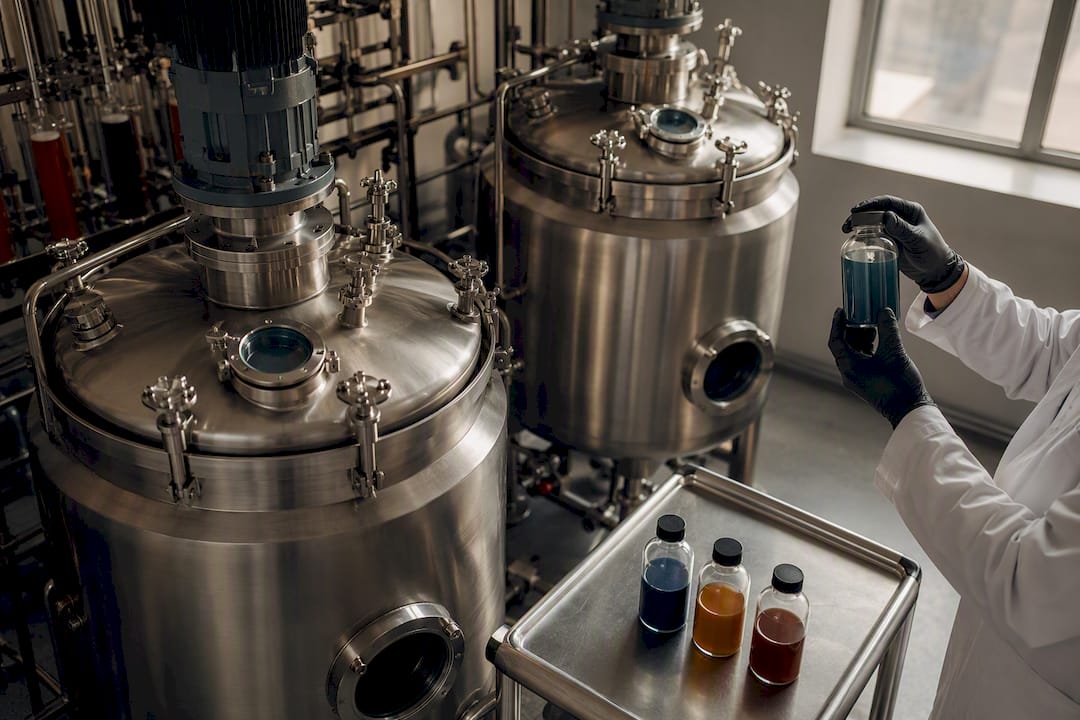
Enzymatic dyeing is the near-term practical cousin of this biotech wave. Rather than engineering an organism to produce pigment, enzymatic processes use enzymes to replace harsh conventional chemistry in specific applications. Denim finishing is the clearest example: enzyme-based indigo reduction processes are being developed specifically to avoid the toxic reductants that traditional indigo dyeing depends on, part of a broader push toward reductant-free coloration.
What’s holding wider adoption back:
An EU-funded initiative called IRIS is one of the more organized efforts pushing this forward, working on bio-indigo, microbial dyes, pigment encapsulation, and reductant-free enzymatic processes, explicitly designed to work as light equipment retrofits rather than requiring dyehouses to rebuild from scratch, according to Aalto University’s project coverage. That retrofit framing is the detail worth remembering. Biotech dyeing that only works in a purpose-built pilot facility will stay a research curiosity. Biotech dyeing designed to slot into an existing dye kettle has a real shot at commercial adoption.
Three distinct technologies dominate the waterless and low-water conversation, and they’re not interchangeable. Each fits a different fiber type and a different point in the production chain.
The deciding factor for any mill weighing these options isn’t just the environmental math. It’s whether the technology is a drop-in fit for the dyehouse they already run, or whether it demands new capital equipment and retrained staff. Industry analysis on this point is blunt: many mills reject genuinely sustainable technology outright when it requires full equipment replacement, regardless of how strong the environmental case is, because the throughput and cost math doesn’t pencil out during a transition period. Supercritical CO2 and dope-dyeing both fall on the “new equipment” side of that line. Air-based systems and certain cold-chemistry processes lean closer to retrofit territory, which is exactly why they’re gaining faster commercial traction.
A sustainable dye that washes out in a year isn’t sustainable. Fixation determines whether all the water and energy savings upstream actually translate into a product people keep using.
Mordant choice is the first fork in the road for natural and bio-based dyes. Metal salts like alum bind dye to fiber reliably but carry an extraction and disposal footprint. Biomordants such as tannin extracts and chitosan reduce that footprint and have shown real improvement in lab trials, especially when the fiber gets a physical pretreatment first.
Physical and advanced treatments are where a lot of recent research energy is going:
A review of natural dye advancements documents measurable fastness improvements from combining these physical methods with biomordants, though the exact gain depends heavily on fiber type and dye source, so results from one combination don’t automatically transfer to another.
Statistic Callout: Textile dyeing and finishing remain one of the largest sources of industrial water pollution worldwide, which is precisely why fixation quality carries environmental weight, not just aesthetic weight. A dye that has to be reapplied or a garment that gets discarded early because color failed both feed back into that same pollution burden, according to research on textile dyeing’s water impact.
Reading fastness test results matters more than most buyers realize. Wash fastness, light fastness, and rub (crocking) fastness are usually graded on a 1 to 5 scale, with 5 being best, and a ΔE value under 1.0 generally means a color shift is invisible to the naked eye, while anything above 3.0 is noticeable. If a dye method scores well on light fastness but poorly on wash fastness, it’s fine for curtains and upholstery that get exposure to sun but rarely see a washing machine. It’s a poor match for activewear.
When a dye combination underperforms on fastness testing, you’ve got three real options: add a fixative or after-treatment, change the process (different mordant, added pretreatment step), or accept that the result is suited to a niche, lower-durability use case. Pretending fastness problems don’t exist is how you end up with returned inventory and unhappy customers.
A credible life-cycle assessment states its functional unit clearly, meaning it defines exactly what’s being measured, per kilogram of fabric, per garment, per batch, and it sets system boundaries that specify whether dye synthesis, auxiliary chemical production, and downstream wastewater treatment are all included or conveniently left out. Confirming those two details first is the single fastest way to catch a misleading claim, according to guidance drawn from research on textile LCA methodology.
The most common way vendor claims mislead isn’t outright fabrication. It’s narrow scope dressed up as a full picture. A “90% water reduction” claim that only measures the dye-bath step, while ignoring fiber pretreatment or finishing, tells you something real but far less than it implies. SSbD thinking exists specifically to close that gap, insisting that chemistry and process both get evaluated together rather than cherry-picked for whichever metric looks best.
A few standards and frameworks are worth knowing by name because they show up constantly in vendor and brand claims:
Pro Tip: When a supplier hands you a sustainability claim, ask two questions before anything else: what’s the functional unit, and does the boundary include wastewater treatment? If they can’t answer clearly, treat the number as marketing, not measurement.
A short vendor-vetting checklist worth keeping on hand: confirm the LCA’s scope and functional unit, ask whether the testing was done independently or only in-house, and check whether the reported metric covers the full process or just the flashiest single step. That last question catches more inflated claims than any other.
The right sustainable dyeing move depends heavily on where you sit in the production chain. A hobbyist dyeing scarves in a kitchen has completely different constraints than a mill running 10,000 meters a day, and pretending otherwise leads to bad advice.
A basic testing checklist applies across all three tiers: run swatch tests before full production, verify safety data for any biologically produced or novel dye (cytotoxicity and allergen screening matter even for “natural” inputs), keep a small-batch run as your validation step before scaling up, and document every parameter, temperature, time, mordant ratio, water volume, so failures are diagnosable instead of mysterious.
Sourcing matters too. Pre-treated (scoured and bleached) fabric takes dye more evenly and predictably than raw fiber, which matters more for natural dyeing than synthetic dyeing since natural dyes are far more sensitive to surface residue and fiber prep.
Most natural dyeing failures trace back to three culprits: pH drift, uneven dye uptake, and inadequate substrate preparation. A dye bath that starts at the right pH but drifts as it heats will shift color mid-process, which is why checking pH before and during the bath, not just at the start, catches problems before they ruin a batch. Uneven uptake is almost always a fiber prep issue: fabric that hasn’t been fully scoured still carries oils or sizing agents that block dye penetration in patches, leaving blotchy results that look like a dyeing failure but are actually a washing failure.
A workable small-batch recipe format follows a consistent sequence regardless of the specific dye: scour and weigh the fiber dry, calculate mordant by percentage of dry fiber weight, mordant first and rinse, then prepare the dye bath separately and add pre-mordanted fiber gradually rather than dumping it in all at once, which helps prevent the blotchy unevenness that ruins so many first attempts. Full step-by-step measurements and troubleshooting for specific fibers are covered in more detail in a guide on mastering fabric dyeing techniques.
| Common problem | Likely cause | First fix to try |
|---|---|---|
| Blotchy, uneven color | Incomplete scouring or fiber prep | Rescour fabric before mordanting |
| Color fades fast in wash | Insufficient mordant or no after-treatment | Increase mordant ratio, add fixative rinse |
| Shade doesn’t match previous batch | Natural variation in plant material | Standardize plant-to-water-to-fiber ratios and log them |
| Dye won’t take on synthetic fiber | Wrong dye class for fiber type | Confirm fiber content before choosing dye type |
Fastness and finishing choices compound each other, and how a fabric is finished after dyeing can matter as much as the dye itself, a connection covered further in a piece on the role of fabric finishes in sustainable apparel.
EverDye is the clearest example right now of a drop-in retrofit advantage translating into real numbers. The company’s cold-chemistry process bonds dye to fiber at room temperature instead of the near-boiling baths conventional dyeing requires, and reported life-cycle figures put energy reduction in the dyeing stage at up to roughly 90%, with water savings around 30% for certain cellulosic fibers, according to Climate Solutions News coverage of EverDye. The reason this one is worth watching closely isn’t just the numbers. It’s that the process is explicitly designed to work with existing dyehouse equipment rather than demanding a rebuild, which is exactly the adoption barrier that sinks most sustainable dye tech before it reaches commercial scale.
Biosynthetic in-situ indigo research represents the opposite end of the maturity spectrum, further from market but more radical in its potential. The one-pot bacterial system that biosynthesizes and fixes indigoid dye in a single step has only been demonstrated at lab scale, and the leap from a controlled lab environment to industrial fermentation volumes remains unproven, though it points toward a future where the dye-bath step disappears entirely rather than just shrinking.
Colorifix works on fermentation-based dye concentrates, using engineered microorganisms to produce color that can replace conventional synthetic dye synthesis, with the resource savings tied to the fermentation process itself rather than the traditional petrochemical dye supply chain. It sits closer to commercialization than lab-stage indigo biosynthesis but still faces the same cost and consistency questions that shadow every microbial pigment approach.
What these three cases mean for adoption timelines: near-term progress looks like EverDye, retrofit-compatible chemistry with reported LCA numbers ready for mill evaluation now. Medium-term progress looks like Colorifix, promising fermentation economics still working through commercial-scale proof. Long-term potential looks like in-situ biosynthesis research, technically exciting but years from a factory floor.
The textile industry has a bad habit of chasing the most dramatic-sounding innovation instead of the one that actually gets adopted. Biosynthetic indigo produced in a bacterial one-pot reaction makes for a great headline. A cold-chemistry process that drops into an existing dye kettle is what actually reduces water and energy use this decade. Prioritize verifiable, drop-in solutions backed by a full LCA over lab demonstrations that sound impressive but haven’t solved the scale-up problem yet.
Biomordant and fastness research deserves more investment than it’s getting relative to flashier biotech headlines, because fastness is the quiet variable that determines whether a “sustainable” garment actually stays out of a landfill. A dye process only pays off environmentally if the product lasts.
None of this works without better-trained designers and buyers. Too many purchasing decisions get made on a marketing claim with no functional unit and no system boundary behind it. The people specifying fabric and color need to know how to read an LCA, not just trust the label.
— kev
Every dyeing technique in this guide, from biomordanted natural dyes to low-water synthetic processes, depends on starting with the right fiber. A dye chemistry chosen for cotton won’t behave the same way on polyester, and testing a new mordant or fastness treatment on the wrong yardage wastes time and materials you can’t get back.

The range of fiber types that dye testing requires includes natural cellulosics that take plant-based dyes well and synthetics suited for dope-dyed or low-water applications. If you’re running small-batch trials before committing to a full production order, sample swatches let you test mordant ratios and fastness on real material without buying yardage you might not need. For upholstery-weight and home-textile dye projects specifically, the home decor fabric by the yard selection covers the heavier weaves that hold dye differently than apparel fabric. Order swatches first, run your fastness tests, then scale up the order once you know the fiber and dye combination actually works.
Natural dyes come from plants, minerals, animals, and increasingly microbes, and they’re genuinely biodegradable in a way most synthetic dyes are not. Indigo from Indigofera and woad, madder root for reds, weld and turmeric for yellows, cochineal and lac for crimsons, walnut husks and pomegranate rind for browns: the palette is real, and it’s been in continuous use for thousands of years for a reason.
Extraction matters as much as the source material. Traditional hot-water extraction works but consumes significant energy and time, sometimes hours of simmering per batch. Research on natural dye processing has documented that ultrasonic and microwave-assisted extraction methods pull more colorant from the same amount of plant matter in less time, cutting both water and energy use while improving yield, according to a review of sustainable natural dyes. Enzymatic pretreatment of the fiber, before dyeing even starts, can also improve how readily the fabric takes up color, meaning less dye and fewer repeat dips are needed to hit a target shade.
The honest limitations are just as important as the appeal:
Mordants are the other half of the natural dyeing equation, and they carry their own trade-offs. Alum (potassium aluminum sulfate) is the most common metal mordant, relatively low in toxicity compared to chrome or copper mordants, but it’s still a mined mineral salt with its own extraction footprint. Iron and copper mordants can deepen or shift shades but are more environmentally persistent if they end up in wastewater untreated.
Biomordants are the more interesting development. Tannin-rich plant extracts and chitosan (derived from crustacean shells or fungal cell walls) have shown real promise in lab and small-scale trials as replacements for metallic mordants, and they perform even better when paired with physical pretreatments like ultrasound, according to research on natural dye advancements. They’re not yet a universal drop-in replacement for alum at scale, but for small-batch work, they’re worth the extra step.
Pro Tip: Keep a dye journal with exact plant weight, water volume, mordant ratio, and simmer time for every batch. Natural dye reproducibility problems are almost always a documentation problem in disguise.
So when do natural dyes make sense? Craft work, limited-run designer pieces, and products where slight color variation is part of the appeal rather than a defect are good fits. Avoid them for anything requiring tight color matching across large production runs, or for products marketed on colorfastness guarantees. A review of natural dye research frames this well: natural dyes are best understood as niche, value-added solutions until fastness and reproducibility improve, not a wholesale replacement for synthetic color.
Rit is a synthetic dye line, and while it’s widely available and easy to use at home, it isn’t marketed or independently verified as a low-impact or eco-friendly option. Households using it should treat wastewater disposal the same way they would any synthetic dye, avoiding pouring concentrated dye bath directly into open drains where possible.
Natural plant-based dyes like indigo, madder, and weld, along with emerging biosynthetic and microbial pigments, are the main eco-friendly categories, each with different fastness and scale trade-offs covered earlier in this guide. Fixation method matters as much as dye source, since even a low-impact dye needs a non-toxic mordant to actually perform well.
Plant sources like onion skins, avocado pits, black beans, and turmeric can produce usable natural color at home, though shade consistency varies significantly by batch. Pairing any of these with a biomordant such as tannin extract or chitosan generally improves fastness over using the plant material alone.
Natural fibers, cotton, linen, silk, wool, and hemp, take natural dye far better than synthetics because their fiber structure bonds more readily with plant-based colorants. Synthetic fibers like polyester generally resist natural dyes almost entirely, which is why dope-dyeing or disperse-dye methods exist specifically for that fiber category.