

 Canadian Dollars

4HS–8HS Satin: Pick Harness Count, Fiber, and Stitches for Sewists
Posted by BLG on 2026 Sep 18th
Posted by BLG on 2026 Sep 18th

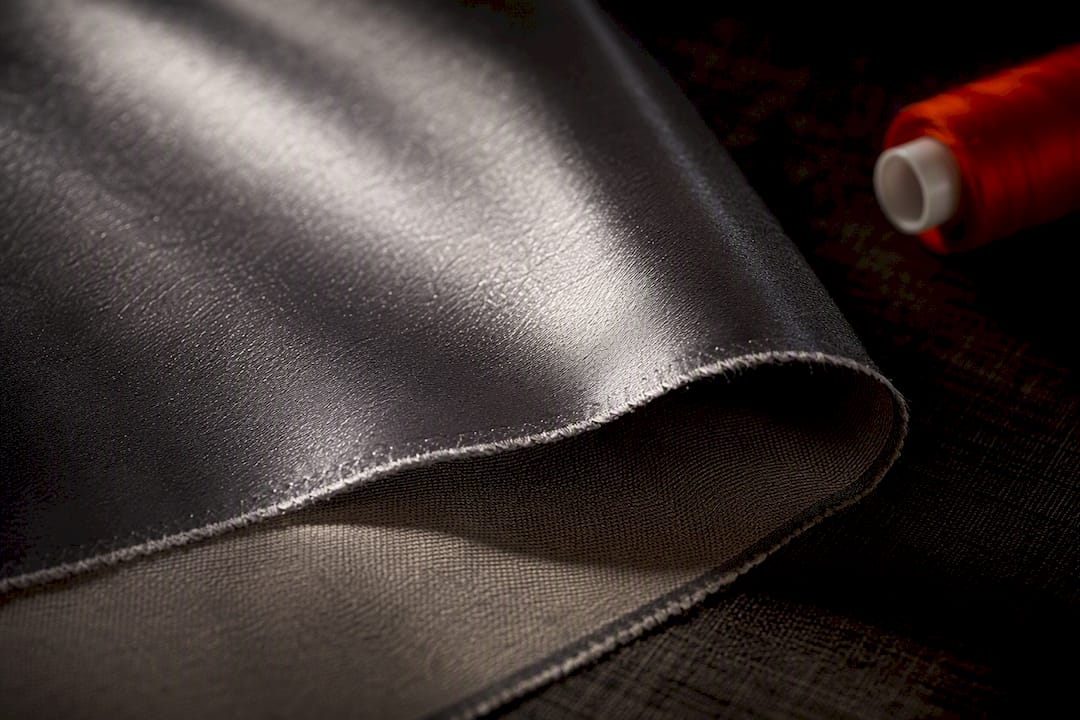
Satin is a weave structure, not a fiber, built so long threads “float” over the surface and bounce light back at you, which is why the fabric reads as glossy on one side and flat on the back. That sheen comes at a price: fewer interlacing points mean a looser, more fragile structure. Choose satin when a project needs drape and shine under lights or cameras; skip it for anything that gets washed weekly or rubbed hard, where a sturdier weave like sateen or twill holds up better.
TL;DR:
- Satin with a higher harness count, such as 8HS, provides a deeper sheen but also increases snagging and seam slippage risks.
- Silk satin offers the highest luster and drape but requires careful handling and is generally more fragile than polyester or cotton sateen.
- Long floats in satin, especially in warp direction, create a glossy appearance but make the fabric more prone to snagging and less durable over time.
- For daily-wash garments like sheets or children’s clothing, cotton sateen or polyester satin are more practical options than true silk satin.
- Testing fiber content, weight, and drape with swatches before purchasing is essential to avoid costly mistakes and ensure the fabric suits the project’s wear and care requirements.
A “float” is the length of yarn that skips over multiple threads before diving back under one. In a plain weave, yarns interlace constantly, over one, under one, which scatters light and produces a matte, textured surface. Satin does the opposite: the weave lets a yarn glide over four, five, or more threads before it catches, so long, unbroken stretches of yarn lie flat on the surface and reflect light almost like a mirror. That is the entire mechanism behind the glossy face and dull back that defines the fabric, and it is one of the three foundational weave structures in textile production, alongside plain weave and twill.
There’s a naming distinction worth locking in early. When those long floats run in the warp direction (the threads strung lengthwise on the loom), you get true satin. When the float runs in the weft (the threads woven crosswise), the fabric is technically sateen, even though it shares the identical weave logic. A charmeuse evening gown and a jacket lining both lean on warp floats for that liquid drape. Cotton bedsheets almost always use the weft version because sateen built from spun cotton yarn shrugs off machine washing in ways filament satin never will.
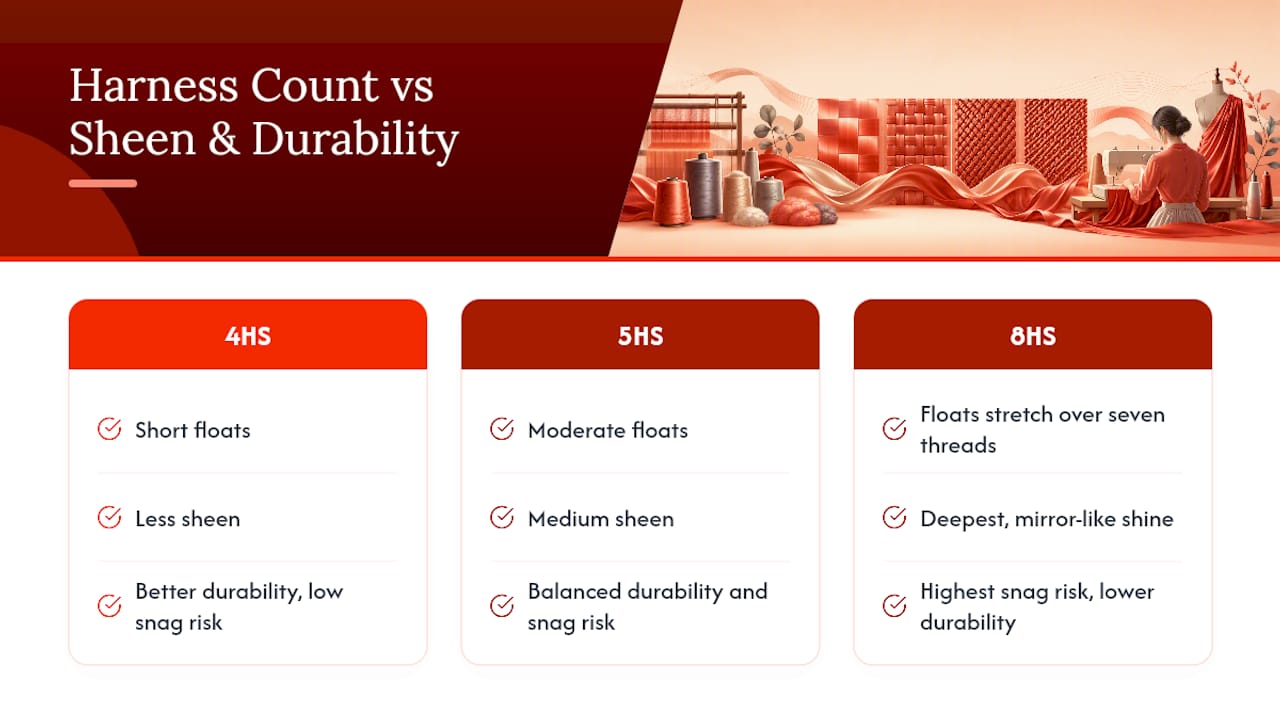
Satin weaves get classified by harness count, which is really just a way of describing how many threads a float skips before it interlaces again. A 4-harness satin (4HS) has shorter floats, less sheen, and better durability. An 8-harness satin (8HS) has floats stretching over seven threads before catching, producing the deepest, most mirror-like shine and the highest snag risk. 5-harness sits in between and shows up constantly in mid-weight apparel satin.
Fiber matters just as much as harness count. Silk gives the deepest natural luster and the best drape, but it costs more and demands careful handling. Polyester, often sold as “polysatin,” delivers a similar look for far less money and tolerates machine washing, which is why polyester dominates mainstream satin production while silk stays in the premium tier. Nylon adds strength and a slightly cooler hand, useful for linings. Cotton, woven this way, becomes sateen rather than true satin, trading some shine for everyday practicality.
For a couture gown under photography lights, 8HS silk earns its cost. For a lined jacket or a costume piece on a budget, mid-harness polyester does the job without the dry-cleaning bill.
Not all satin behaves the same way once it is off the bolt, and the differences come down to weight, harness count, and finishing. Charmeuse, duchess, and crepe-back satins vary in weight and hand enough that picking the wrong one can sink an otherwise good pattern.
Matching the type to the garment upfront saves a lot of unpicked seams later.
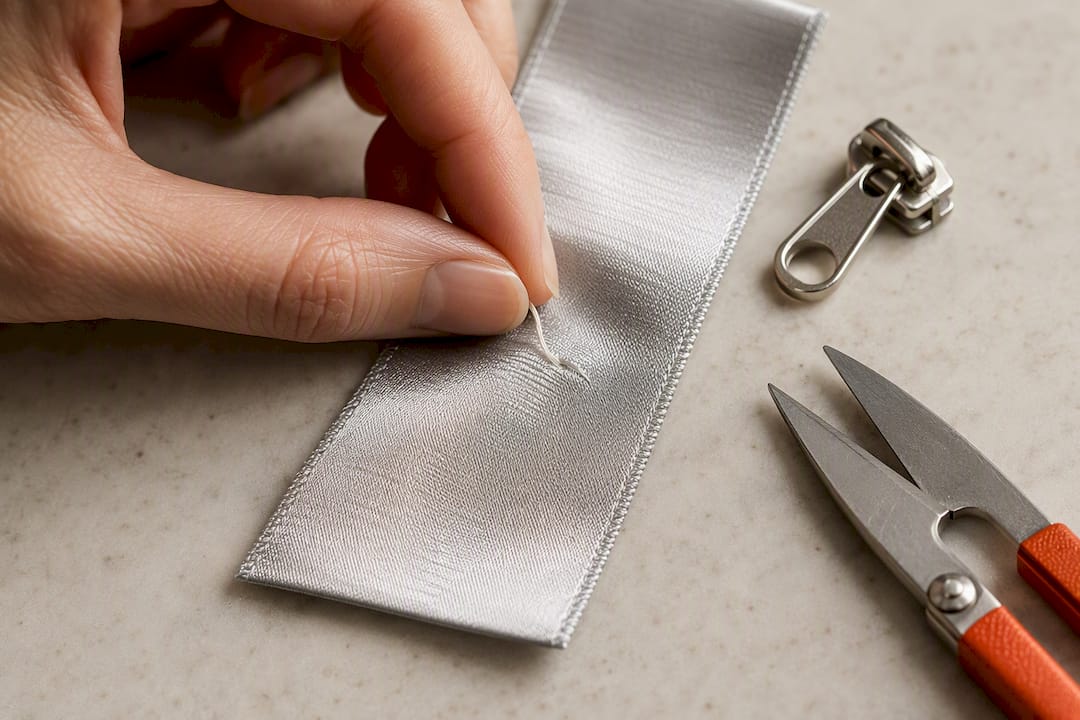
Longer floats mean more shine, but they also mean more exposed yarn sitting loosely on the surface, and that surface is what snags on rings, zippers, and rough furniture. The same structure that gives satin its signature luster also explains why it’s fragile: gloss and durability move in opposite directions on the same fabric.
Seam slippage is the other headache. Because floats interlace so infrequently, the weave has fewer anchor points holding yarns in place along a seam line, so stress can pull threads apart at the stitch line over time. Production sewers counter this with smaller needles, tighter stitch density, and seam finishes that enclose the raw edge rather than leaving it exposed.
Pressing satin is its own minefield. Water spots and iron marks show up permanently on some fibers, so a pressing cloth and low heat setting are non-negotiable. Laundering depends entirely on fiber: silk satin usually needs dry cleaning, while polyester and cotton sateen tolerate a gentle machine cycle. If a project involves anything worn daily and washed often, like everyday bedding or children’s clothing, cotton sateen typically performs better than true satin, offering a soft sheen that survives repeated laundering.
Bridal and evening wear lean on duchess and bridal satin because the weight holds a silhouette and the sheen photographs beautifully under flash and stage lighting. Lingerie and slips go the opposite direction, favoring charmeuse for its drape and skin-friendly hand.
Bedding splits along fiber lines. Decorative bedding, throw pillows, and accent pieces can carry true satin for the visual impact. Daily-use sheets are better off in cotton sateen, which launders easier and breathes better against skin overnight.
Upholstery and accessories occupy a middle ground. Satin ribbon, sashes, and decorative cushions use the fabric purely for visual effect, not wear resistance, while satin-look upholstery fabric usually blends fibers or backs the material to survive years on a sofa.
Cutting satin single-layer with sharp shears or a rotary cutter prevents the slippery surface from shifting mid-cut. Because floats catch light differently depending on direction, cut every pattern piece the same way to avoid visible light and dark patches across the finished garment.
For sewing, drop to a smaller needle (60/8 or 70/10 for lightweight satin), shorten the stitch length, and consider French seams or a narrow zigzag to keep raw edges from slipping apart. Reinforced staystitching and narrower seam allowances reduce yarn movement at stress points, particularly around necklines and armholes where satin gets pulled the most.
Pro Tip: Before cutting into yardage, run the fingernail test on a swatch: slide a nail under a single surface yarn. If it lifts easily and visibly, that float will snag the first time it meets a zipper pull or a ring.
Pressing calls for a low heat setting and a pressing cloth every time, since satin marks permanently under direct iron contact. For care, dry-clean silk satin, machine-wash polyester and cotton sateen on a gentle cycle, and always order a swatch before committing to bulk yardage so you can test drape, sheen, and hand against your actual pattern.
Satin’s story starts in medieval China, in the port city of Quanzhou, historically known as Zaitun. The fabric’s name traces back to that port’s name, carried through Arabic and later European trade routes as merchants exported silk woven in this glossy, floating structure to markets across Asia and eventually Europe.
For centuries, satin meant silk. The Silk Road carried both the fiber and the weaving technique westward, and by the medieval and Renaissance periods, European weaving centers in Italy and France had adopted the structure, producing silk satin for royal courts and wealthy merchants who wanted fabric that visibly announced status. The sheen alone marked it as a luxury textile, since achieving that kind of light reflection required skilled hand-loom weaving and expensive raw silk.
The Industrial Revolution changed who could wear satin. Mechanized looms made the weave faster and cheaper to produce, and the later development of synthetic fibers, particularly polyester in the 20th century, broke silk’s monopoly on the structure entirely. Suddenly a weave once reserved for aristocracy could be produced at scale for department stores and home sewers. That shift explains the current market split: silk satin still occupies the premium tier tied to its historical roots, while polyester satin fills the volume market that didn’t exist before synthetic fibers arrived.
Here’s where a lot of confusion creeps in, because these terms get used almost interchangeably in fabric shops and pattern instructions, but they describe different layers of the same thing.
Satin is the weave structure itself, the technical term for how the threads interlace. Silk satin specifies the fiber content: satin weave built from silk filament yarn. Charmeuse describes weight and finish within the satin family, specifically a lightweight, closely woven satin with exceptional drape, and it can be made from silk, polyester, or a blend.
So silk satin and silk charmeuse often overlap in casual use, but a true distinction exists: not all silk satin is light enough to qualify as charmeuse, and duchess satin (frequently made from silk or silk blends) sits at the opposite weight extreme from charmeuse despite sharing the same weave and sometimes the same fiber.
| Term | What it describes | Typical weight |
|---|---|---|
| Satin | The weave structure (floats, glossy face) | Varies widely |
| Silk satin | Satin weave using silk filament yarn | Light to medium |
| Charmeuse | Lightweight, drapey satin finish | Light |
| Duchess satin | Heavy, structured satin | Heavy |
The practical takeaway for shopping: don’t rely on the word “satin” alone to predict how a fabric will behave on the body. Ask about weight and fiber content, since those two details tell you far more than the weave name does about how a garment will fall.
Fiber choice drives most of satin’s environmental footprint. Silk production is labor-intensive and depends on sericulture, the farming of silkworms, which raises both resource questions (silkworms need mulberry leaves and controlled conditions) and ethical debates, since conventional silk harvesting kills the pupae inside the cocoon. Alternatives like peace silk, which allows the moth to emerge before the cocoon is processed, exist but remain a small niche within the broader silk market.
Polyester satin carries a different set of concerns. It is petroleum-based, so production ties directly to fossil fuel extraction, and the fabric does not biodegrade, meaning garments and home textiles made from it persist in landfills for a long time after disposal. Washing polyester satin also sheds microplastic fibers into wastewater, an issue that’s drawn increasing attention across the synthetic textile industry generally.
Cotton sateen sits somewhere in the middle. Conventional cotton farming uses significant water and pesticide inputs, but organic and better-cotton certification programs have expanded access to lower-impact cotton over the past decade, and the fiber itself biodegrades far faster than polyester once a garment reaches end of life.
For designers and small production runs, the practical move is asking suppliers directly about fiber origin and certification rather than assuming any single fiber is automatically the “ethical” choice. Silk, polyester, and cotton each carry trade-offs, and the right answer depends on the project’s durability needs, budget, and how much weight a buyer puts on end-of-life impact versus manufacturing impact.
The weave test comes first: hold the fabric up to a light source and look at how it catches the light across the surface. Genuine satin, regardless of fiber, shows long, smooth, unbroken floats that shift shine as you move the fabric. Cheap satin-look knits or bonded fabrics often show a more uniform, flat shine with visible ribbing or knit loops on close inspection, a giveaway that the shine comes from a coating or finish rather than the weave itself.
Fiber content labels matter more than the word “satin” printed on a bolt tag. A fabric marketed as satin but not specifying fiber content is worth a second look, since some manufacturers use “satin” loosely to describe any glossy synthetic material rather than a true satin weave. Ask for the fiber content explicitly, or check the selvage, where mills often print fiber and weave information.
The burn test offers a rougher but useful confirmation for raw swatches. Silk burns slowly, curls away from the flame, and smells faintly like burning hair, leaving a fine, crushable ash. Polyester melts rather than burns cleanly, forms a hard bead, and gives off a chemical smell. This test destroys the swatch, so save it for scrap corners, not the yardage you plan to cut.
The hand feel test rounds it out. Real silk satin feels cool against the skin and warms quickly to body temperature, while polyester tends to feel warmer immediately and stays that way. None of these tests alone is definitive, but running two or three together, light reflection, fiber label, and hand feel, gets you a reliable read before you commit to a full bolt.
Choose satin when sheen and drape matter more than daily wear, think eveningwear, bridal pieces, or lining. Skip it for anything washed often or rubbed hard, where sateen or a tighter weave holds up better. Before ordering yardage, check three things: the fiber content label, the harness count or weight if listed, and how a sample swatch drapes and snags in your hand.
Fabric-fabric organizes satin by intended use instead of making you dig through a single undifferentiated bolt list, which matters once you know that a charmeuse slip and a duchess ball gown need completely different fabric. Browse charmeuse satin for lightweight, drapey projects, bridal satin and peau de soie for structured gowns, and the broader bridal fabrics category if you’re still comparing weights and finishes.
If your satin plans lean toward cushions, drapery, or decorative accents rather than garments, the upholstery fabrics category covers heavier satin-look options built for that kind of use. And if you’re producing multiple garments or outfitting a bridal party, bulk pricing brings the per-yard cost down as your order grows.
Before committing to full yardage, ordering a swatch is recommended to check weight, fiber content, and how a specific fabric drapes and catches light in person rather than relying solely on images. Detailed product listings often include fiber content and usage suggestions to help with selection.
No. Satin is a weave structure, while silk is a fiber. Silk satin is one specific combination, but satin also comes in polyester, nylon, and cotton (which technically becomes sateen when woven with spun yarn).
Satin uses warp floats and typically filament yarns like silk or polyester, producing a higher sheen but more fragility. Sateen uses weft floats and spun cotton yarn, giving it better durability and machine washability, which is why it dominates bedding.
Satin’s long floats sit loosely on the fabric surface with fewer interlacing points holding them down, so rings, zippers, and rough edges catch and pull those exposed yarns. Higher harness counts like 8HS increase this risk further because the floats run even longer.
It depends entirely on fiber. Polyester and cotton sateen generally tolerate a gentle machine cycle, while silk satin usually needs dry cleaning to avoid water spotting and fiber damage.
Yes. Fabric-fabric carries bridal satin and peau de soie along with lighter charmeuse options, and current pricing is listed directly on each product page.
Most guides treat satin like a single fabric with a single personality, glamorous, delicate, done. That framing misses the actual decision designers face, which isn’t “should I use satin” but “which harness count and fiber combination does this specific garment need.” An 8HS silk duchess and a 4HS polyester lining both qualify as satin, and treating them as interchangeable is how projects go wrong.
The bigger blind spot is seam slippage, not snagging. Snag risk gets all the attention because it’s visible and dramatic, but seam slippage is the quieter failure that shows up weeks after a garment ships, when a bodice seam starts separating under normal wear. Smaller needles and tighter stitch density aren’t optional extras for satin production, they’re the difference between a garment that survives a wedding day and one that doesn’t.
If there’s one habit worth adopting from this whole guide, it’s ordering swatches before committing to yardage. Photos and product descriptions can’t tell you how a specific bolt drapes on a dress form or how visible a seam pull might be. A five-dollar swatch is cheap insurance against a costly cutting mistake.
— kev