

 US Dollar

Complete Guide to the Role of Fabric Weights
Posted by BLG on 2025 Oct 20th
Posted by BLG on 2025 Oct 20th


Did you know a typical T-shirt fabric weighs about 150 grams per square metre, setting the standard for breathability and comfort? Whether you sew, design, or simply want clothing that feels right, fabric weight shapes how textiles look and perform. Knowing how to read these numbers means making smarter choices for everything from breezy summer tops to rugged workwear, so your projects come out just right.
| Point | Details |
|---|---|
| Understanding Fabric Weight | Fabric weight influences project outcomes, dictating suitability for different applications in textiles. |
| Categories and Applications | Fabrics are classified into lightweight, medium, and heavyweight categories, each suited for specific styles and uses. |
| Measuring Fabric Weight | Accurate measurement is essential; fabric weight can be expressed in GSM or ounces per square yard for proper selection. |
| Common Mistakes | Avoid errors like ignoring seasonal appropriateness and unit conversion discrepancies to ensure effective fabric choice. |
Understanding fabric weight is crucial for anyone working with textiles, whether you’re crafting a delicate summer dress or selecting upholstery for a robust armchair. According to research from textile measurement experts, fabric weight represents the mass per unit area, typically expressed in grams per square metre (GSM) or ounces per square yard.
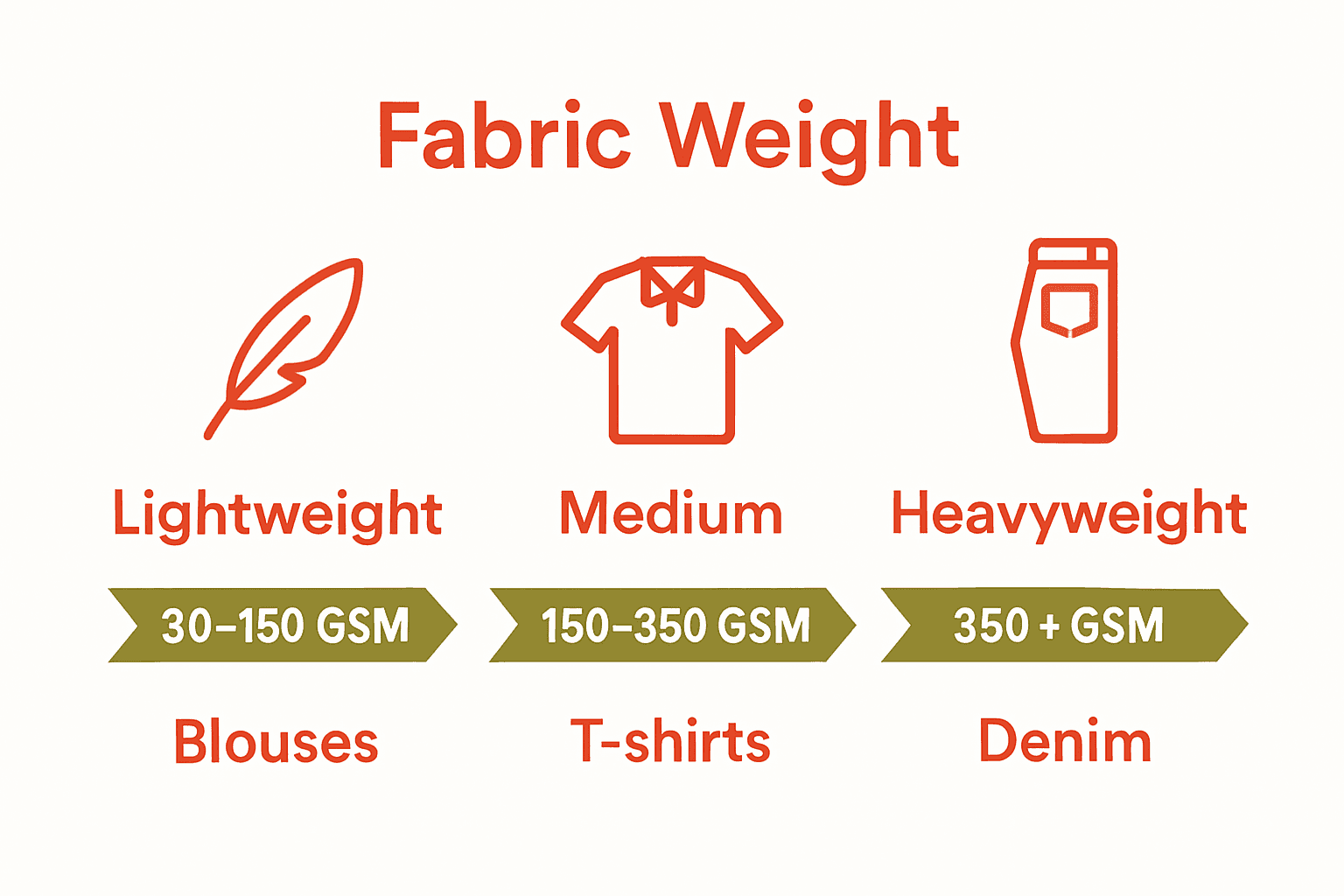
Fabric weights generally fall into three primary categories that help creators choose the right material for their specific project:
As textile experts explain, the weight directly correlates with thread thickness, material composition, and intended use. A typical T-shirt fabric hovers around 150 g/m², providing a comfortable balance between breathability and durability. By understanding these weight classifications, crafters and designers can make informed decisions about fabric selection, ensuring their projects meet both aesthetic and functional requirements.
Fabric weights aren’t just numbers—they’re critical indicators of a textile’s potential and performance. According to research from fabric classification experts, fabric weights span multiple categories that determine their ideal applications across fashion, home decor, and industrial uses.
Let’s break down the primary fabric weight categories and their typical applications:
Here’s a summary of fabric weight categories and their common applications:
| Fabric Weight Category | GSM Range | Typical Uses |
|---|---|---|
| Ultra-Light | 34–102 | Voile Gauze Sheer scarves Summer tops |
| Light | 102–170 | Poplin Broadcloth Blouses Dress shirts |
| Medium | 170–271 | Twill Medium canvas Casual shirts Light jackets |
| Heavy | 271–407 | Denim Duck cloth Winter coats Workwear |
| Extra Heavy | 407+ | Upholstery Outdoor gear Heavy jackets |
Ultra-Light Fabrics (1–3 oz or 34–102 gsm):
Light Fabrics (3–5 oz or 102–170 gsm):
Medium Weight Fabrics (5–8 oz or 170–271 gsm):
Heavy Fabrics (8–12 oz or 271–407 gsm):
As textile researchers from Kairos Riverside explain, understanding these weight classifications helps designers and crafters select the perfect material for their specific project requirements. The weight isn’t just about thickness—it influences drape, durability, and overall performance of the fabric.

Fabric weight is far more than a simple measurement—it’s a critical design parameter that can make or break your textile project. According to textile research, the weight of a fabric dramatically influences its performance, aesthetic qualities, and functional characteristics across different applications.
Let’s explore how fabric weight transforms project outcomes:
Lightweight Fabrics (100-180 gsm):
Medium Weight Fabrics (180-270 gsm):
Heavyweight Fabrics (270+ gsm):
Research from Lee Linework indicates that fabric weight fundamentally determines a textile’s texture, feel, and application fit. Heavier fabrics inherently cost more due to increased fiber content and typically create greater volume and insulation.
By understanding these weight characteristics, designers and crafters can strategically select materials that precisely match their project’s functional and aesthetic requirements.
Fabric weight measurement is a precise science that helps creators select the perfect textile for their specific project needs. According to research from textile experts, fabric weight can be determined by carefully weighing a known area of material and expressing its mass per square metre or square yard.
Here’s a practical guide to understanding fabric weight conversions and selection:
Lightweight Fabrics (3–5 oz/yd² or 100–180 gsm):
Medium Weight Fabrics (6–8 oz/yd² or 180–270 gsm):
Heavyweight Fabrics (9+ oz/yd² or 270+ gsm):
As researchers from Quality Logo Products explain, choosing the right fabric weight involves matching the material’s characteristics with your project’s specific requirements. Whether you need a lightweight, breathable fabric for a summer dress or a robust material for outdoor gear, understanding these weight classifications will help you make an informed decision.
Navigating the world of fabric weight can be tricky, with numerous potential pitfalls that can derail even the most carefully planned textile project. Research from industry experts highlights several critical mistakes that can compromise your design’s quality and functionality.
Here are the most common errors to avoid:
Ignoring Seasonal Considerations:
Unit Conversion Errors:
Always Test Fabric Swatches:
Consider Fiber and Weave Variations:
According to research from Kairos Riverside, global fabric sourcing introduces additional complexity. Subtle differences in manufacturing and measurement standards can lead to unexpected results. Pro tip: Always request detailed fabric specifications and, when possible, physical samples before committing to a large order.
Are you struggling to pick the right fabric weight for your next project? The article highlighted how easily confusing fabric weight can lead to wasted time, mismatched results, or discomfort. Whether you are worried about choosing a fabric that is too heavy for summer apparel or too light for durable upholstery, we know every ounce matters for your success. Many readers want clear guidance, reliable choices, and peace of mind that their textile will fit their specific needs.
Experience the confidence of finding your ideal fabric at fabric-fabric.com. Our detailed product descriptions clearly outline GSM, intended uses, and expert suggestions. Shop by fabric type, intended project, or feature and discover options like luxurious velvet, breezy seersucker, or versatile satin with one easy search. Make your next fabric purchase simple, accurate, and personalized by exploring our full fabric range at fabric-fabric.com today. Secure your materials now while seasonal discounts and free shipping are still available.
Fabric weights generally fall into three primary categories: Lightweight (under 150 GSM), Medium Weight (150-350 GSM), and Heavyweight (above 350 GSM). Each category is suited for specific uses, from summer clothing to winter gear.
Lighter fabrics provide exceptional softness and breathability, creating flowing silhouettes. Medium-weight fabrics offer a balance of strength and flexibility, making them versatile for everyday wear, while heavyweight fabrics deliver maximum durability and structure, ideal for outerwear and heavy garments.
Fabric weight can be measured by weighing a known area of material and expressing its mass in grams per square meter (GSM) or ounces per square yard (oz/yd²). Ensure to use precise measurements for accurate results.
Common mistakes include ignoring seasonal considerations (e.g., using heavyweight fabrics for summer), making unit conversion errors between GSM and oz/yd², and not testing fabric swatches for drape before production. Always verify fabric specifications before making a large order.