

 US Dollar

Rayon Fabric Guide for Crafters and Sewers
Posted by BLG on 2026 Jun 29th
Posted by BLG on 2026 Jun 29th

TL;DR:
- Rayon is a semi-synthetic fiber made from plant cellulose that performs well in apparel and textiles but requires careful handling.
- Choosing the right type, such as Modal or Lyocell, ensures durability and sustainability for washing and design purposes.
Rayon is a semi-synthetic fiber made from regenerated plant cellulose that bridges the gap between natural and man-made textiles. It starts as wood pulp from sources like bamboo, beech, or eucalyptus, then undergoes chemical processing to produce a soft, drapeable fiber. The Federal Trade Commission classifies it as a manufactured fiber, not a natural one, because of that chemical transformation. Rayon accounts for about 80% of all man-made cellulosic fibers produced worldwide. That dominance reflects how well it performs across apparel, home textiles, and craft projects.
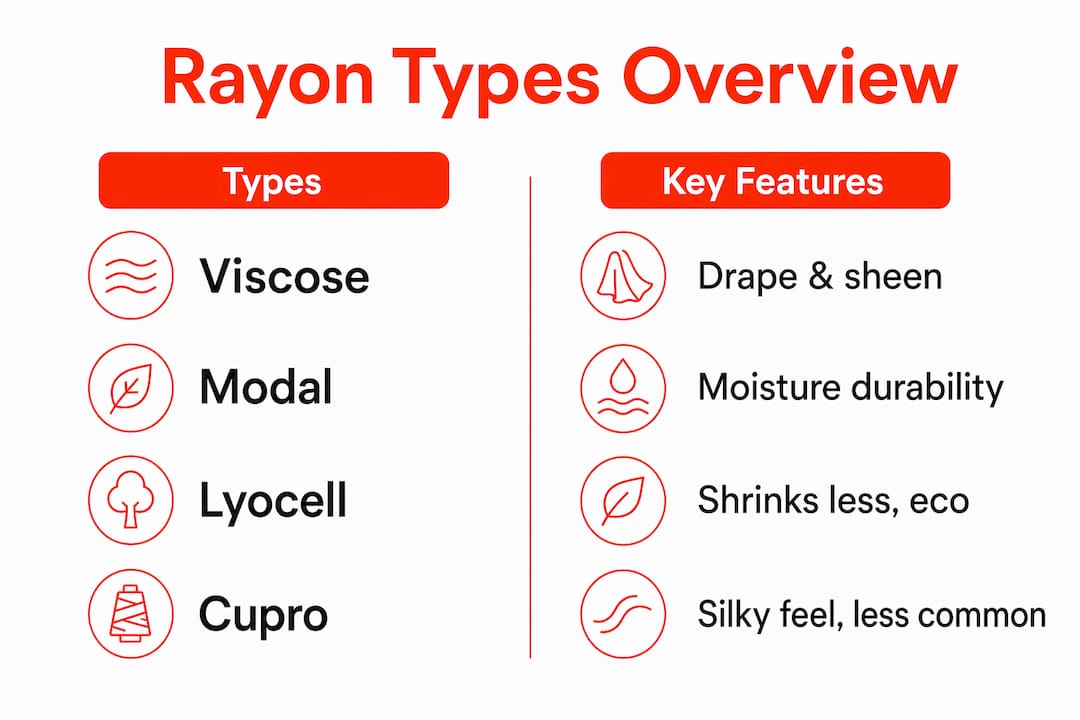
Rayon is not a single fabric. It exists in four distinct forms, each with different performance characteristics that matter a great deal when you are choosing material for a specific project.
Viscose is the original and most widely produced form. It drapes beautifully and has a silky sheen, but it is the least stable of the group. Viscose shrinks 8–12% when washed improperly. That level of shrinkage can ruin a finished garment if you skip pre-washing.
Modal is a second-generation improvement on viscose. It handles moisture better, holds its shape longer, and shrinks only 3–5%. Modal works well for fitted garments like activewear or underwear where dimensional stability matters.
Lyocell (often sold under the brand name Tencel) is the third generation and the most technically advanced. It shrinks just 1–3% and is produced in a closed-loop process that recycles most of its chemical solvent. If sustainability is a priority for your project, lyocell is the strongest choice among rayon types. Fabric-fabric carries a range of options that includes lyocell for exactly this reason.
Cupro is less common but worth knowing. It is made from cotton linter waste and shrinks 2–4%. It has a fluid, silk-like drape that makes it a favorite for linings and luxury blouses.
| Rayon type | Shrinkage rate | Best use |
|---|---|---|
| Viscose | 8–12% | Dresses, blouses, draperies |
| Modal | 3–5% | Activewear, fitted garments |
| Lyocell | 1–3% | Sustainable apparel, structured pieces |
| Cupro | 2–4% | Linings, luxury blouses |
Pro Tip: Choose Modal or Lyocell for any project that requires repeated washing. Reserve Viscose for decorative or low-wash items where its superior drape outweighs the shrinkage risk.
Understanding rayon generations helps you match the right fiber to the right project. Each generation improves on the last in durability, moisture management, and environmental impact.
Rayon delivers a combination of properties that few other fibers can match at its price point. Those properties make it a go-to choice for fashion designers and crafters alike.
The most notable benefit is its drape. Rayon falls in soft, fluid folds that mimic silk without the silk price tag. That quality makes it ideal for flowy dresses, wrap tops, and any garment where movement is part of the design.
Breathability is the second major advantage. Rayon is about 50% more moisture-wicking than cotton. That makes it one of the best choices for warm-weather clothing and summer garments where comfort depends on how well the fabric moves sweat away from the skin.
Here is a quick summary of rayon’s core properties:
One property that surprises many crafters is rayon’s weakness when wet. Rayon loses up to 50% of its tensile strength when saturated with water. That is not a flaw to avoid the fabric over. It is a characteristic to plan around with the right washing technique.
Though rayon originates from plant cellulose, its heavy chemical processing means it does not behave like cotton or linen. It is more sensitive to heat, agitation, and moisture. Knowing that distinction upfront prevents most of the damage crafters accidentally cause.
Rayon’s combination of drape, breathability, and visual appeal makes it one of the most versatile fabrics in a crafter’s toolkit. Its uses span everyday apparel to specialty textile art.
In fashion design, rayon appears most often in:
Beyond clothing, rayon performs well in home textiles. Designers use it for draperies, bedding, and decorative pillows where a soft sheen and smooth texture add visual richness. Costume designers favor it heavily because it photographs well under stage lighting and accepts dye in vivid, saturated colors.
Crafters working in textile art use rayon thread and fabric for embroidery, quilting accents, and mixed-media projects. The fiber’s smooth surface catches light differently than cotton, adding dimension to finished pieces. For viscose fabric projects, the high sheen of standard viscose rayon creates a luxurious effect that elevates even simple designs.
Rayon also works well in tropical and warm-climate wardrobes. Its moisture-wicking performance means garments stay comfortable through heat and humidity, which is why resort wear collections rely on it so heavily.
Rayon clothing care is the area where most crafters and sewers make costly mistakes. The fiber’s wet-strength loss demands a specific approach every time you wash it.
Follow these steps to wash rayon safely:
Pro Tip: Pre-wash your rayon fabric before cutting or sewing. Shrinkage ranges from 5–12% depending on the type, and pre-washing locks in the final dimensions before you cut your pattern pieces.
Humidity adds another layer of complexity. In humid climates, air drying alone often traps moisture in the fibers, which leads to warping and musty odors. Flat drying with a fan and a dehumidifier running nearby solves this problem. Silica gel packets stored with finished garments also help control ambient moisture during storage.
For wrinkle removal, steaming is safer than ironing. Hold the steamer a few inches from the fabric surface rather than pressing directly onto it. If you must iron, use the lowest heat setting with a pressing cloth between the iron and the fabric. Direct high heat scorches rayon quickly and the damage is permanent.
Repair small tears immediately. Rayon has low elasticity, so a small snag or tear spreads fast under tension. Hand-stitching minor damage promptly prevents a minor flaw from becoming a ruined garment.
Rayon is a semi-synthetic fiber that demands careful handling but rewards crafters with unmatched drape, breathability, and visual appeal across apparel and home textile projects.
| Point | Details |
|---|---|
| Choose the right rayon type | Match viscose for drape, Modal for durability, and Lyocell for sustainability based on your project needs. |
| Pre-wash before cutting | Rayon shrinks 5–12% depending on type, so always pre-wash fabric before cutting pattern pieces. |
| Wash gently and cold | Use a mesh bag, gentle cycle, cold water, and spin speed at or below 600 RPM to protect wet rayon. |
| Air dry flat, never tumble dry | Lay rayon flat to dry and use a fan or dehumidifier in humid conditions to prevent warping. |
| Steam rather than iron | Hold a steamer a few inches from the surface to remove wrinkles without scorching the fiber. |
I have worked with rayon in dozens of projects, and the single biggest mistake I see crafters make is treating it like cotton. They toss it in a regular wash cycle, pull it out of the dryer, and wonder why the garment is two sizes smaller and misshapen. Rayon punishes that kind of casual handling fast.
What I have come to appreciate is that rayon’s fragility is actually a signal of its quality. The same fiber structure that makes it so soft and drapeable is what makes it sensitive to heat and water. Once you accept that and build the right habits around it, the fabric becomes one of the most rewarding to work with.
My personal rule is to always pre-wash twice before cutting. The first wash removes the bulk of the shrinkage. The second confirms the fabric has stabilized. It adds time to a project, but it eliminates the heartbreak of a finished dress that no longer fits.
On the environmental side, rayon sits in a complicated middle ground. It starts from renewable plant sources, which sounds good. But the chemical processing involved in standard viscose production is resource intensive. If that matters to you, Lyocell is the clear answer. Its closed-loop manufacturing recovers most of the solvent used, making it genuinely more responsible than first-generation viscose. I reach for Lyocell whenever a project allows it, and the performance difference in durability and wash stability makes it an easy choice to defend.
— kev
Fabric-fabric stocks a wide selection of fabrics suited to the kinds of projects rayon excels at, from flowing apparel to home decor and creative craft work.
Whether you are sourcing material for a summer dress, a set of draperies, or a textile art piece, the quilting and craft fabrics at Fabric-fabric offer quality options across fiber types and weights. The home decor fabric collection is particularly well suited for anyone working on draperies, bedding, or decorative pillows where rayon’s sheen and drape shine. Browse the full range to find the right weight and weave for your next project.
Rayon is made from regenerated cellulose derived from plant sources like wood pulp, bamboo, beech, or eucalyptus. The cellulose is chemically processed into a fiber, making rayon semi-synthetic rather than fully natural.
Standard viscose rayon uses a chemical-intensive process that raises environmental concerns. Lyocell, a third-generation rayon, uses a closed-loop solvent process and is considered the most sustainable option among rayon types.
Wash rayon in cold water on a gentle cycle inside a mesh bag, keeping spin speed at or below 600 RPM. Always air dry flat and never use a tumble dryer, as heat and agitation cause irreversible shrinkage.
Rayon is about 50% more moisture-wicking than cotton and drapes more fluidly. Cotton is more durable when wet and easier to care for, while rayon requires gentler handling to maintain its shape and texture.
Pre-washing rayon before cutting is non-negotiable. Depending on the type, rayon shrinks 5–12% in the first wash, which can distort finished garments if the fabric has not been pre-shrunk before cutting pattern pieces.