

 Canadian Dollars

How to Select Sustainable Fabrics for Every Project
Posted by BLG on 2025 Oct 20th
Posted by BLG on 2025 Oct 20th


Sustainable fabrics are exploding in popularity as the market in North America is expected to nearly triple, reaching $29.8 billion by 2035. For designers and creators, this massive shift brings real choices and practical challenges. Picking eco-friendly materials is more than a trend, it protects the planet and supports ethical production. Whether you sew, upholster, or design, knowing how to select the right sustainable fabric will shape the quality and impact of your next project.
| Key Point | Explanation |
|---|---|
| 1. Clearly define fabric needs | Understanding your project’s specific requirements is crucial for selecting the right sustainable fabric. |
| 2. Research sustainable fabric categories | Explore different types of eco-friendly materials like organic, recycled, and natural to match your project goals. |
| 3. Understand certification importance | Familiarize yourself with certifications to ensure the fabrics meet safety and sustainability standards. |
| 4. Prioritize sourcing transparency | Assess the environmental impact and ethical practices of fabric sources to support responsible manufacturing. |
| 5. Verify through samples and documentation | Physically examining fabric samples and requesting detailed reports solidifies your sustainability claims. |
Choosing the right sustainable fabric starts with crystal clear understanding of your specific project requirements. According to market research from Market Research Future, the North America sustainable fabrics market is projected to grow from USD 9.17 billion in 2024 to USD 29.8 billion by 2035—which means knowing exactly what you need matters more than ever.
Start by asking yourself some key questions about your project. What will this fabric actually do? Are you creating clothing that needs stretch and durability? Designing home decor that requires stain resistance? Crafting something that must withstand frequent washing? Each potential use demands different fabric characteristics.
Consider these critical factors when defining your fabric needs:
Research from trend forecasts suggests segmented demand across different sustainable fabric categories—organic, regenerated, recycled, and natural. This means you will want to match your specific functional needs with the right fabric type. A lightweight organic cotton works differently than a recycled polyester blend, so precision matters.
Pro Tip: Always order fabric swatches before committing to a large purchase. Touching and seeing the material firsthand prevents expensive mistakes.

Once you have a clear picture of your project requirements, you are ready to explore specific sustainable fabric options that align perfectly with your goals. The next step will help you navigate the exciting world of eco friendly textiles with confidence.
Now that you understand your project needs, it is time to explore the world of sustainable fabric materials. According to Market Research Future, the North America sustainable fabrics market offers a rich variety of eco-friendly material options—each with unique environmental and performance characteristics.
Your research journey begins by understanding the main categories of sustainable materials. These typically include organic fibers, regenerated textiles, recycled materials, and natural alternatives. Each category offers distinct advantages depending on your specific project requirements.
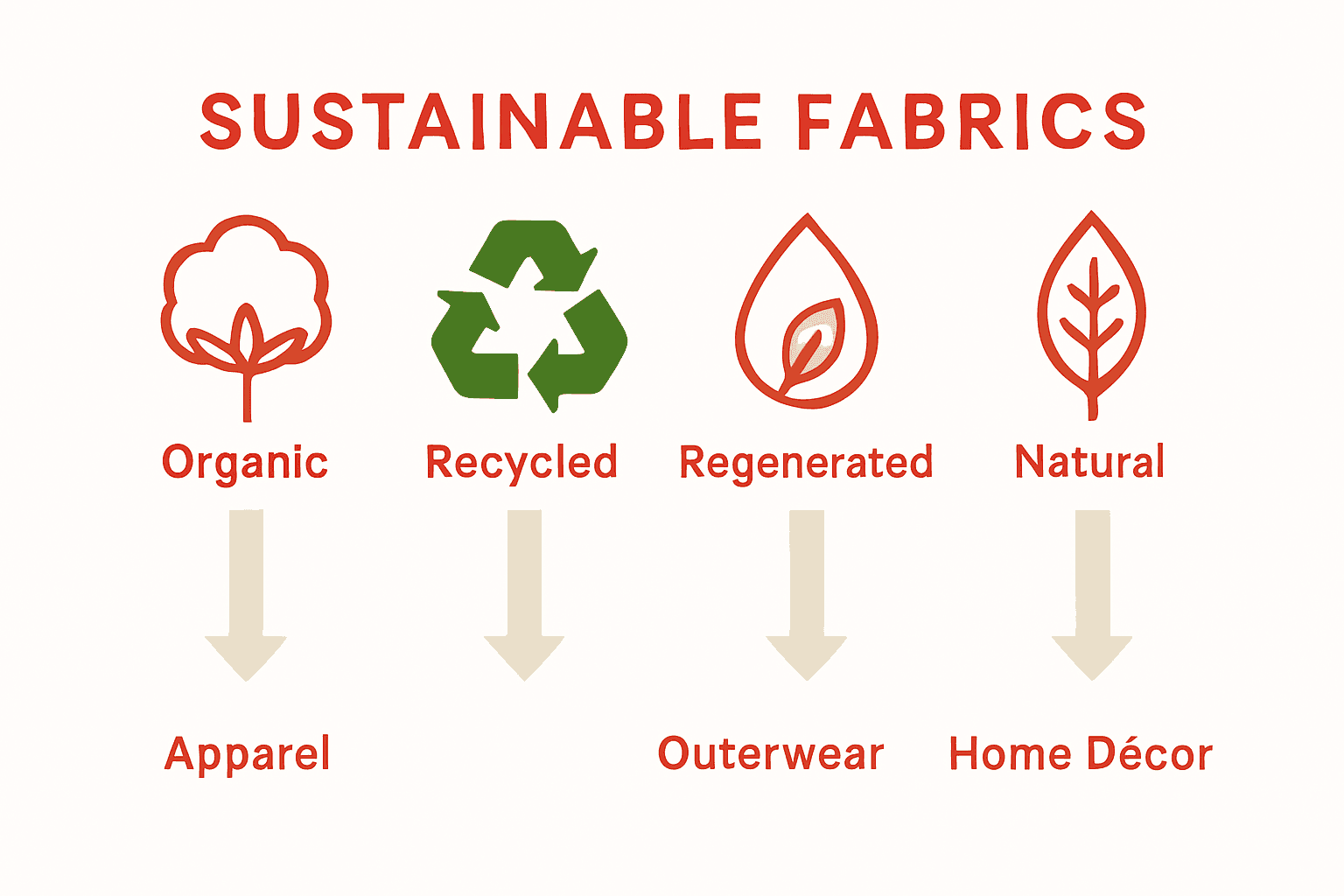
Start by investigating these primary sustainable material types:
Here’s a comparison of major sustainable fabric categories:
| Category | Description | Typical Applications |
|---|---|---|
| Organic Fibers | Grown without harmful chemicals | Apparel Bedding |
| Recycled Materials | Made from repurposed textiles or plastics | Outerwear Sportswear |
| Regenerated Fibers | Derived from renewable sources like wood pulp | Dresses Lining fabrics |
| Natural Fibers | Minimal processing from plants or animals | Home décor Accessories |
As Lucintel notes in their global market outlook, understanding the environmental profile of these materials helps you select options that meet both performance and sustainability goals.
Pro Tip: Look for third party certifications like Global Organic Textile Standard (GOTS) or OEKO TEX to verify the authenticity of sustainable claims.
Dig deeper by consulting specialized textile databases, sustainability reports, and expert resources. Attend virtual textile conferences or webinars to stay updated on emerging sustainable material innovations. Your thorough research will set the foundation for selecting the perfect eco-friendly fabric for your project.
With your sustainable fabric research complete, understanding certifications becomes crucial in validating your material choices. According to insights from Reel Comfort, certifications like OEKO TEX Standard 100 ensure textile safety by verifying the absence of harmful substances.
Think of fabric certifications as your roadmap to responsible material selection. These official stamps of approval help you distinguish genuinely sustainable textiles from those making vague environmental claims. Not all certifications are created equal, so learning to read and interpret them becomes an essential skill.
Key certifications to understand include:
As the Oeko Tex association demonstrates, they offer multiple certification types that cover different aspects of sustainability—from chemical safety to social responsibility.
Pro Tip: Always verify certification authenticity by checking the official certification database or contacting the certifying organization directly.
Remember that certifications are more than just fancy labels. They represent tangible commitments to environmental protection, worker safety, and sustainable manufacturing practices. Your careful review of these standards will ensure you select fabrics that truly align with your eco conscious goals.
As you narrow down your sustainable fabric choices, understanding the true environmental impact of your sources becomes paramount. According to Apparel News, North American regulations are pushing brands toward unprecedented levels of sourcing transparency.
Transparency goes far beyond a simple label. You want to dig deep into how and where materials are sourced, processed, and transported. This means looking beyond surface level claims and examining the entire supply chain journey of your potential fabric.
When comparing fabric sources, focus on these critical transparency indicators:
Emerging technologies are making this research easier. Blockchain tracking, FiberPrint tracers, and platforms like GREentrack allow you to virtually follow a fabric’s entire lifecycle. These tools transform transparency from a buzzword into a measurable, verifiable commitment.
Pro Tip: Request detailed sustainability reports from potential suppliers. Legitimate sustainable brands will be eager to share comprehensive impact data.
By meticulously comparing sources, you are not just selecting a fabric. You are casting a vote for responsible manufacturing and environmental stewardship. Your careful research ensures that your project supports genuine sustainability efforts.
You have researched materials, understood certifications, and compared sources. Now comes the tangible proof: physically verifying sustainability through samples and labels. According to ProECO Fabrics, modern traceability protocols now enable article level tracking with precise environmental impact metrics.
Physical samples reveal what digital research cannot. They allow you to assess texture, durability, color accuracy, and actual sustainability performance. Touch matters. Feel matters. Real world verification trumps theoretical claims every time.
When examining samples, pay attention to these critical verification points:
As reported by Textile School, leading brands like Patagonia use comprehensive sustainability reporting aligned with Global Reporting Initiative standards. This means you should expect detailed documentation explaining environmental performance.
Pro Tip: Request full material traceability reports alongside your fabric samples. Legitimate sustainable suppliers will provide comprehensive documentation without hesitation.
Your careful sample verification transforms abstract sustainability concepts into concrete, touchable reality. By demanding transparency you are not just selecting a fabric. You are supporting an entire ecosystem of responsible manufacturing.
Are you struggling to find truly sustainable fabrics that match your exact project needs? Choosing the right material means more than just picking a color or pattern. The article you just read covers everything from understanding eco-friendly certifications to verifying fabric claims with real samples. At Fabric-Fabric.com, you get the confidence of shopping a wide variety of textiles, each with transparent product details and usage suggestions.
Ready to turn knowledge into action? Go beyond reading about sustainable textiles and actually experience the difference. Visit Fabric-Fabric.com today to explore our curated products for apparel, quilting, crafts, and home decor. Discover current offers and easy search tools that help you find exactly what your project demands. Make the responsible, high-quality choice now and set your creative work apart.
To define your fabric needs, start by identifying the specific requirements of your project. Ask yourself about the intended use, performance characteristics, and aesthetic preferences, then create a list to guide your fabric selection process.
Research the main categories of sustainable materials, such as organic fibers, recycled materials, regenerated fibers, and natural alternatives. Focus on their unique environmental benefits and performance attributes that best fit your project’s goals.
Verify fabric sustainability claims by checking for recognized certifications like OEKO TEX Standard 100 or USDA Organic. Always examine the certification label closely and consider contacting the certifying organization if you have questions about its authenticity.
Look for transparency indicators such as the traceable origin of raw materials and details on the production carbon footprint. Additionally, assess water and energy consumption during manufacturing to understand the overall impact of the fabric on the environment.
To assess sustainability through fabric samples, examine key factors like material composition, texture, and color consistency. Request detailed sustainability documentation with each sample to verify the fabric’s environmental performance claims.
Essential certifications to know include OEKO TEX Standard 100, USDA Organic, and Global Organic Textile Standard (GOTS). Familiarize yourself with what each certification guarantees regarding safety and sustainability to ensure your fabric choices align with your values.