

 US Dollar

How to Select Fabric Suppliers: A Step-by-Step Guide
Posted by BLG on 2025 Aug 27th
Posted by BLG on 2025 Aug 27th


Choosing the right fabric supplier might seem simple until you realize that a single sourcing mistake can disrupt your entire project timeline or quality expectations. Here is something few people expect. Professional buyers recommend always obtaining multiple collections of supplier samples and creating a weighted scoring system before making a final choice. Most people focus just on price or a pretty catalog, but the real secret lies in evaluating supplier consistency, technical capabilities, and communication style in ways that reveal strengths you might miss at first glance.
| Key Point | Explanation |
|---|---|
| 1. Define clear fabric requirements. | Thoroughly assess end-use applications and technical specifications before sourcing fabric. |
| 2. Research multiple fabric suppliers. | Utilize trade shows, online directories, and certifications to identify reputable suppliers tailored to your needs. |
| 3. Evaluate samples rigorously. | Perform structured testing of supplier samples, focusing on performance metrics and durability under real-world conditions. |
| 4. Assess supplier reliability through communication. | Evaluate responsiveness and operational integrity by engaging suppliers in detailed discussions and checking references. |
| 5. Compare pricing with service terms. | Analyze detailed quotes and delivery terms to identify the supplier offering the best overall value, not just the lowest price. |
Successfully selecting fabric suppliers begins with a crystal clear understanding of your specific fabric requirements. This foundational step determines the trajectory of your entire sourcing process, acting as a strategic roadmap that guides your selection criteria and helps you identify the most suitable suppliers.
Start by conducting a comprehensive assessment of your project’s unique fabric needs. Consider the end-use application thoroughly: Will the fabric be used for apparel, home decor, industrial purposes, or specialized technical applications? Each category demands distinct performance characteristics. For fashion designers, this might mean evaluating drape, weight, stretch, and color retention. Interior decorators will prioritize durability, colorfastness, and upholstery-specific attributes like abrasion resistance.
Documenting precise technical specifications becomes crucial. According to NC State’s Textile Extension, key performance parameters include:
Beyond technical specifications, consider additional critical factors such as sustainability requirements, budget constraints, minimum order quantities, and potential lead times. Manufacturers seeking fabric for children’s sleepwear, for instance, must verify compliance with specific flammability standards mandated by regulatory bodies.
Create a detailed requirements document that serves as your sourcing blueprint. This living document should articulate every nuanced expectation, from aesthetic preferences to functional performance standards. By investing time in meticulously defining your fabric needs upfront, you dramatically increase the likelihood of identifying suppliers who can precisely meet your specifications and quality expectations.
Researching potential fabric suppliers transforms your initial requirements document into a practical sourcing strategy. This critical step bridges the gap between conceptual needs and real-world manufacturing capabilities, requiring a methodical and comprehensive approach to identifying reliable textile partners.
Begin your research by leveraging multiple discovery channels. Industry trade shows, professional textile associations, and online manufacturing directories offer robust starting points for finding potential suppliers. According to NIST’s Manufacturing Extension Partnership, specialized supplier scouting services can help streamline this initial identification process, providing targeted recommendations based on your specific technical requirements.
Digital platforms have revolutionized supplier research. Explore specialized online marketplaces, industry-specific forums, and professional networking sites to uncover potential fabric suppliers. Prioritize suppliers with verifiable credentials, such as certifications in quality management, sustainable manufacturing, or industry-specific compliance standards. Pay close attention to their digital footprint: a comprehensive website, active social media presence, and transparent communication channels often indicate a professional and reliable operation.
Compile a comprehensive supplier evaluation matrix that goes beyond basic contact information. Include critical assessment criteria such as:
Reach out proactively to potential suppliers, requesting detailed company profiles, product catalogs, and sample materials. Engage in preliminary conversations to assess their responsiveness, technical expertise, and alignment with your specific fabric requirements. This initial communication provides invaluable insights into their professional approach and potential compatibility with your project needs.
Successful supplier research culminates in a shortlist of 3-5 potential vendors who demonstrate the technical capabilities, reliability, and communication standards necessary to meet your fabric sourcing objectives. By investing thorough effort in this research phase, you significantly increase your chances of establishing a productive and sustainable supplier relationship.
Evaluating supplier samples represents a critical checkpoint in your fabric sourcing journey, transforming theoretical requirements into tangible quality assessments. This stage moves beyond digital research, allowing direct interaction with potential fabric suppliers through physical material examination and rigorous performance testing.
Request comprehensive sample collections from each shortlisted supplier, ensuring they represent the full range of fabric specifications outlined in your original requirements document. Professional fabric buyers recommend obtaining multiple sample variations to understand the supplier’s consistency and range of capabilities. These samples should be accompanied by detailed technical specifications, including fiber composition, manufacturing process, and recommended care instructions.
According to CPSC’s Flammable Fabrics Act guidelines, perform systematic quality assessments that go beyond visual inspection. Develop a structured evaluation protocol that includes:
Invest in professional testing equipment or partner with a certified textile testing laboratory to conduct comprehensive sample evaluations. This approach provides objective, scientifically validated data about each fabric’s performance characteristics. Pay special attention to how samples behave under simulated real-world conditions, such as repeated washing, exposure to sunlight, and mechanical stress.
Carefully document your findings, creating a comparative matrix that ranks suppliers based on sample quality, performance metrics, and alignment with your original requirements. Look beyond immediate visual appeal to understand long-term durability, consistency, and technical performance. The goal is not just finding an acceptable fabric, but identifying a supplier capable of delivering consistent, high-quality materials that meet your exact specifications across multiple production runs.
Assessing supplier reliability and communication transforms potential business relationships from theoretical connections into practical, dependable partnerships. This crucial step goes beyond initial sample evaluations, diving deep into the operational integrity and responsiveness of your potential fabric suppliers.
Initiate a comprehensive communication assessment by scheduling detailed discussions with each supplier’s representative. Observe their communication style, response times, and depth of technical understanding. Pay close attention to how thoroughly they explain complex manufacturing processes, address potential challenges, and provide transparent information about their production capabilities.
According to NIST’s Manufacturing Extension Partnership, building strong supplier relationships requires explicit communication and clear expectations. Develop a structured evaluation framework that encompasses multiple reliability indicators:
Request and carefully review references from the supplier’s existing clients, focusing on their experiences with order fulfillment, quality consistency, and problem resolution. A reputable supplier will readily provide contact information for previous or current customers who can validate their performance claims. Consider conducting surprise follow-up communications to test the supplier’s actual responsiveness and professional consistency.
Develop a comprehensive supplier scorecard that quantifies their reliability across multiple dimensions. This living document should track key performance indicators such as on-time delivery rates, sample accuracy, communication responsiveness, and overall professional conduct. By maintaining a systematic approach to assessing supplier reliability, you create a robust framework for making informed sourcing decisions that extend far beyond initial interactions, ensuring long-term manufacturing success.
Below is a summary checklist table to help you verify supplier suitability at various stages of your fabric sourcing process.
| Verification Step | What to Check For | When to Complete |
|---|---|---|
| Define Requirements | All technical specs and compliance documented | Before supplier outreach |
| Review Supplier Credentials | Certifications, references, digital presence | During research phase |
| Sample Evaluation | Test results, technical alignment | Upon receiving samples |
| Communication Consistency | Timely, clear, and thorough responses | Throughout interactions |
| Pricing and Terms Review | Detailed quotes, contract flexibility | During negotiation |
| Final Due Diligence | References, capacity, financial stability | Prior to contract signing |

Comparing pricing and terms of service represents the critical financial crossroads of your fabric supplier selection process. This step transforms your technical and qualitative assessments into a comprehensive economic evaluation that balances cost-effectiveness with long-term value and risk management.
Pricing comparison goes far beyond simple per-yard calculations. Request detailed, itemized quotes from each potential supplier that break down all associated costs, including base fabric price, minimum order quantities, potential volume discounts, shipping expenses, and any additional processing or customization fees. Understanding the full financial landscape prevents unexpected budget surprises and enables more accurate total cost of ownership projections.
According to Uniform Commercial Code guidelines, carefully examine delivery terms that materially impact total pricing. Pay special attention to how shipping costs, risk transfer, and payment schedules are structured. Some suppliers might offer lower per-yard pricing but include complex delivery terms that ultimately increase overall expenses.
Develop a comprehensive comparison matrix that evaluates potential suppliers across multiple financial dimensions:
Negotiate strategically by understanding each supplier’s pricing flexibility. Many textile vendors are willing to adjust terms for customers demonstrating potential for consistent, long-term business relationships. Request sample contracts and carefully review all clauses related to pricing adjustments, order modifications, and potential penalty structures.
Ultimately, your goal is not to select the cheapest supplier, but to identify the vendor offering the most comprehensive value. Balance pricing considerations with the quality, reliability, and communication standards established in previous evaluation steps. A marginally higher-priced supplier with exceptional consistency and responsiveness may prove far more cost-effective over time than the lowest-cost alternative.
The table below summarizes the key factors to compare in supplier pricing and service terms to help you make an informed financial decision.
| Factor | Why It Matters | What to Look For |
|---|---|---|
| Base Fabric Pricing | Sets foundation for total cost | Per-yard/item cost, clarity |
| Minimum Order Requirement | Impacts affordability and cash flow | MOQ aligned with your needs |
| Volume Discount Structure | Reduces cost for larger orders | Discount tiers and eligibility |
| Payment Term Flexibility | Affects cash management and risk | Net terms, deposit requirements |
| Shipping & Handling Costs | Can significantly increase total expenses | Transparent, itemized breakdown |
| Customization Expenses | May add to budget unexpectedly | Clear fees for custom processes |
| Contract/Long Term Pricing | Stabilizes costs and terms for future orders | Locked-in rates, renegotiation clauses |
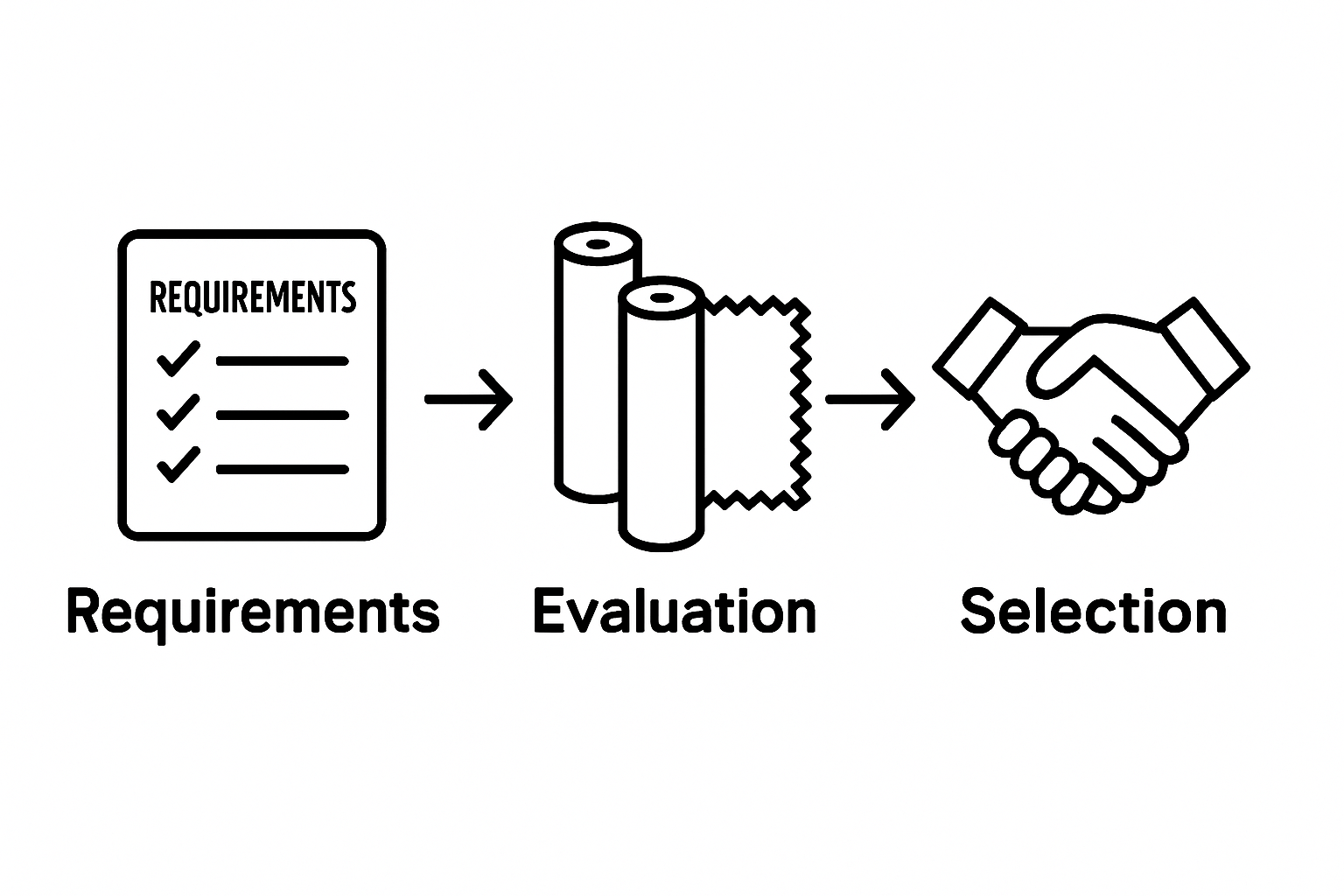
Making your final fabric supplier selection represents the culmination of a meticulous evaluation process, transforming extensive research and assessment into a strategic partnership. This critical decision requires a holistic approach that balances technical requirements, financial considerations, and long-term collaboration potential.
Synthesize all previous evaluation data into a comprehensive decision-making framework, carefully weighing each supplier against your original fabric requirements and performance benchmarks. Create a weighted scoring system that assigns relative importance to key selection criteria, allowing for an objective, data-driven final decision. Consider not just immediate needs, but potential future scalability and flexibility of the supplier relationship.
According to NIST’s Manufacturing Extension Partnership, final selection should extend beyond surface-level metrics to assess total value and operational compatibility. Conduct a final round of due diligence that includes:
Negotiate a preliminary agreement that includes clear performance expectations, quality standards, and potential escape clauses. Draft a comprehensive contract that protects your interests while establishing a collaborative framework. This document should explicitly outline quality expectations, delivery timelines, pricing structures, and mechanisms for addressing potential performance issues.
Consider implementing a phased approach to supplier engagement. Start with a smaller initial order that allows you to thoroughly validate the supplier’s capabilities in a real-world production scenario. This strategy provides a low-risk opportunity to confirm all previous assessments and establishes a practical foundation for future collaboration. Remember that selecting a fabric supplier is not a one-time transaction, but the beginning of a potentially long-term strategic partnership that will significantly impact your product quality and business success.
Struggling to find reliable fabric suppliers who truly match your technical needs and quality expectations? If you have faced the frustration of unclear specifications, lackluster samples, or unreliable communication, you are not alone. This article showed you the importance of technical documentation, supplier evaluation, and transparent communication. Yet, the next step is making sure your sourcing process leads to a trustworthy marketplace with proven quality and comprehensive variety.
Take the uncertainty out of your fabric sourcing experience right now by visiting https://fabric-fabric.com. Our platform caters to both small businesses and professional designers with an extensive range of cotton, silk, velvet, and specialty fabrics. Browse detailed product listings, request samples, or source in bulk with the confidence that comes from a proven supplier. Don’t let another sourcing cycle leave you disappointed. Visit https://fabric-fabric.com today to discover fabrics that match your requirements, streamline your purchasing, and elevate your production from the very first order.
Start by assessing the end-use application for the fabric, including its performance characteristics such as weight, stretch, and durability. Document precise technical specifications like fiber composition, weave structure, and colorfastness, along with any sustainability requirements and budget constraints.
Utilize various discovery channels such as industry trade shows, online manufacturing directories, and specialized online marketplaces. Prioritize suppliers with verifiable credentials and certifications. Create a supplier evaluation matrix that includes their manufacturing capabilities, lead times, and quality control processes.
Request comprehensive sample collections that represent your specified requirements. Evaluate samples based on technical specifications including dimensional stability, color fastness, and tensile strength. Consider professional testing for objective data and document findings to compare quality and performance.
Request detailed, itemized quotes that include all costs such as fabric price, shipping, and any processing fees. Develop a comparison matrix evaluating base prices, minimum order requirements, and payment flexibility. Remember to consider the overall value, not just the lowest price.