

 Canadian Dollars

How to Identify Fabric Quality: Expert Steps for Shoppers
Posted by BLG on 2025 Oct 22nd
Posted by BLG on 2025 Oct 22nd

Did you know that nearly half of returned clothing items are sent back due to fabric quality issues? Choosing the right textile goes far beyond a quick glance or touch at the store. Learning the step-by-step process of fabric inspection helps you avoid disappointment and ensures your projects, whether fashion or home decor, last longer and look better. With the proper tools and a little know-how, you can confidently evaluate fabric before making a purchase.
| Key Point | Explanation |
|---|---|
| 1. Gather essential inspection tools | Collect bright lighting, magnifying glass, and measuring tape for effective fabric evaluation. |
| 2. Evaluate fabric weave and texture | Gently stretch and feel the fabric to assess its structure and quality indicators. |
| 3. Test for strength and durability | Perform stretch and recovery tests; observe how the fabric withstands tension and wear. |
| 4. Assess color consistency and finish | Inspect fabric under various lights to check for uniformity, sheen, and color transfer. |
| 5. Synthesize observations for overall quality | Compile findings into a comprehensive review to determine the fabric’s overall performance and suitability. |
Getting ready to assess fabric quality requires a strategic approach and the right tools. You will learn how to set yourself up for a thorough and accurate fabric evaluation that goes beyond quick surface impressions.
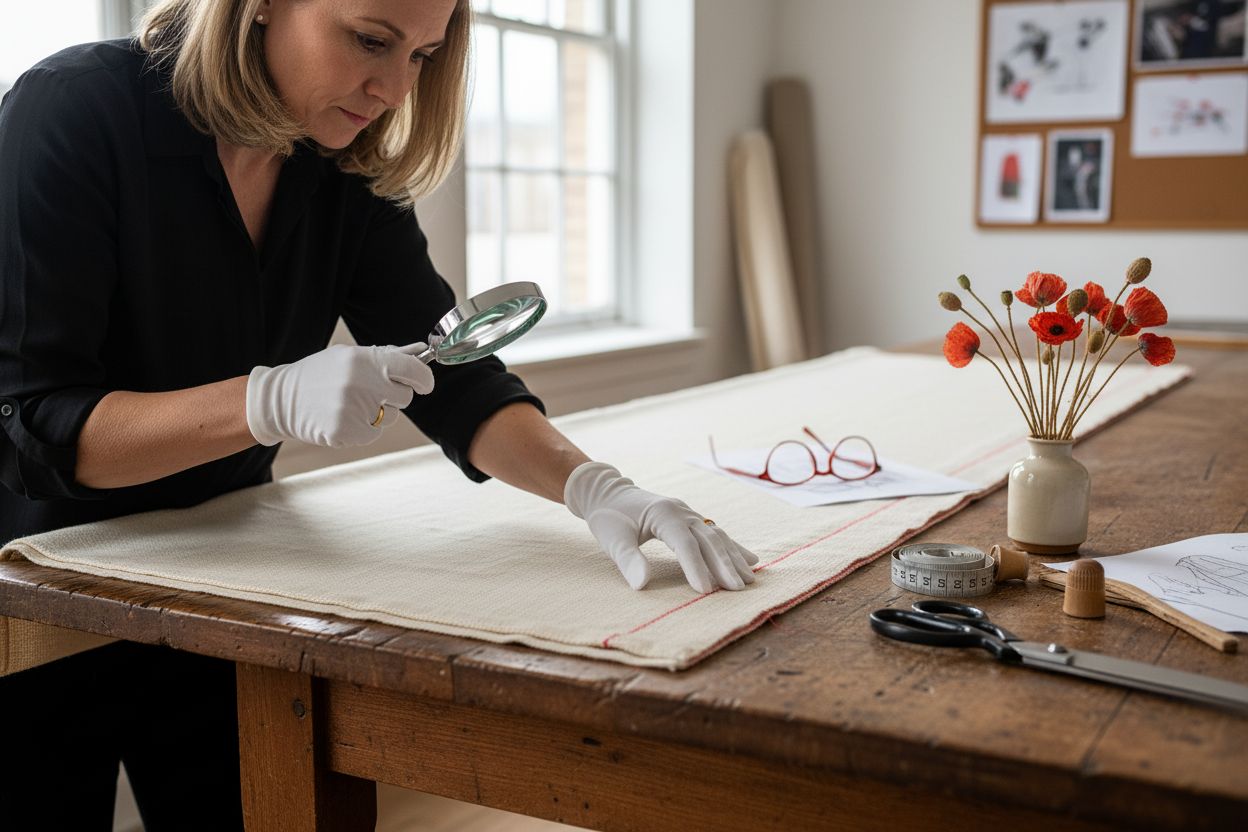
According to the University of Georgia Extension, fabric inspection is more than just touching material at the point of sale. You will want to gather specific tools and create an ideal inspection environment before you begin. Start by collecting bright lighting (natural daylight works best), a flat clean surface, and a few key tools such as a magnifying glass, white paper, and measuring tape.
Prepare your workspace by ensuring you have ample room to spread out fabric completely. Natural light helps reveal true color and texture nuances that artificial lighting might mask. If possible, set up near a large window or under bright white LED lighting that mimics daylight spectrum.
Your inspection toolkit should include:
Here’s a summary of essential tools for effective fabric inspection:
| Tool | Purpose | Pro Tip |
|---|---|---|
| Bright white light | Reveals true color & texture | Use daylight or daylight-spectrum LEDs |
| Magnifying glass | Examines fine weave details | Identify imperfections and thread structure |
| White paper/surface | Highlights color/shade accuracy | Detects color inconsistencies and stains |
| Measuring tape | Measures fabric dimensions | Confirm width, length, and repeat patterns |
| Fabric scissors | For sample cuts if allowed | Make clean cuts to examine interior construction |
| White gloves | Keeps fabric clean (optional) | Avoids oil and dirt transfer |
Pro Tip: Always wash or sanitize your hands before handling fabric to prevent transferring oils or dirt that could impact your assessment.
As research from University of Georgia Extension indicates, you will want to prepare to examine not just the surface texture but also the interior construction elements like seams and finishing. This preparation sets the stage for a comprehensive fabric quality evaluation.
With your workspace and tools ready, you are now prepared to move into the detailed fabric inspection process where you will systematically assess color, weight, density, and potential manufacturing defects.
Your next mission is to unlock the secrets hidden in fabric structure by carefully examining its weave and texture. You will learn how to assess fabric construction using hands-on techniques that reveal critical quality indicators.
Research from the Gaston College Textile Technology Center highlights that understanding fabric structure goes far beyond simple visual inspection. Start by gently stretching the fabric in different directions to understand its inherent flexibility and strength. Pay close attention to how the threads interact when you apply light tension.
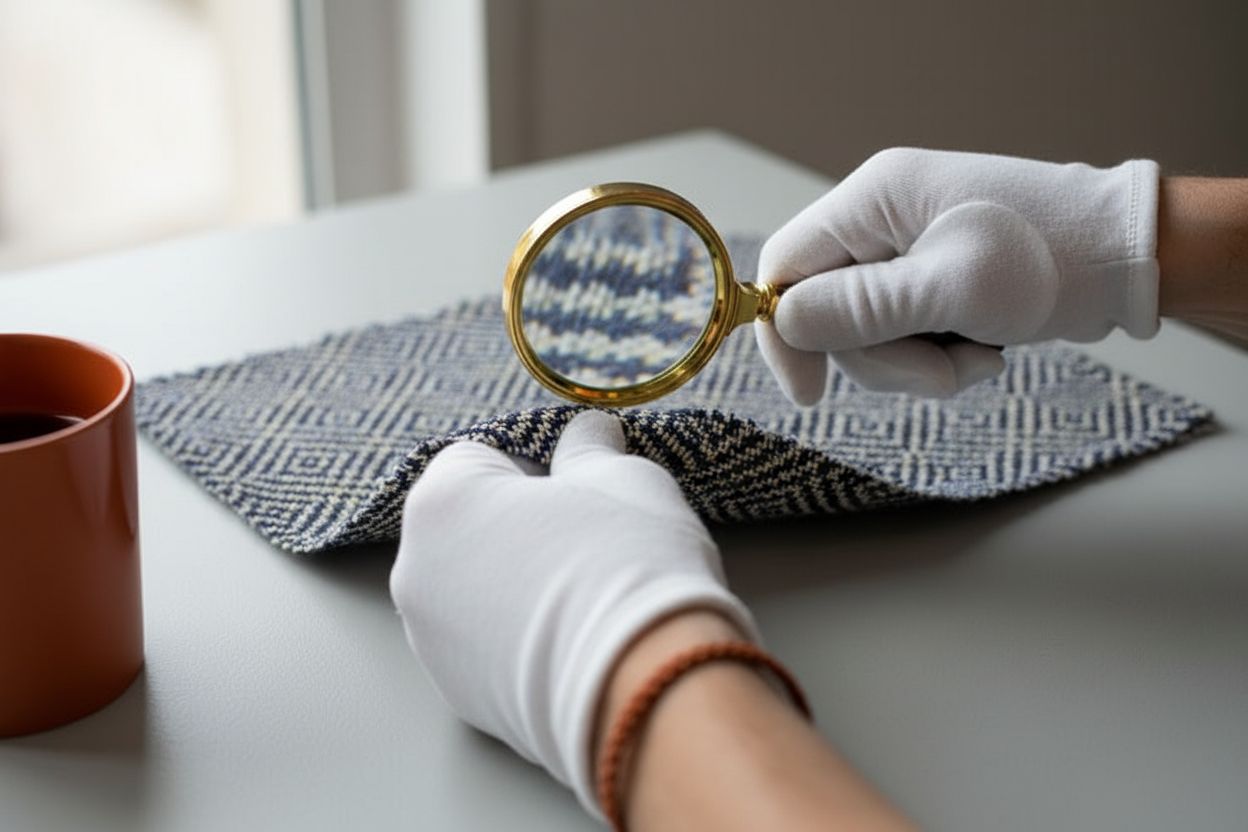
Begin your texture exploration by running your fingers across the fabric surface. Notice how the threads are interlocked or woven together. Some fabrics will feel smooth and uniform while others might have intentional surface variations like small bumps or irregular patterns. These texture differences can indicate specific manufacturing techniques or fabric types.
Look closely at the fabric weave pattern. Common weave types include:
Pro Tip: Backlight can reveal subtle weave details. Hold your fabric against a bright light source to see thread density and potential irregularities.
According to Gaston College Textile Technology Center, professional labs can perform extensive testing on fabric structure including evaluating knit extension and weave tightness. While you may not have access to such advanced equipment, your careful manual examination can still provide significant insights.
As you complete your weave and texture assessment, you are now ready to move into more detailed fabric quality evaluation techniques that will help you make informed textile selections.
You are about to learn how to assess fabric resilience beyond surface appearance. Your goal is to understand how well a fabric will withstand regular wear and potential stress through practical testing techniques.
According to research from the Gaston College Textile Technology Center, fabric durability involves multiple performance measures. Start by performing a simple stretch test. Gently pull the fabric in different directions to observe how it responds. A high quality fabric will return to its original shape without significant distortion.
Focus on understanding key durability indicators. Professional textile labs use standardized tests to measure different aspects of fabric strength. While you might not have industrial equipment, you can still conduct meaningful home assessments.
Your manual durability evaluation should include:
Pro Tip: Repeated gentle stretching can reveal more about fabric quality than one hard pull. Watch how quickly the material returns to its original form.
Research indicates that abrasion resistance is particularly critical. As noted in Wikipedia, professional tests like the Martindale or Wyzenbeek method quantify a fabric’s ability to withstand repeated rubbing and friction. While you cannot replicate these exact laboratory conditions, careful manual testing provides valuable insights.
By systematically examining fabric strength and resilience, you are now prepared to make informed decisions about textile quality and potential long-term performance.
Understanding fabric color and finish requires more than just visual appreciation. You will learn how to critically evaluate color quality and surface characteristics that impact fabric performance and aesthetic appeal.
Research from North Carolina State University’s Physical Testing Laboratory reveals that color assessment goes far beyond simple visual inspection. Start by examining the fabric under different lighting conditions. Natural daylight provides the most accurate color representation, so position your fabric near a window or under full spectrum lighting.
Carefully observe color consistency across the entire fabric surface. Look for subtle variations in tone, potential color bleeding, or uneven pigmentation. Professional textile experts use specialized techniques to measure color precision and permanence.
Key aspects to evaluate during color and finish assessment include:
Pro Tip: Gently rub a white cloth against the fabric to check for unexpected color transfer that might indicate poor dye quality.
As noted in North Carolina State University’s Physical Testing Laboratory, professional color testing involves complex measurements like spectral analysis and blue wool scale assessments. While you cannot replicate these exact laboratory methods, your careful visual and tactile examination can reveal significant insights about fabric color quality.
The Blue Wool Scale provides an interesting benchmark for understanding color permanence. According to Wikipedia, this standardized method helps quantify how well fabric colors resist fading under controlled light exposure.
With your color and finish assessment complete, you now have a comprehensive understanding of the fabric’s visual and functional characteristics.
You have reached the final stage of fabric evaluation where you will synthesize all your previous observations into a comprehensive quality assessment. Your goal is to create a holistic understanding of the fabric that goes beyond individual characteristics.
According to the American Association of Textile Chemists and Colorists, professional textile quality verification involves multiple systematic evaluations. Begin by reviewing your notes and observations from previous inspection steps to create a complete picture of the fabric’s performance potential.
Compile a comprehensive fabric quality checklist that integrates all your previous assessments. Think of this as creating a report card for your textile that covers critical performance dimensions. Review each aspect critically and objectively.
Your final verification should consider these key quality indicators:
Pro Tip: Trust your cumulative observations more than any single test. Fabric quality is about overall performance, not isolated metrics.
Research from Gaston College’s physical testing overview emphasizes using multiple standardized tests to comprehensively verify fabric quality. While you cannot replicate professional laboratory conditions, your systematic home assessment provides valuable insights.
Your final step is to make an informed decision about the fabric based on your thorough evaluation. Consider how the fabric will perform in its intended use and whether it meets your specific requirements for durability, appearance, and functionality.
Understanding how to identify fabric quality can feel overwhelming without the right guidance and tools. This article breaks down essential steps like examining weave and texture, testing strength, and assessing color and finish, helping you avoid costly mistakes and poor fabric choices. If you want to shop fabrics that already meet these expert standards, you deserve a reliable source that makes quality easy to find.
Discover a wide selection of premium fabrics safeguarded by clear descriptions and thorough details at Fabric Fabric. Whether you need delicate satin for apparel or durable textiles for upholstery, you can trust the quality you get. Take advantage of ongoing discounts and free shipping offers today to elevate your crafting or design projects with confidence. Start your search now on our homepage and see why discerning shoppers turn to us for textiles that truly perform.
To prepare for fabric inspection, gather essential tools such as bright white light, a magnifying glass, measuring tape, and a clean flat surface. Set up your workspace near natural light to accurately assess the fabric’s color and texture before starting your evaluation.
Start by gently stretching the fabric to check its flexibility and strength, then run your fingers over the surface to feel its texture. Identify the weave pattern, such as plain or satin, as these can reveal important quality indicators about the fabric’s construction.
Perform a stretch test by gently pulling the fabric in different directions to observe how well it returns to its original shape. Additionally, assess the fabric’s surface for signs of wear and perform a seam strength check by gently tugging at the seams to ensure they are secure.
Evaluate the fabric color by examining it under different lighting conditions to check for consistency and any potential fading. Look for color transfer by rubbing a white cloth against the fabric to ensure that the dye holds well and does not bleed.
Compile your observations from each inspection step to create a comprehensive quality checklist that includes factors like structural integrity, color permanence, and durability. Focus on collective characteristics rather than isolated tests to accurately assess the fabric’s overall performance.
Multiple factors, such as strength, color consistency, and texture, contribute to the fabric’s overall performance in real-world use. By considering each aspect carefully, you can make informed decisions about durability and suitability for your specific needs.