

 US Dollar

1–8 Years of Wear: Faux Leather Tests Makers and Shoppers Need
Posted by BLG on 2026 Sep 9th
Posted by BLG on 2026 Sep 9th

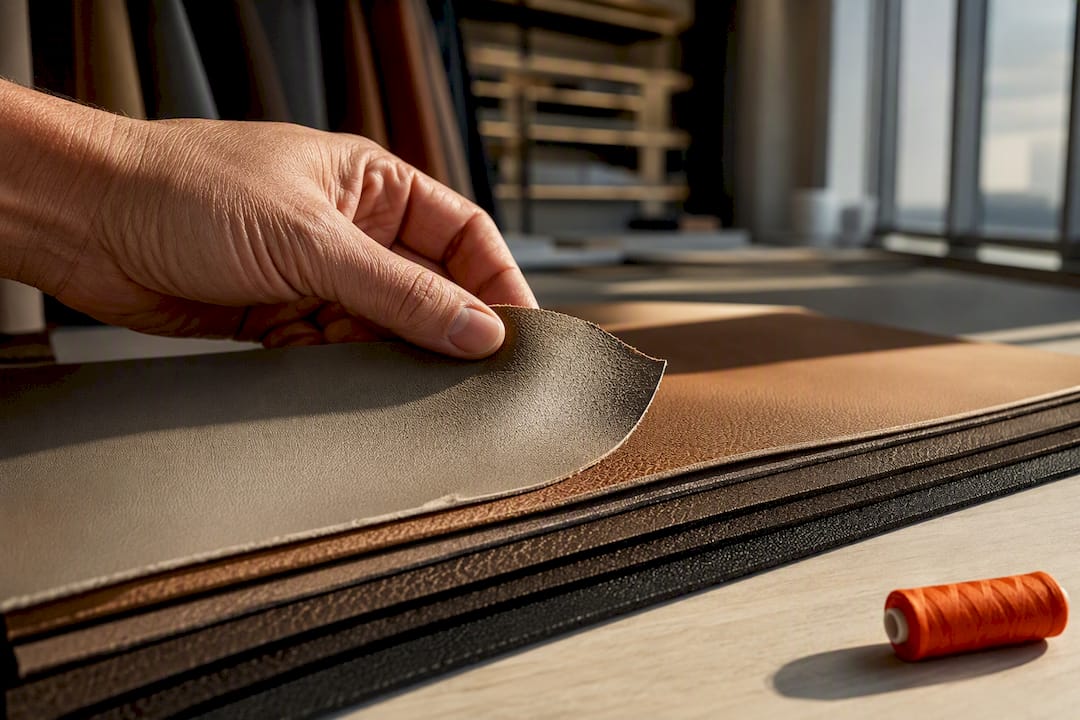
Faux leather is a layered material, a woven or knit fabric backing coated with a plastic polymer like polyurethane (PU) or PVC, engineered to look and feel like animal hide. It costs less upfront, cleans up easily, and skips animal products entirely, but it wears out faster than genuine leather. Pick it for apparel, budget upholstery, or high-turnover projects; skip it for anything you want to last a lifetime.
TL;DR:
- Faux leather typically lasts one to eight years, with higher coating quality extending its durability but not preventing eventual breakdown.
- PU leather offers softness and flexibility ideal for apparel and low-contact furniture, while PVC is better suited for outdoor or water-exposed uses due to its toughness.
- Bonded leather tends to peel within a few years and should be avoided for high-use furniture, unlike premium PU or PVC, which wear longer but still degrade over time.
- Proper identification of coating type and backing fabric, along with inspecting for pattern repetition and smell, is essential before purchasing faux leather.
- Routine cleaning involves wiping with a damp cloth, avoiding harsh chemicals and conditioners, and protecting against UV exposure to slow degradation.
Not all faux leather behaves the same way, and the differences come down to what’s coating that fabric backing. Walk into any fabric shop and you’ll typically find four categories, each suited to a different job.
PU leather is the softest and most flexible of the bunch. Manufacturers spray or laminate a thin polyurethane layer onto a fabric base, which gives it a supple hand that drapes well in clothing and moves naturally on furniture cushions. It’s the go-to choice for jackets, handbags, and mid-range upholstery where comfort against skin matters more than industrial toughness.
PVC, or vinyl, sits on the tougher end of the spectrum. The coating is thicker and less breathable than PU, but it shrugs off water, punctures, and heavy abrasion far better. That’s why you see it on marine seating, restaurant booths, and outdoor cushions where spills and sun exposure are a given rather than an occasional risk.
Bonded leather is a different animal structurally. It’s made by grinding up real leather scraps and fibers, then binding them with adhesive to a fiber or paper backing before applying a printed surface layer. The Odesleep buying guide notes that manufacturers must disclose the leather fiber percentage, since bonded leather isn’t fully synthetic. That composite structure is also its weakness: the bonding layer separates from the backing faster than a pure PU or PVC coating does, so bonded leather tends to peel within a couple of years on anything that gets regular use. Avoid it for dining chairs, sofas, or car seats.
Bio-based alternatives are the newest entrants, made from materials like mushroom mycelium, cactus fiber, apple peel waste, or pineapple leaf fiber (often blended with a polymer binder for durability). They cut down on petroleum content and tend to have a smaller production footprint, but availability is still limited, pricing runs higher than standard PU, and most still rely on some plastic binder to hold together. Treat them as a promising middle ground, not yet a wholesale replacement.
A quick way to sort them by use case:
Faux leather starts as a textile and ends up looking nothing like one, thanks to a manufacturing process built around layering and finishing.
The textile base and coating structure is consistent across most commercial faux leather, which is why identifying the coating type on a product label tells you more about its performance than the brand name does. If you want a plain-language rundown of how this compares with other synthetic textiles, Fabric-fabric’s guide to synthetic leather breaks down the terminology shoppers run into.
Expect a working life of one to eight years, depending almost entirely on coating quality and how the piece gets used. Low-quality PU or PVC, the kind found in fast-fashion jackets or bargain furniture, typically lasts one to three years before visible cracking sets in. Mid-quality material stretches to three to five years, and high-quality faux leather with a thicker coating and better backing can hold up for five to eight years under normal use.
Three failure modes account for almost every faux leather complaint:
The chemistry behind these failures is the same reason faux leather doesn’t age the way real hide does. Genuine leather develops a patina; faux leather just breaks down.
Breathability is the other major performance gap. Real leather has natural pores that let moisture vapor pass through, so it stays comfortable against skin. Faux leather’s plastic coating is largely non-porous, so a PU or PVC jacket traps heat and can feel sticky in warm weather, a common complaint on furniture that sits in direct sun.
One insight worth remembering: buying a premium PU product narrows the durability gap with real leather, but it doesn’t change the underlying chemistry. Even the best faux leather eventually succumbs to the same hydrolysis and cracking that affects cheap pleather. Quality buys you years, not immunity.
When shopping, ask about coating thickness and backing fabric weight. Thicker coatings and tighter backing weaves consistently correlate with longer real-world lifespans, even when the marketing copy on two competing products looks identical.
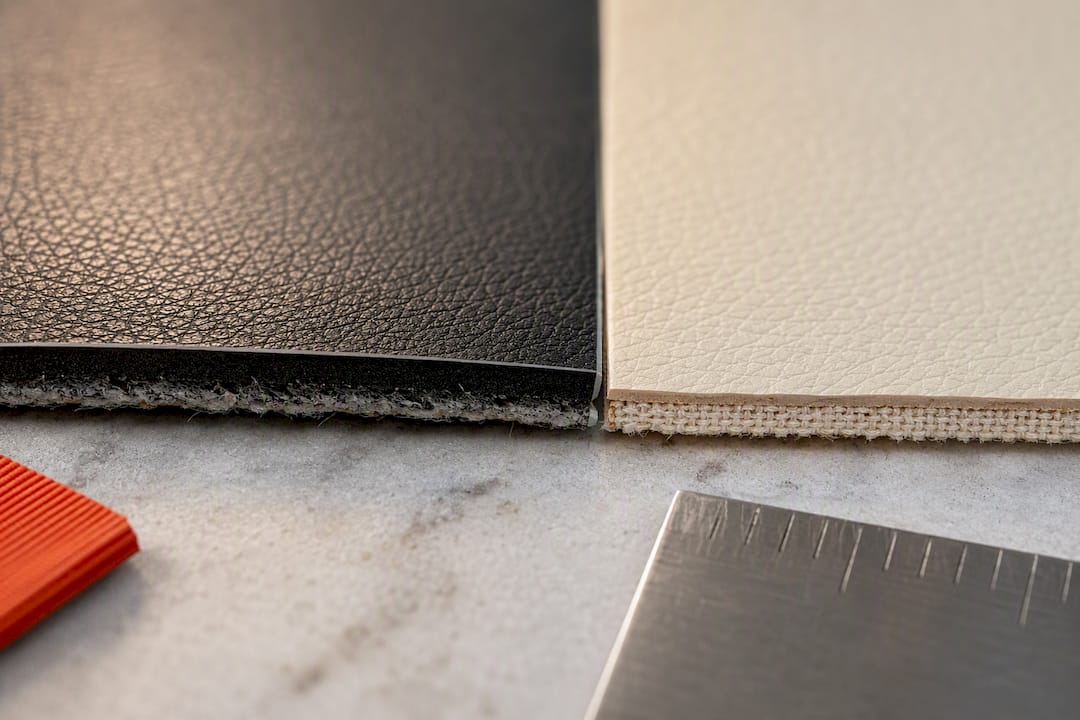
The honest case for faux leather comes down to cost, cleanup, and ethics; the honest case against it comes down to lifespan and what happens after that lifespan ends.
What works in its favor:
Where it falls short:
The environmental picture is genuinely mixed, not a clean win for either material. Faux leather is petroleum-derived, which means production energy use and end-of-life waste that doesn’t biodegrade. Skipping animal hide avoids the environmental load of livestock farming and tanning chemicals, but it trades that for persistent plastic waste and microplastic shedding. Neither material comes out clean in a full lifecycle comparison, and treating faux leather as the automatically “green” choice oversimplifies a genuinely complicated trade-off.
Pro Tip: If a product will see daily contact with skin, like a bag strap or a chair arm, prioritize PU over PVC. PU breathes slightly better and stays flexible longer under repeated flexing, which matters more than a lower price tag once you’re a year into ownership.
Faux leather makes sense when you want the look without the maintenance commitment, or when the item will likely be replaced or restyled before it wears out anyway.
Matching the material to the job starts with being honest about how hard that piece will actually work.
| Use Case | Best Type | Key Test Before Buying |
|---|---|---|
| Apparel and bags | PU leather | Flex test for cracking, check for chemical smell |
| Everyday upholstery | PU or mid-weight PVC | Coating thickness, backing weave |
| Marine or outdoor | PVC/vinyl | Water resistance rating, UV stabilizer mention |
| Kids’ furniture or rentals | PU or PVC (budget tier acceptable) | Cost-per-year math, easy-clean finish |
| High-use furniture | PVC (avoid bonded leather) | Delamination risk at seams and edges |
If you’re sourcing fabric for a furniture build, Fabric-fabric’s guide on selecting sofa fabric walks through how backing weight and finish affect wear beyond faux leather specifically.
Wipe faux leather down with a damp microfiber cloth and mild soap on a regular basis, then dry it fully to avoid trapping moisture against the coating. That’s most of what routine care requires.
Pro Tip: Test any cleaner on a hidden seam first. A five-minute patch test beats discovering a cleaner strips the finish on the visible front panel of a chair.
The website stocks upholstery-weight and craft-ready textiles alongside category filters that flag backing type, finish, and width, so you can compare specs before buying rather than guessing from a photo.
Skip it for anything you’d call an heirloom. A dining set you expect to hand down doesn’t belong in PU or PVC, full stop, because even premium faux leather is on a timer that genuine hide isn’t.
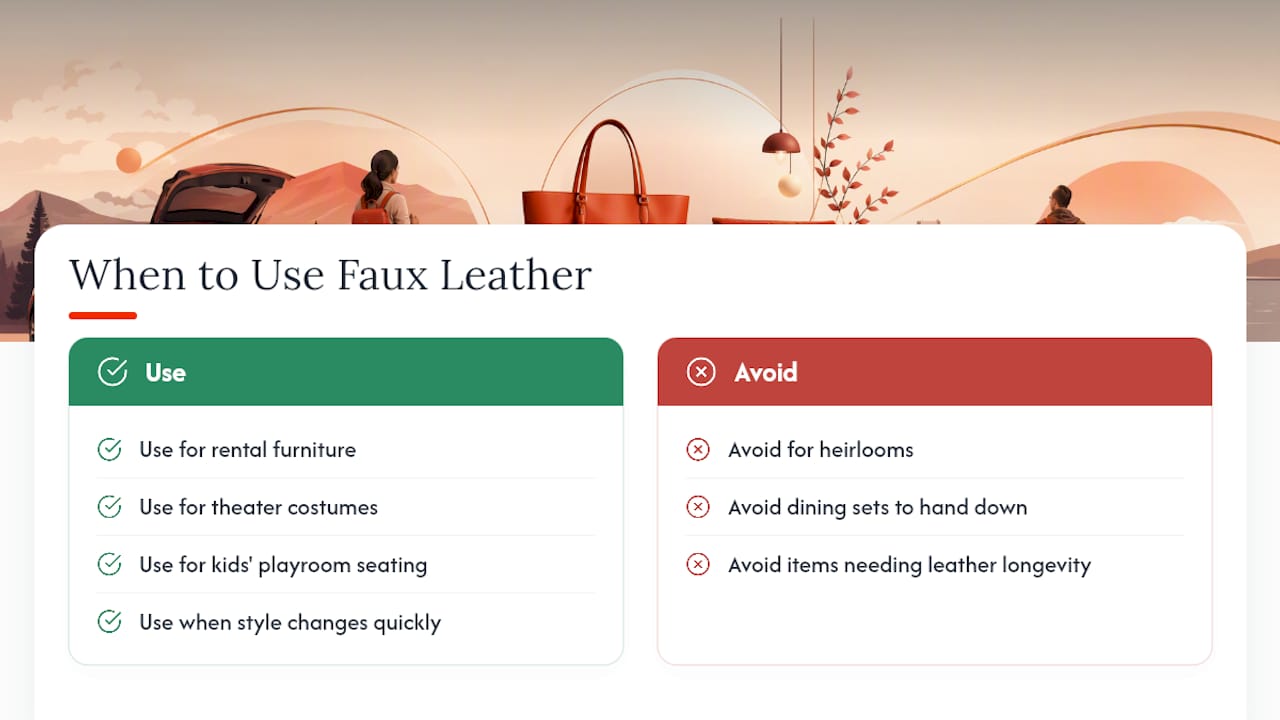
Where faux leather earns its keep: rental furniture, costumes, kids’ playroom seating, and any project where style changes faster than the material would wear out anyway. A theater troupe redoing costumes each season gets more value from faux leather’s low cost than from leather’s longevity. A family with toddlers gets more value from wipeable PVC than from a natural material that stains permanently.
Recommend faux leather when replacement cycles are short by design, not by accident.
— kev
Skipping a showroom markup matters more than most buyers realize. The site offers upholstery and craft-ready textiles by the yard, with sample swatches available so you can run your own bend and smell tests before committing to a full order instead of gambling on a product photo.
Browse the home decor fabric category to compare backing weights and finishes side by side, or check backdrop fabrics if your project calls for heavier decorative yardage. Use the site filters to narrow by backing type and width before ordering a swatch, so the sample you get in the mail actually matches what your project needs. Order a sample today and test it against your project’s exact use case before buying by the yard.
For terminology, check Wikipedia’s artificial leather entry; for lifespan data, see Leather Insights; for failure chemistry, see Decrum.