

 Canadian Dollars

Master the Fabric Selection Process for Perfect Projects
Posted by BLG on 2025 Sep 15th
Posted by BLG on 2025 Sep 15th


Picking the right fabric sounds simple but holds surprising complexity. Most people just grab whatever looks good, yet choosing the wrong fabric can ruin a project before you even start. The real secret is that a few clear, strategic steps can make your fabric choice nearly foolproof and save you from costly mistakes.
| Key Point | Explanation |
|---|---|
| 1. Define clear project requirements | Establishing detailed functional and aesthetic goals helps in selecting the right fabric for your project. |
| 2. Understand fabric types and properties | Familiarize yourself with natural, synthetic, and blended fabrics to match materials with project needs effectively. |
| 3. Set a realistic budget | A well-planned budget accounts for all project costs, preventing unexpected expenses and ensuring financial feasibility. |
| 4. Source and sample fabrics | Collect and evaluate fabric samples from various sources to ensure they meet your project’s specific requirements. |
| 5. Rigorously evaluate fabrics | Use an objective scoring system to assess fabric performance, ensuring the final choice aligns with your project’s needs and quality standards. |
Successful fabric selection begins with crystal clear project requirements. Think of this step as creating a precise roadmap that will guide every subsequent decision in your fabric selection process. Before touching a single fabric swatch, you need to understand exactly what your project demands.
Start by conducting a comprehensive project assessment that explores the functional and aesthetic goals of your specific endeavor. Are you designing a summer dress that requires breathability? Creating upholstery for a high-traffic living room that needs durability? Crafting a delicate quilt that demands soft, lightweight material? Each scenario requires a different fabric approach.
Carefully document your project’s core requirements by examining several critical dimensions. Performance characteristics are paramount. Consider factors like stretch, weight, texture, drape, and potential wear and tear. A professional designer understands that fabric isn’t just about appearance but how it performs under specific conditions. For instance, outdoor cushions need weather-resistant fabrics, while children’s clothing demands machine-washable materials that can withstand repeated laundering.
Your project requirements should also include precise measurement specifications. This means understanding exact dimensions, potential fabric shrinkage, required yardage, and any pattern matching needs. A garment might need fabric with specific stretch percentages, while home decor projects could require precise width measurements to minimize seaming.
According to University of Washington’s Material Selection Process guide, effectively defining application requirements involves determining the part’s function, identifying possible materials, and understanding underlying physical principles. This structured approach ensures your chosen fabric meets the specific needs of your unique project.
Before moving forward, verify your project requirements by creating a comprehensive checklist that includes:
By meticulously defining your project requirements upfront, you transform the fabric selection process from a potentially overwhelming task into a strategic, purposeful journey. Each detail you clarify narrows your options and brings you closer to finding the perfect fabric match.
Use this checklist to verify your project requirements before advancing in the fabric selection process.
| Requirement | Description |
|---|---|
| Performance needs | Is the fabric suitable for stretch, weight, texture, and drape? |
| Aesthetic preferences | Does the fabric match the desired look and feel for your project? |
| Budget constraints | Can you acquire enough fabric within your planned spending limit? |
| Durability expectations | Will the fabric withstand expected wear and tear? |
| Maintenance requirements | Is the fabric easy to clean or maintain as needed? |
Understanding fabric types and their unique properties is like learning a secret language of materials. After defining your project requirements, you now enter the fascinating world of textile characteristics that will transform your creative vision into reality. This step is about matching your specific project needs with the perfect fabric composition.
Begin by exploring the fundamental fabric categories: natural fibers, synthetic fibers, and blended fabrics. Natural fibers like cotton, silk, and wool offer distinct qualities such as breathability, softness, and temperature regulation. Synthetic fibers including polyester, nylon, and acrylic provide durability, wrinkle resistance, and often more affordable options. Blended fabrics combine the best attributes of multiple fiber types, creating materials with enhanced performance characteristics.
Each fabric type carries a unique set of properties that directly impact your project’s success. Fabric weight, texture, stretch, and drape become critical evaluation points. A lightweight chiffon behaves dramatically differently from a heavy canvas. A fabric with significant stretch works wonderfully for fitted clothing but could be disastrous for structured home decor. Understanding these nuanced differences allows you to make informed selections that align perfectly with your project’s functional and aesthetic requirements.
Consider conducting hands-on research by visiting local fabric stores or ordering sample swatches. Physical interaction with fabrics provides insights no online description can capture. Feel the material’s texture, test its stretch, observe how light passes through it, and imagine how it will perform in your specific application. Professional designers and seasoned crafters know that tactile exploration is an invaluable part of the fabric selection process.
According to the University of Georgia Extension, understanding fiber characteristics is crucial for making informed textile choices. Different fibers offer unique performance attributes that can make or break your project’s success.
Before moving forward, verify your fabric type identification by checking these essential criteria:
By methodically exploring fabric types and their properties, you transform textile selection from a guessing game into a strategic decision-making process. Each fabric becomes a potential solution, waiting to be matched with your unique creative vision.
Here is a comparison of common fabric types and their key properties to help match fabric choices with project requirements.
| Fabric Type | Key Qualities | Best For |
|---|---|---|
| Cotton | Breathable, soft, easy to wash | Everyday clothing, quilts |
| Silk | Luxurious, smooth, sheen, delicate | Fine garments, linings |
| Wool | Warmth, elasticity, moisture-wicking | Outerwear, suits, winter apparel |
| Polyester | Durable, wrinkle-resistant, affordable | Sportswear, home decor |
| Nylon | Strong, lightweight, quick-drying | Activewear, outdoor gear |
| Blends | Combined properties, versatile | Clothing, upholstery |
Budget planning transforms your fabric selection from a potential financial minefield into a strategic, controlled process. This critical step requires thoughtful consideration and realistic financial planning that balances your creative vision with practical monetary constraints. By establishing a clear budget upfront, you prevent unexpected expenses and ensure your project remains financially achievable.
Begin by conducting a comprehensive financial assessment that goes beyond the initial fabric purchase. Total project costs include more than just material expenses. Factor in additional requirements like thread, interfacing, specialized tools, potential waste fabric, and potential mistakes that might require replacement materials. Professional crafters and designers understand that budget planning is an art form that requires careful calculation and a small buffer for unexpected contingencies.
Determine your budget’s flexibility by creating clear spending tiers. Ideal budget represents your preferred spending amount, while maximum budget defines your absolute financial limit. This approach provides wiggle room and prevents potential financial stress. Consider dividing your budget into percentage allocations: perhaps 70% for primary fabric, 20% for complementary materials, and 10% as a contingency fund for unexpected needs.
Research fabric pricing across multiple sources to develop realistic expectations. Online fabric retailers, local craft stores, and wholesale suppliers offer varying price points. Compare prices, but remember that cheaper isn’t always better. A slightly more expensive fabric might provide superior durability, reducing long-term replacement costs. Look for sales, bulk discounts, and seasonal promotions that can help stretch your budget without compromising quality.
According to the University of Georgia Extension, effective budget planning involves carefully allocating funds and understanding spending limitations. This approach ensures your creative project remains financially sustainable.
Before finalizing your budget, verify your financial plan by checking these critical elements:
By methodically setting a well-researched budget, you transform fabric selection from a potential financial gamble into a calculated, confident investment in your creative vision. Your budget becomes a strategic tool that empowers rather than limits your project’s potential.
Sourcing and sampling fabrics transforms your project from theoretical planning into tangible reality. This crucial step bridges the gap between conceptual design and practical execution, allowing you to physically interact with potential materials before making significant investments. Think of fabric sampling as your project’s quality control checkpoint, where theoretical requirements meet real-world performance.
Begin your sourcing journey by exploring multiple channels. Online fabric retailers, local craft stores, specialty textile shops, and wholesale suppliers each offer unique advantages. Online platforms provide extensive selections and convenient comparison, while local stores allow immediate tactile examination. Wholesale suppliers can offer more competitive pricing for larger projects. Create a systematic approach to collecting samples that balances convenience, quality, and budget considerations.
When requesting fabric samples, develop a strategic testing protocol. Request swatches large enough to conduct comprehensive evaluations, typically 4-6 inches square. Many suppliers offer sample packs or swatch cards specifically designed for professional designers and crafters. Inspect each sample meticulously, examining color consistency, texture, weight, and potential manufacturing imperfections. Hold fabric samples against light, stretch them gently, and assess how they drape and move.
Develop a standardized evaluation process for your fabric samples. Create a scoring system that rates each material against your original project requirements. Consider factors like color fastness, stretch resilience, wrinkle resistance, and potential shrinkage. Take detailed notes and potentially photograph samples for later comparison. Professional designers often create physical sample boards that allow side-by-side material comparisons.
According to Cornell University’s materials sourcing course, effective material sourcing involves thorough quality control and careful sample evaluation before committing to larger purchases.
Before finalizing your fabric selection, verify your sampling process by checking these critical elements:
By methodically sourcing and testing fabric samples, you transform potential risks into calculated decisions. Each sample brings you closer to discovering the perfect material that will bring your creative vision to life with precision and confidence.
Evaluating and finalizing fabric choices represents the critical moment where your meticulous planning crystallizes into a definitive selection. This step transforms your accumulated research, sampling, and strategic considerations into a purposeful decision that will define your project’s ultimate success. Think of this process as your fabric selection’s final examination, where each material must prove its worthiness.
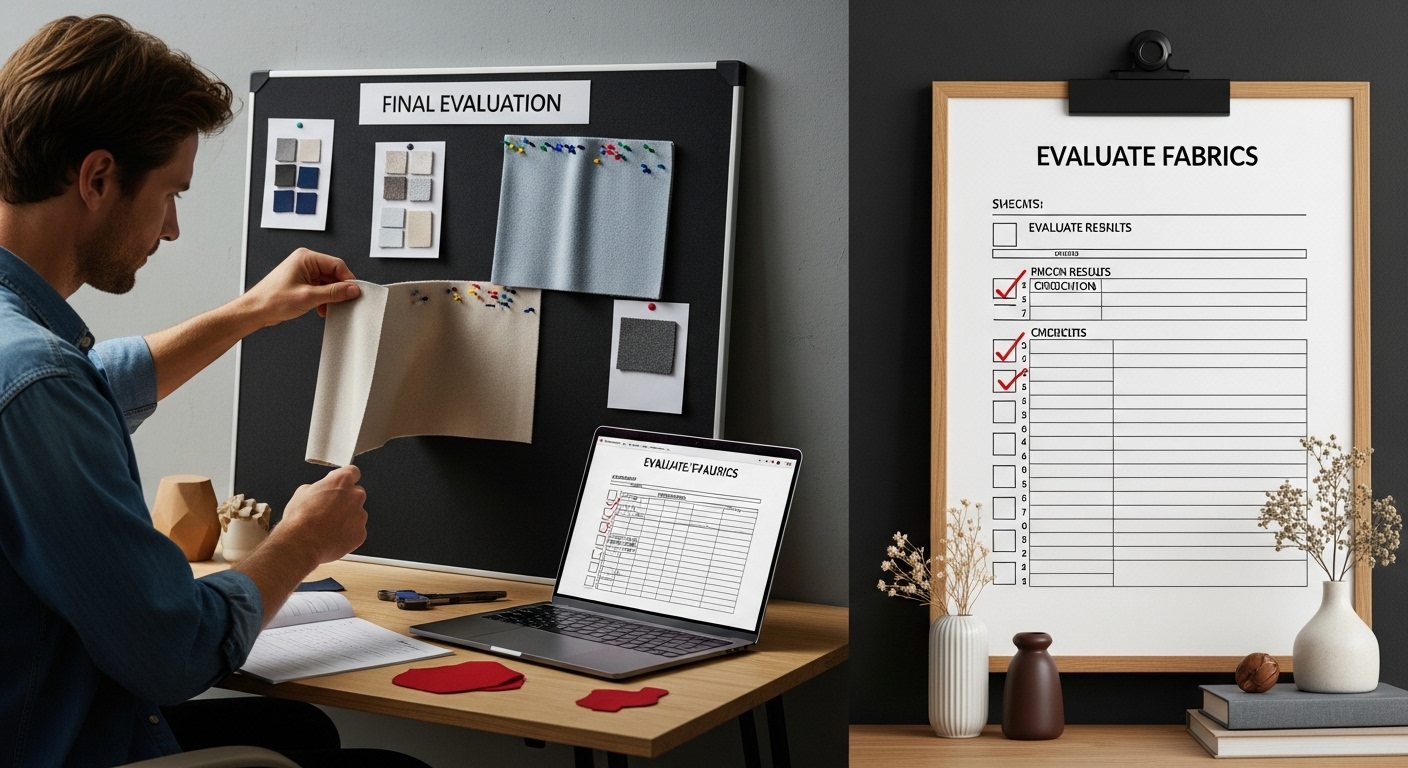
Develop a comprehensive evaluation matrix that objectively scores each fabric sample against your original project requirements. Create a scoring system that assigns numerical values to key performance attributes like durability, appearance, maintenance complexity, and cost-effectiveness. Professional designers understand that emotional attachment can cloud judgment, so rely on structured, data-driven assessment methods. Consider creating a weighted scoring system where critical requirements carry more significance than secondary preferences.
Conduct rigorous performance tests that simulate real-world conditions your fabric will encounter. Stress test your fabric samples by subjecting them to scenarios matching your project’s intended use. For clothing, this might mean testing stretch recovery, wash durability, and color fastness. Home decor fabrics require assessments of wear resistance, potential fading, and cleaning compatibility. These practical experiments provide insights far beyond initial visual or tactile impressions.
Consider long-term performance and maintenance requirements as part of your final evaluation. A beautiful fabric that requires specialized cleaning or demonstrates rapid wear might ultimately prove impractical. Examine factors like potential shrinkage, color stability, ease of care, and potential environmental interactions. Sometimes a slightly more expensive fabric with superior longevity represents better overall value than a cheaper alternative that deteriorates quickly.
According to the University of Georgia Extension, effective fabric selection involves comprehensive quality assessment that goes beyond immediate aesthetic considerations. Thoroughly evaluating each material ensures your final choice meets both functional and visual requirements.
Before making your final selection, verify your evaluation process by checking these critical elements:
By methodically evaluating and finalizing your fabric choices, you transform potential uncertainty into a confident, well-researched decision. Your selected fabric becomes more than a material choice it becomes the foundation of your creative vision.
You have just explored how to master the fabric selection process by clarifying your project needs, assessing fabric properties, setting a smart budget, and meticulously sampling your options. Yet, actually putting this blueprint into action can feel daunting, especially when the stakes are high for your next sewing, quilting, or decor project. Worrying about picking the wrong material or missing key details can lead to costly mistakes and frustration.
Choosing the right textiles has never been easier. Fabric Fabric is your trusted source for high-quality fabrics, clear product details, and inspiration for every creative vision. Browse our specialized collections for clothing, home decor, quilting, or craft fabrics with confidence. Each listing lists usage suggestions, care instructions, and current pricing, supporting the step-by-step process outlined in this article. Skip the guesswork and transform knowledge into success with materials that truly fit your project’s demands. Visit https://fabric-fabric.com now to request samples, seize seasonal discounts, and finish your project the right way from day one.
The key steps in the fabric selection process include defining your project requirements, identifying fabric types and their properties, setting a budget for your fabric selection, sourcing and sampling fabrics for testing, and evaluating fabrics to finalize your choices.
To determine the right fabric type, start by analyzing the functional and aesthetic goals of your project. Consider factors such as breathability, durability, texture, and the specific performance characteristics needed for your application.
When setting a budget, include not only the cost of the fabric itself but also additional supplies like thread, interfacing, and tools. Consider creating a budget breakdown into percentages for each category to ensure a well-rounded financial plan.
Evaluate fabric samples by creating a comprehensive evaluation matrix that scores each sample against your project requirements. Conduct performance tests to simulate how the fabric will behave in real-world conditions and take into account maintenance and durability factors.