

 US Dollar

Chiffon vs Organza: Spot the Difference for Better Sewing
Posted by BLG on 2026 May 29th
Posted by BLG on 2026 May 29th

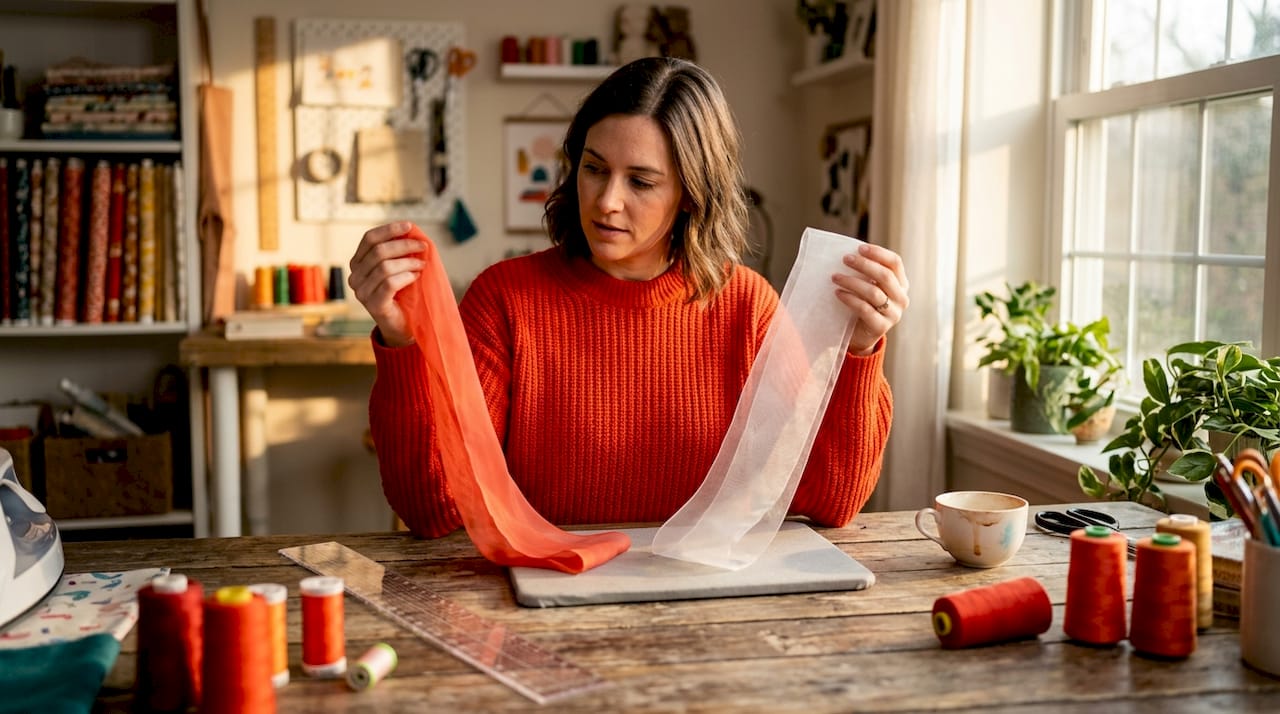
TL;DR:
- Chiffon is soft, drapey, and slightly grainy, making it ideal for flowing garments and overlays. Organza is crisp, structured, and holds volume, suited for sculptural design elements and bridalwear. Both fabrics differ in weave and stiffness, with chiffon favoring movement and organza providing shape, guiding their best use cases and sewing techniques.
Both fabrics are sheer, both are lightweight, and both appear in the same corner of the fabric store. So it’s no surprise that the difference between chiffon and organza trips up sewers and crafters constantly. Pick the wrong one and your breezy wrap dress turns into a structured tent, or your bridal overlay collapses without the volume you needed. These two fabrics share an aesthetic family resemblance but behave very differently on the cutting table, the sewing machine, and the body. This guide breaks down exactly what sets them apart so you can choose with confidence every time.
| Point | Details |
|---|---|
| Texture defines the split | Chiffon is soft and slightly grainy; organza is smooth and crisp with a subtle shine. |
| Drape versus structure | Chiffon flows and moves; organza holds its shape and adds volume. |
| Is chiffon thicker than organza? | Not necessarily. Organza (40–80 GSM) overlaps with chiffon (30–70 GSM), but organza has more body. |
| Sewing difficulty differs | Chiffon slips and shifts; organza stays put, making it friendlier for beginners. |
| Fiber content changes everything | Silk, polyester, and nylon versions of each fabric behave and care differently. |
The confusion is understandable. Hold both fabrics up to a window and they both let light through. Feel them cold off the bolt, though, and the difference registers immediately. Chiffon feels soft, slightly gritty, and almost reluctant to hold any particular shape. Organza feels smooth, crisp, and stiff. That contrast is not random. It comes directly from how each fabric is built.
Chiffon is a plain-woven fabric) constructed using alternating S-twist and Z-twist high-twist crepe yarns. Those opposing twists create slight puckering across the surface, which gives chiffon its barely-there roughness and a small amount of stretch. Organza uses tightly twisted filament yarns woven in a plain weave too, but the yarns are finer, denser, and produce a smooth, stiff hand feel instead. The structural contrast between weaves) is what drives every downstream difference in drape, sewing behavior, and ideal use.
Think of it this way. Chiffon’s crepe yarn twist makes the fabric act like water. Organza’s filament yarn weave makes it act more like stiff paper. Both are thin and sheer. But their personalities could not be more different.
Chiffon’s defining characteristic is movement. When you hold a piece and let it fall, it doesn’t stiffen or project. It collapses and drapes in gentle, romantic folds that follow gravity rather than resist it. That behavior comes from its crepe yarn construction, which also creates its signature weight range of 30–70 GSM.
Several chiffon fabric qualities vary depending on the fiber used:
What all versions share is that soft, grainy texture and a fabric that refuses to hold structure on its own. That makes chiffon perfect for floaty sleeves, wrap skirts, evening gowns with movement, and layered overlays where you want the fabric to behave like it’s alive.
Pro Tip: Before cutting chiffon, lay it flat on a large cutting surface and use pattern weights instead of pins. Pins can distort the fabric along the cut line and create uneven edges that compound when you start sewing seams.
For a deeper look at chiffon’s uses and care details, Fabric-fabric has a full guide worth bookmarking.
Organza is a different animal entirely. Where chiffon surrenders to gravity, organza pushes back. It holds its shape. It creates volume. It adds body to a garment without adding weight. That stiffness comes from tightly twisted silk or synthetic yarns woven in a tight plain weave, producing a smooth surface with a subtle shine that chiffon doesn’t have.
Key organza fabric characteristics worth knowing:
These properties make organza the go-to choice for bridal gowns, couture overlays, puffy sleeves, peplums, and any decorative element where you need the fabric to project outward instead of collapse inward. It’s also widely used in home decor applications like structured window treatments and decorative backdrops.
Silk organza is the premium version and holds shape the best. Polyester organza is more affordable and widely available. Crystal organza is a popular synthetic variation with more shine and a slightly softer hand feel compared to regular polyester organza.
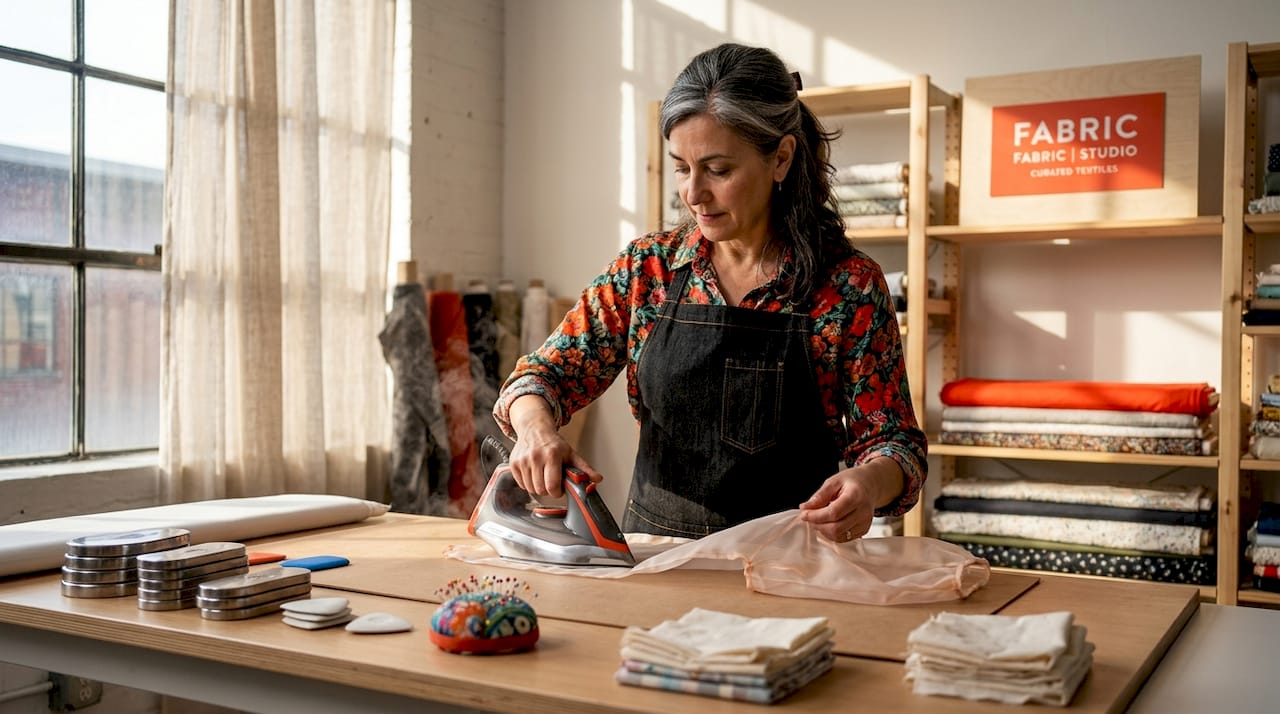
Pro Tip: Organza frays aggressively. Seal every raw edge with a French seam, a rolled hem, or a fine serged edge before the fabric unravels further than you intended. Don’t leave cut organza unfinished on your table for even a few hours.
Learn more about organza fabric properties to understand how each variation affects your finished garment.
Here’s how these two fabrics stack up across the attributes that matter most when you’re planning a project:
| Attribute | Chiffon | Organza |
|---|---|---|
| Texture | Soft, slightly grainy | Smooth, crisp, papery |
| Drape | Fluid and flowing | Structured and volumetric |
| Weight (GSM) | 30–70 | 40–80 |
| Shine | Matte to subtle | Subtle sheen |
| Sewing difficulty | High (slippery, shifts) | Moderate (holds position) |
| Best uses | Flowing gowns, overlays, scarves | Bridal volume, peplums, decor |
| Fiber options | Silk, polyester, nylon, rayon | Silk, polyester, crystal |
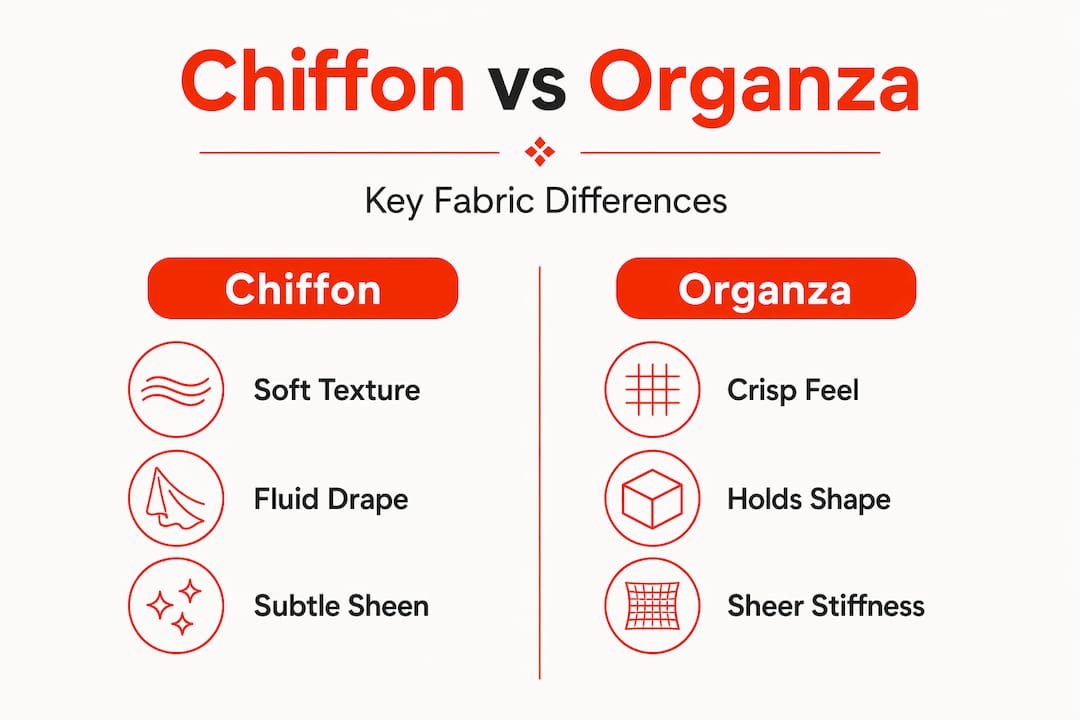
The core takeaway from this comparison is intentional. According to the research, chiffon suits soft flowing silhouettes while organza performs best when structure and volume are the design goal. They’re not interchangeable. They’re complementary.
Sewing difficulty is where these two fabrics create the biggest difference in the workroom. Chiffon is notoriously slippery. Feed it through a standard presser foot and it shifts, gathers unevenly, and produces puckered seams. Organza stays where you put it. That self-supporting quality makes organza much friendlier for sewers who are newer to working with sheers.
Pro Tip: When comparing organza versus chiffon for a layered gown design, consider using organza as the underlayer for structure and chiffon as the top layer for softness. The two fabrics work beautifully together and cancel out each other’s limitations.
Getting the best results from either fabric comes down to knowing what each one needs before you cut the first piece.
Use the right needle. Both fabrics require a fine, sharp needle. A size 60/8 or 70/10 works well for chiffon. Organza tolerates a slightly larger needle but still benefits from a fine size 70/10 or 75/11. A dull or oversized needle snags both fabrics.
Reduce presser foot pressure for chiffon. Distortion during feeding is the most common problem when sewing chiffon. Lowering the presser foot pressure prevents the fabric from bunching and stretching as it moves through the machine.
Stabilize chiffon before cutting. Use tissue paper under the chiffon when cutting or sewing to stop it from shifting. The tissue tears away cleanly after stitching and costs almost nothing.
Sew organza with a short stitch length. Because organza holds its shape, short stitch lengths (around 1.5 to 2mm) create cleaner seams that don’t pull or pucker against the fabric’s structure.
Press both fabrics with care. Steaming is the safest approach for both chiffon and organza. If you use an iron, keep the heat low and always use a pressing cloth between the iron and the fabric surface. Never press organza with a hot iron directly. The fibers can melt or develop permanent shine marks.
Check the fiber content label before washing. Silk chiffon, polyester chiffon, silk organza, and polyester organza all have different care requirements. Fiber content labels are more reliable than the fabric name alone for deciding how to launder a finished piece.
Combine them intentionally. When you layer chiffon over organza, you get a fabric pairing that solves both fabrics’ weaknesses. The organza provides the body and structure the chiffon lacks. The chiffon softens the stiff, papery feel of the organza underneath.
For techniques that apply when sewing silk fabrics, many of the same principles carry over to silk chiffon and silk organza. The handling logic is nearly identical.
Pro Tip: Always pre-wash silk chiffon before cutting your pattern pieces. It will shrink in the first wash and you want that to happen before the garment is assembled, not after.
I’ll be honest: when I started working with sheer fabrics, I treated chiffon and organza as basically the same thing with different names. That mistake cost me two ruined garments and a lot of frustration before I really understood what was happening.
The shift for me came when I stopped thinking about how they looked and started thinking about what they do. Chiffon does movement. It rewards designs where the fabric is meant to breathe, float, and respond to the body and the air around it. Any time I’m building a garment where I want the viewer’s eye to follow flow rather than form, chiffon is my instinct.
Organza does shape. I’ve used it to create sleeve volume that holds for an entire evening without collapsing, and to build structured bodice overlays that photograph sharply from every angle. The stiffness is a creative tool, not a limitation, once you understand it.
The real lesson I’ve learned is that these fabrics are far more useful together than apart. A chiffon and organza combination gives you dimension, movement, and structure in a single garment layer. I’ve also found that sewing chiffon successfully is less about fighting the fabric and more about adapting your setup to work with its slippery nature. Tissue paper underlay and adjusted presser foot pressure changed my results overnight.
If you’re new to both, start with organza. It teaches you about sheers without the frustration of chiffon’s movement. Then, once you’re comfortable, graduate to chiffon and enjoy everything it can do.
— kev
Whether you’re drawn to the fluid softness of chiffon or the crisp volume of organza, Fabric-fabric carries both in a variety of colors, fiber contents, and widths. The selection is built for sewers, crafters, and designers who want quality yardage without the guesswork. Browse the full range of organza fabrics to find the right weight and finish for your next garment or decorative project. If you’re working on something larger, check out the backdrop fabrics collection for sheer options that work beautifully in event styling and home decor applications. Quality fabric makes every project easier.
Chiffon is soft, slightly grainy, and drapes fluidly due to its crepe yarn construction. Organza is smooth, crisp, and structured because its filament yarns are woven tightly, giving it body and volume.
Not necessarily. Organza typically ranges from 40 to 80 GSM and chiffon from 30 to 70 GSM, so they overlap. However, organza has noticeably more body and stiffness despite similar or overlapping weights.
Use chiffon when your design calls for soft, flowing movement. It works best for wrap skirts, floaty sleeves, evening gowns, and overlays where you want the fabric to drape against the body naturally.
Organza is the right choice when structure and volume matter. It holds shape independently, making it ideal for bridal gowns, puffy sleeves, structured overlays, and decorative elements that need to project outward.
Yes, and it’s actually a smart pairing. Organza provides the structural base and chiffon adds softness on top. The combination gives you both volume and movement in a single layered design.