

 US Dollar

Canvas Material: Pick the Right Weight and Duck Grade for Makers
Posted by BLG on 2026 Sep 8th
Posted by BLG on 2026 Sep 8th

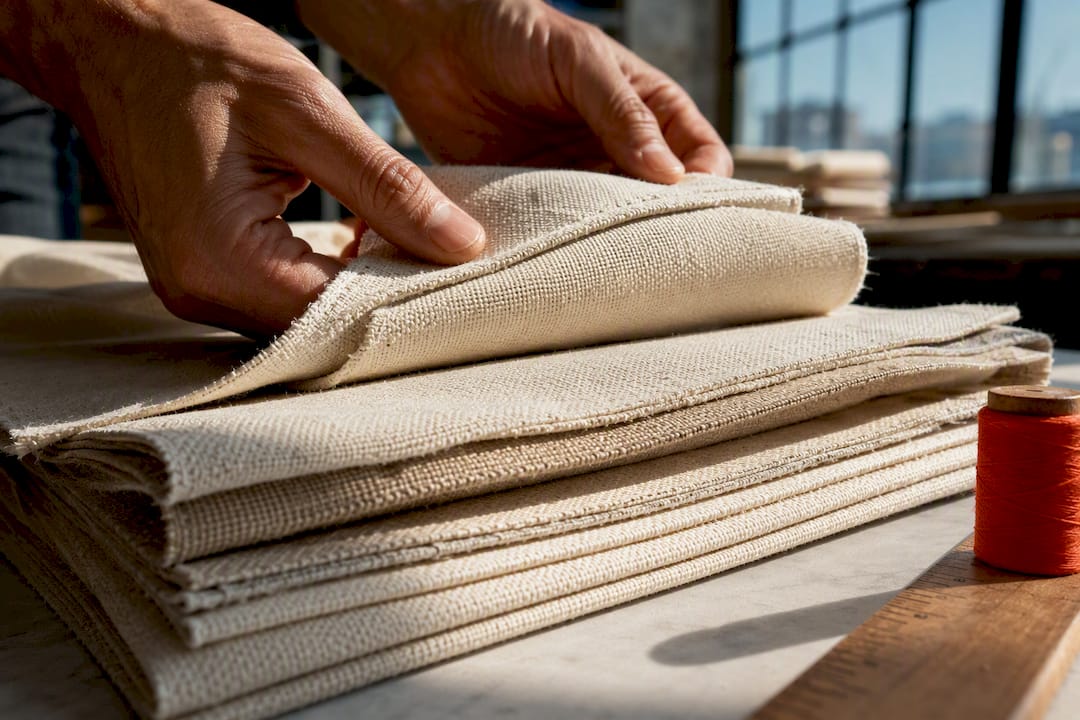
Canvas is a plain-woven, heavy-duty fabric traditionally made from cotton, linen, or hemp, prized for its durability and resistance to tearing. It’s woven tighter and denser than most everyday fabrics, which is why it shows up in sails, tents, tote bags, and stretched painting supports. Modern versions sometimes swap synthetic fibers in or get coated with PVC for extra weatherproofing.
TL;DR:
- Heavier canvas (15 oz/yd² and above) provides better puncture and abrasion resistance, making it ideal for outdoor covers, tarps, and upholstery.
- The US duck grading scale helps estimate fabric weight; a #1 duck weighs about 30 oz/yd², decreasing with higher numbers, guiding project-specific choices.
- Cotton is the most common fiber, but linen offers better long-term stability for art, while synthetic coatings improve weatherproofing but reduce breathability.
- Finishing options like wax or PVC coating significantly enhance water resistance, but each reduces fabric softness and flexibility, affecting sewing and comfort.
- Regular maintenance, including re-waxing outdoor gear and avoiding machine washing coated canvas, extends fabric lifespan and maintains water resistance.
Canvas gets its strength from a plain weave, the simplest weaving pattern there is: one thread goes over, one goes under, repeated in a tight grid. That structure, combined with thicker yarns than you’d find in something like quilting cotton, is what gives canvas its stiff hand and rugged surface.
People often confuse canvas with twill fabrics like denim, but the two are built differently. Denim uses a twill weave, where the weft thread passes over two or more warp threads before going under one, creating that diagonal ribbing you can see on any pair of jeans. Canvas has no diagonal line. It’s flat, grid-like, and generally stiffer than twill at a comparable weight.
Weight is where canvas really separates itself from lighter fabrics:
The heavier the fabric, the less it drapes and the more it resists punctures, abrasion, and stretching over time.
Canvas started as a hemp fabric, and the word itself traces back to that origin, but today it’s woven mainly from four fiber families, each with a different feel and price point.
Cotton is the most common choice for modern canvas. It’s affordable, easy to dye, and takes paint or ink well, which is why art students and sign makers reach for it constantly. Linen, spun from flax, costs more but resists stretching and sagging better over decades, which is why fine art canvases and archival painting supports often specify it. Hemp sits between the two: rougher, more durable, and less common commercially, though it’s seeing a small resurgence among sustainability-minded makers. Synthetic and blended canvas, including polyester and PVC-coated versions, trades some breathability for serious weather resistance.
Within cotton canvas, one variant deserves its own name: duck canvas, sometimes called duck cloth. It’s woven tighter than standard plain canvas, and the name has nothing to do with the bird. It comes from the Dutch word “doek,” meaning cloth. Duck is the fabric you want for work aprons, tool bags, and anything that needs a smoother, denser surface than basic canvas offers.
Then there’s the finished category: waxed canvas, where cotton duck gets saturated with paraffin or beeswax to turn a water-resistant fabric into something genuinely waterproof. It’s the go-to for field bags, boat covers, and outdoor gear that has to survive real weather, though waxing changes the hand of the fabric, making it stiffer and less breathable than untreated cotton.
Canvas gets specified two different ways in the US, and mixing them up is a common source of confusion when you’re shopping by the yard.
The first is straightforward: ounces per square yard (oz/yd²), which tells you exactly how heavy a given piece of fabric is. Lightweight canvas starts at lower weights and ranges up to the heaviest tarps and marquee material. If you prefer metric, that range translates roughly to 240 to 800 grams per square meter, though conversions vary slightly by source.
The second system is older and counterintuitive: the numbered duck grading scale.
Number of Duck = 19 minus the weight in ounces of a 36-by-22-inch piece of fabric.
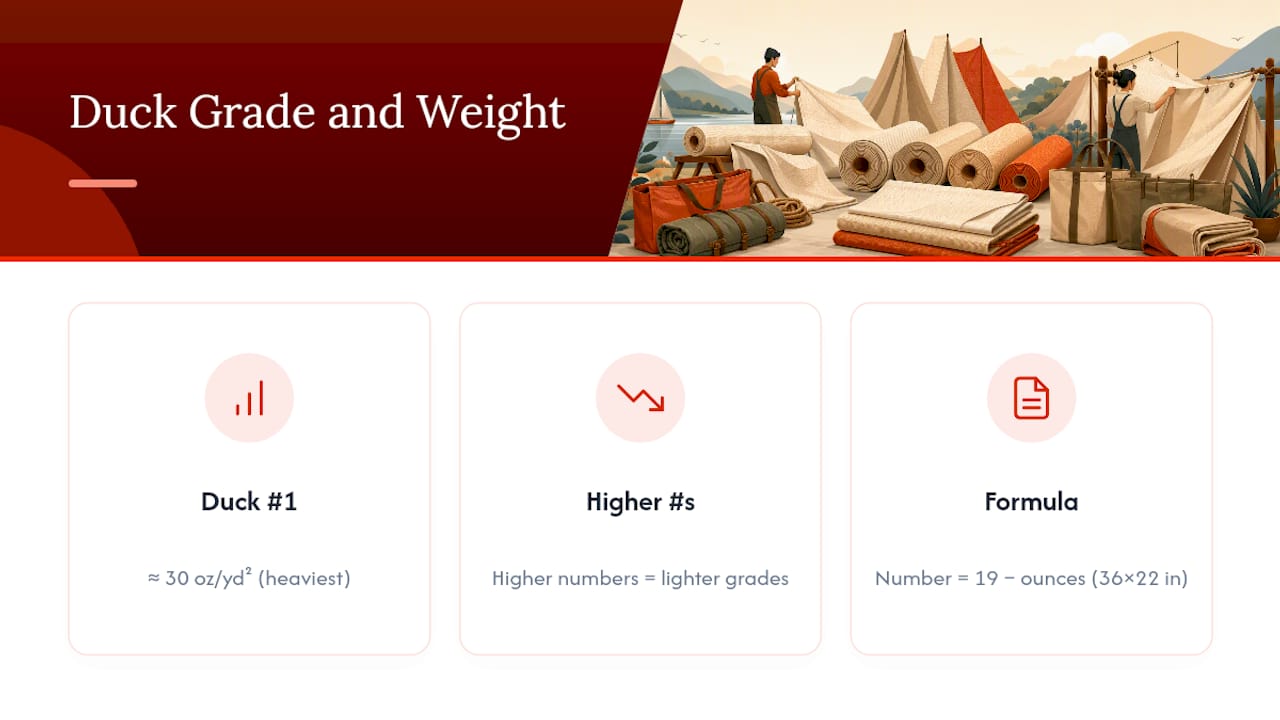
That means a #1 duck, the heaviest standard grade, weighs around 30 oz/yd², while higher numbers like #10 or #12 duck are progressively lighter. This numbered system was standardized in the early 20th century in the US to keep trade labeling consistent across mills, and you’ll still see it on some heavy-duty canvas today, particularly in outdoor gear and tarp specifications. If a label says a duck grade number instead of giving you a straight ounce figure, you can estimate the weight using the formula provided.
Canvas construction comes down to three basic decisions: how the yarn is spun, how it’s woven, and what finish gets applied afterward.
Each finishing choice trades something. Wax adds water resistance but stiffens the fabric. PVC coating waterproofs completely but kills breathability. Gesso locks the weave down for painting but makes the fabric unsuitable for anything that needs to fold or flex.
Canvas earns its reputation for toughness honestly. The tight plain weave and thick yarns give it strong abrasion resistance, which is why it survives being dragged across boat decks, stuffed into backpacks, and used as drop cloths for decades without shredding.
Water resistance is where people get confused. Untreated cotton canvas has some natural water resistance because the fibers swell when wet, tightening the weave and slowing water penetration. That’s a real property, but it’s not the same as waterproof, and it’s temporary. Once the fabric dries out, that tightened weave relaxes again. For anything that needs to shed water long-term, whether that’s a boat cover or a field jacket, wax or PVC treatment is what actually gets the job done, not the raw fiber.
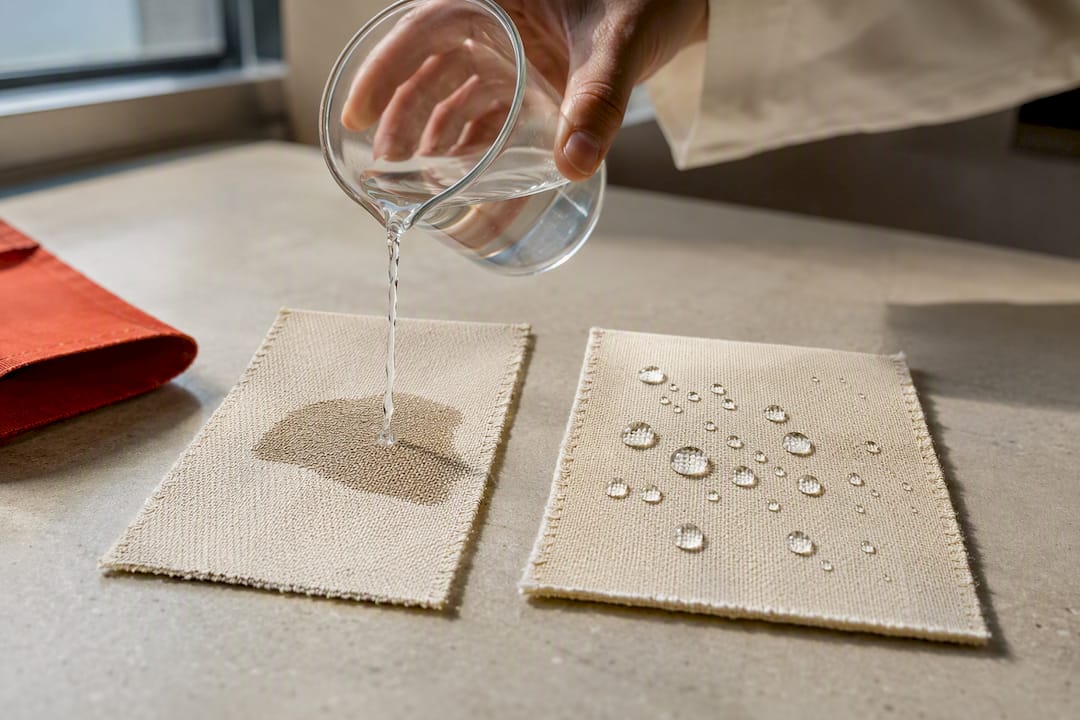
Stiffness is the tradeoff for all this durability. Canvas doesn’t drape like cotton lawn or rayon, and heavier weights can be genuinely difficult to sew on a standard home machine. Breathability also drops as you add coatings, so a waxed canvas jacket feels noticeably different against skin than plain cotton duck.
Pro Tip: If you’re stretching canvas for painting rather than sewing it, buy slightly more fabric than you think you need. Canvas has some give when wet from gesso or primer, and running short mid-stretch is a common beginner mistake.
Matching weight and finish to your project is mostly about being honest about how much abuse the finished item needs to survive.
On the sewing side, anything above roughly 12 oz/yd² calls for a heavier needle and thicker thread. Many makers reach for a 90/14 or larger needle paired with heavy-duty polyester or bonded nylon thread once they’re working with 12 oz-plus canvas, since standard needles tend to skip stitches or snap outright on dense weaves. Before buying, run through four questions: What weight does the project actually need? Which fiber fits the budget and look? Does it need a water-resistant finish? And does the price per yard make sense for the quantity required?
Canvas rewards a little maintenance and punishes neglect. Most cotton canvas can be machine washed on a gentle cycle, but heavier waxed or coated pieces should never go in a washing machine, since agitation breaks down wax coatings and can crack PVC.
The name traces back to the Latin word “cannabis,” referring to hemp, filtered through Anglo-French “canevaz.” That etymology reflects history accurately: canvas was originally a hemp fabric long before cotton entered the picture, used for centuries in ship sails and military tents because hemp fiber resisted rot and salt water reasonably well.
Cotton duck eventually took over as the dominant canvas fiber once industrial cotton production made it cheaper and more consistent than hemp. Painters, meanwhile, split down a different path. Many still prefer linen canvas over cotton for its tighter, more stable weave, even though cotton dominates the budget end of the art supply market today.
Fabric-Fabric groups canvas by intended use, including backdrop and heavy fabric categories, so you can filter by weight and finish rather than guessing from a photo. Before ordering, check the listed weight, fiber content, and finish on product pages, and consider ordering a swatch if unsure how a specific canvas will feel or drape for your project.
Most people overthink fiber choice and underthink weight. If you’re making a tote bag, whether it’s cotton or a cotton-poly blend matters far less than whether you picked 10 oz canvas when the project actually needed 15 oz duck. Weight determines how the finished piece performs. Fiber mostly determines cost and feel.
Artists chasing archival quality should lean toward linen despite the price jump, since its dimensional stability over decades is well documented. Outdoor gear makers should stop treating waxed canvas as optional. Untreated cotton will get you through a dry weekend, not a season of real exposure. Start with the end use, then work backward to weight and finish. Fiber is the last decision, not the first.
— kev
The Wikipedia entry on canvas covers general composition and historical uses. The cotton duck Wikipedia page explains duck weave and naming. Sewport’s canvas fabric guide details technical specs and finishing methods.