

 US Dollar

Benefits of Cotton Fabrics: Health, Comfort & Sustainability
Posted by BLG on 2026 Jul 31st
Posted by BLG on 2026 Jul 31st

TL;DR:
- Cotton offers comfort, breathability, and skin safety, but its environmental impact varies widely depending on farming practices and region. Certifications like GOTS and OEKO-TEX help ensure transparency and restrict harmful chemicals in finished textiles. Careful selection, proper laundering, and prioritizing durable, certified cotton products can maximize benefits and reduce downsides.
Cotton delivers reliable softness, breathability, and skin-friendly performance for everyday wear. Its environmental footprint, though, depends heavily on how and where it’s grown. Certifications like GOTS (Global Organic Textile Standard) and OEKO-TEX help narrow the gap between marketing claims and reality, and retailers like Fabric-fabric make it easier to find cotton with full product specs so you know what you’re actually buying.
At a glance:
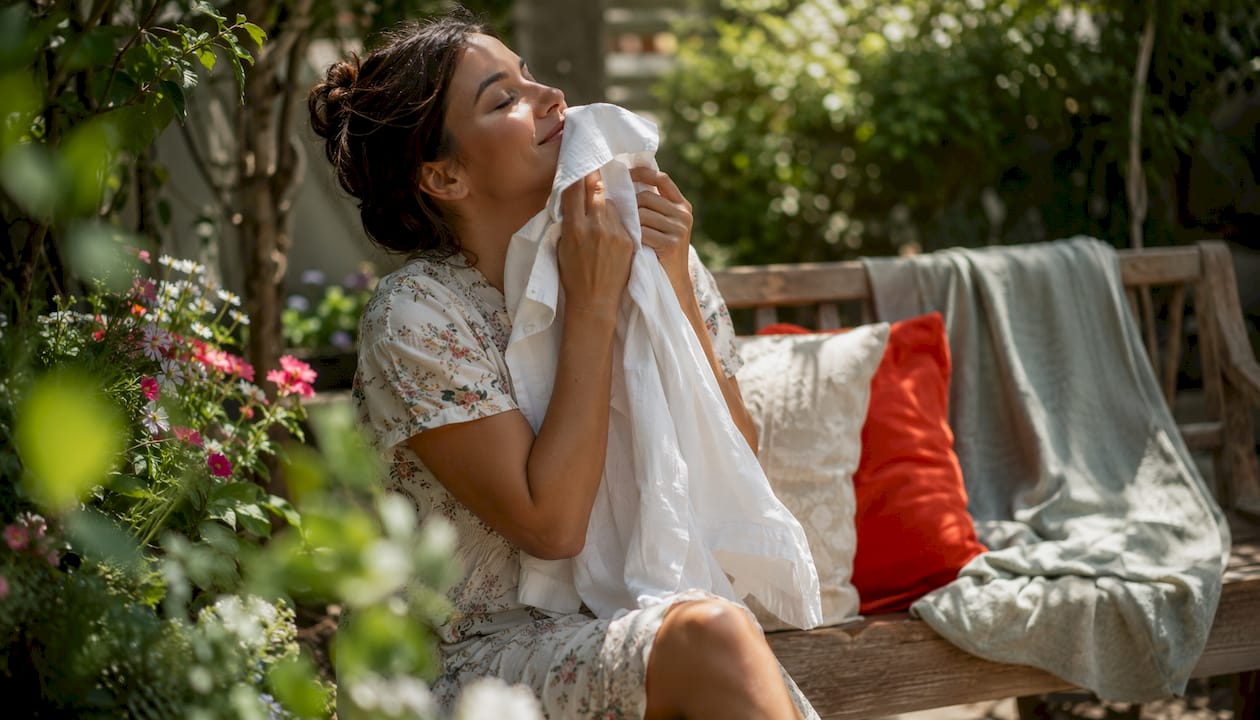
Cotton’s comfort advantage starts at the fiber level. Each strand is a cellulose-based structure with a natural crimp that traps air and allows the fabric to breathe. That’s why a cotton T-shirt feels cooler against your skin than a polyester one at the same weight. The fiber’s surface is also smooth enough that it doesn’t mechanically irritate skin the way coarser fibers can.
Moisture behavior is where cotton gets more nuanced. It absorbs well, holding a substantial amount of water relative to its weight — but it holds onto that moisture rather than pushing it away from the skin. For a morning walk or a casual day at the office, that absorbency feels comfortable. For a hard gym session, it means a damp, heavy shirt that stays wet long after you’ve cooled down.
Fabric construction changes the experience significantly. A loosely woven muslin and a dense twill are both 100% cotton, but they perform very differently. Knit structures (jersey, interlock) stretch and breathe better for body-close wear. Woven structures (poplin, canvas, denim) hold shape and resist abrasion. Weight in grams per square meter (gsm) matters too: a 140 gsm jersey is airy and light; a 280 gsm canvas is durable but warm.
The short answer: raw cotton fiber is rarely an allergen. Skin reactions attributed to “cotton” are almost always caused by something done to the fiber after harvest. Formaldehyde resins (used for wrinkle resistance), optical brighteners, phthalate-containing softeners, and residual bleaching agents are the usual culprits.
A GC/MS screening study of cotton textiles identified 36 compounds, including phthalates and fatty acid esters, some of which carry ecotoxicity concerns when released during laundering. That’s a meaningful finding for anyone with contact dermatitis who assumed their cotton clothing was chemically inert.
For people with atopic dermatitis, cotton has long been the standard clinical recommendation. Dermatology reviews confirm that traditional cotton is generally safe for sensitive skin, though the evidence for cotton actively improving atopic dermatitis symptoms is mixed. Newer functional textiles — silver-coated, chitosan-coated, and cellulose-based fabrics — show more specific clinical benefits in limited trials, but the evidence quality remains low and recommendations are still weak. Plain cotton remains the practical baseline.
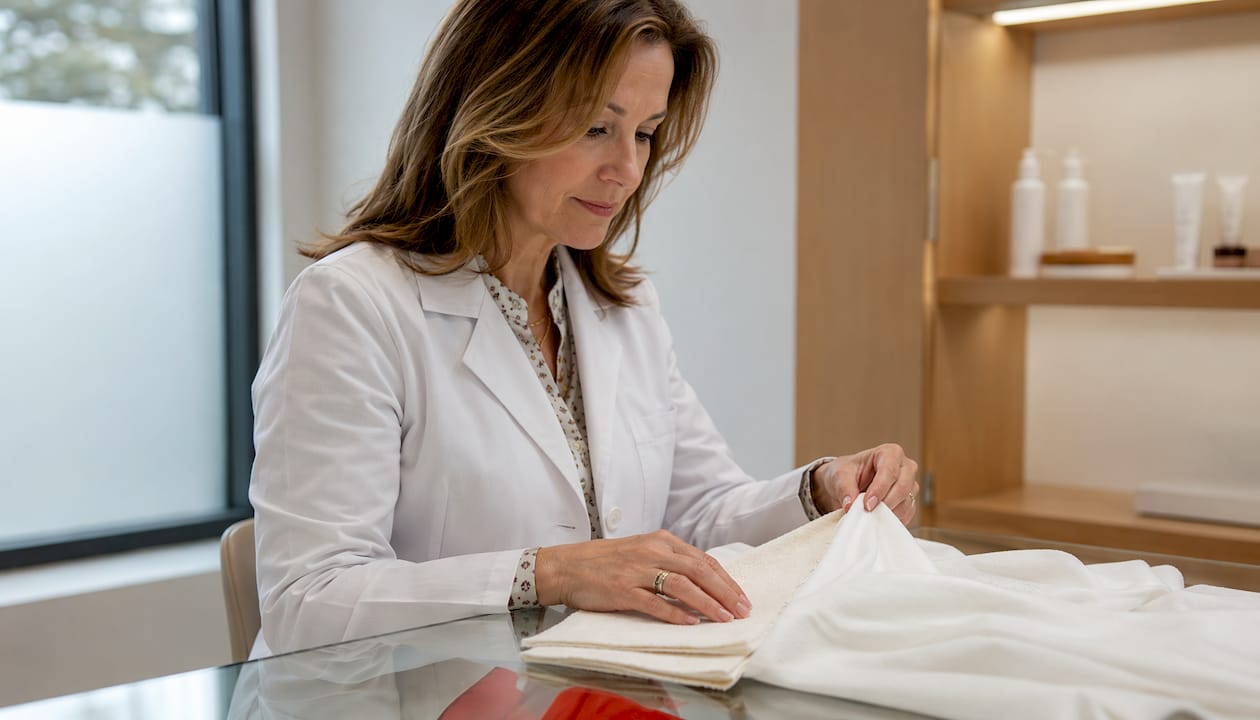
Antimicrobial finishes are worth a separate note. Research on the textile-skin microbiome relationship warns that broad-spectrum antimicrobial treatments can disrupt the skin’s natural microbiome, which may cause problems of their own. “Natural” and “antimicrobial” are not the same thing, and the latter isn’t automatically better for sensitive skin.
Pro Tip: Before wearing any new cotton garment, wash it once in warm water with a fragrance-free detergent. This removes surface finishing residues that are most concentrated in unworn fabric. If you have known sensitivities, look for GOTS-certified or OEKO-TEX Standard 100-labeled cotton, which restricts harmful substances at both the farming and processing stages.
Cotton is durable for everyday use, but it ages in predictable ways. Heat and agitation during washing cause fibers to contract, which is why untreated cotton shrinks. Repeated mechanical stress from washing and wearing causes pilling on lower-quality yarns. UV exposure and chlorine bleach both degrade the fiber and fade color over time.
The good news is that cotton responds well to simple care adjustments. Pre-washing new items removes finishing residues and pre-shrinks the fabric before you cut or sew. Cold or warm water (not hot) preserves both color and dimensions. Air drying reduces shrinkage and extends fiber life compared with a hot dryer cycle.
Care checklist:
Extending cotton’s life:
Cotton’s repairability is a genuine advantage over synthetic blends. A 100% cotton item can be composted at end of life (assuming it’s free of synthetic coatings), while a cotton-polyester blend cannot.
Cotton’s sustainability story is complicated, and anyone who gives you a simple answer is skipping the hard parts. The fiber can be lower-impact under organic or regenerative farming systems, but it can also be water-intensive and pesticide-heavy in conventional production, depending on the region and irrigation method.
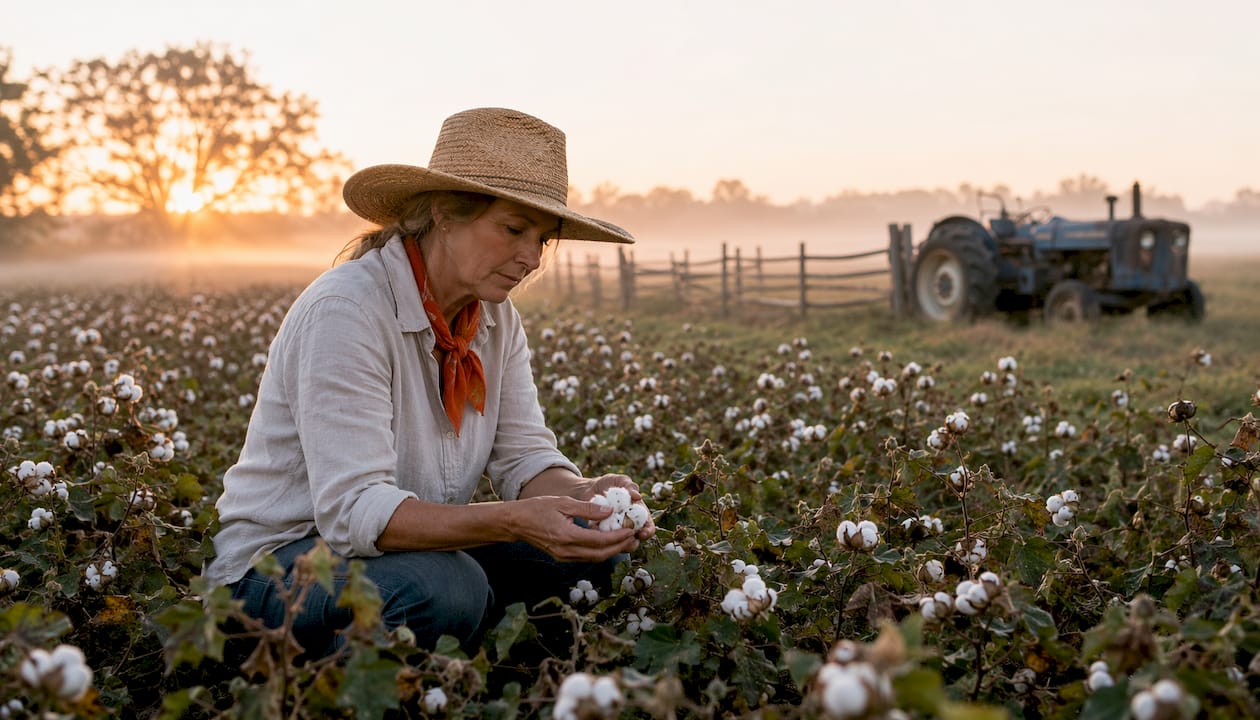
A Textile Exchange LCA study found that nitrogen management, water use, and yields are the primary drivers of cotton’s environmental impact, and that these vary enormously by geography and farming practice. A 2026 AESA study comparing viscose, cotton, and polyester concluded that none of the three fibers are absolutely sustainable against planetary carrying capacities. Cotton exceeded several impact category thresholds, including climate, freshwater eutrophication, and particulate matter, depending on the allocation method used.
Carbon accounting adds another layer of complexity. A U.S. cradle-to-gate LCA found that 1 kg of U.S. cotton fiber produced 1.45 kg CO2e in fossil emissions. When biogenic carbon storage was factored in, the adjusted net result could turn negative under certain accounting assumptions. The number you see depends entirely on the methodology.
The bottom line on cotton and sustainability: no fiber wins outright. Regional farming practices, water sources, processing chemistry, and end-of-life pathways all shape the outcome. Buying less, choosing certified options, and favoring durable construction matters more than switching fibers.
Certifications worth checking:
Neither GOTS nor OEKO-TEX replaces origin-specific LCA data, but they’re the most practical filters available at point of purchase. For a deeper look at organic cotton benefits and what certifications actually cover, Fabric-fabric’s blog breaks it down clearly.
Cotton is the right call for most everyday clothing and home textile applications. It’s the wrong call for anything that demands fast moisture management or sustained performance in wet conditions.
Cotton works best for:
Skip cotton (or use a blend) when:
For a broader comparison of how cotton stacks up against linen, bamboo, and performance synthetics across different use cases, this shirt fabric guide covers the practical differences clearly.
The label tells you more than most shoppers realize. Here’s what to look for before you commit.
For sourcing guidance on specialty and sustainable fabrics, Fabric-fabric’s blog covers supplier checks and what to ask before you buy.
The evidence base for cotton’s skin safety is solid but not spectacular. A systematic review of functional textiles for atopic dermatitis found that silver-coated textiles showed some improvement in SCORAD scores in a subset of trials, and that silk showed mixed results. Plain cotton served as the control in several of these studies and showed mild, non-statistically significant improvements. That’s not a failure — it confirms cotton as a safe, stable baseline rather than an active therapeutic.
“Appropriate fabric selection can reduce the symptom severity and exacerbations of atopic dermatitis.” — Fabric Selection in Atopic Dermatitis: An Evidence-Based Review, PubMed
On the sustainability side, the Textile Exchange LCA work reinforces that regional variability is the dominant factor. Buyers who want accurate sustainability claims need origin and farming-practice data, not just a fiber label. The 2026 AESA study adds weight to this: no major fiber clears all planetary boundaries, which means consumption volume and garment longevity matter as much as fiber choice.
Practical recommendations from the current evidence:
“Natural means chemical-free.” It doesn’t. Conventional cotton is one of the more chemically intensive crops, and the finishing process adds another layer of potential residues. The GC/MS screening research identified phthalates and other compounds in finished cotton textiles. Certified organic cotton reduces but doesn’t eliminate all chemical exposure.
“Cotton doesn’t hold odor.” Cotton actually retains moisture and odor more than many synthetics, partly because of its absorbency and partly because of how it’s laundered. Research on laundering behavior notes that the shift to lower-temperature washes reduces microbial removal compared with hot washes, which can leave more odor-causing bacteria in the fabric.
“Lower-temperature washing reduces microbial removal compared with hot washes and altered detergent chemistries.” — The Future of Functional Clothing for an Improved Skin and Textile Microbiome Relationship, PMC
“Cotton is always the sustainable choice.” The AESA study’s finding that cotton exceeded several planetary impact thresholds in certain scenarios makes this claim hard to defend as a blanket statement. Organic and regenerative systems improve the picture, but the honest answer is: it depends on where and how it was grown.
Practical odor management for cotton: wash at the highest temperature the care label allows, use enzyme-based detergents, and air dry in sunlight when possible. For high-activity use, a moisture-wicking inner layer reduces how much sweat cotton absorbs in the first place.
Cotton’s benefits are real and well-documented, but the full picture requires checking certifications, origin, and processing details before you buy.
| Point | Details |
|---|---|
| Comfort and breathability | Cotton’s cellulose fiber structure delivers softness and airflow for casual wear, sleepwear, and home textiles. |
| Skin safety baseline | Raw cotton fiber is rarely an allergen; reactions usually trace to finishing chemicals, not the fiber itself. |
| Environmental variability | Cotton’s footprint ranges from low to high depending on farming system, region, and water source. |
| Certifications to seek | GOTS verifies organic farming and processing; OEKO-TEX Standard 100 restricts harmful substances in finished textiles. |
| Fabric-fabric for cotton shopping | Fabric-fabric offers detailed product specs, certifications, and a full range of cotton options for apparel, quilting, and home decor. |
The conventional wisdom on cotton tends to fall into two camps: uncritical praise (“it’s natural, it’s safe, it’s sustainable”) or overcorrection (“it uses too much water, it’s full of chemicals”). Neither holds up under scrutiny.
What the evidence actually shows is that cotton is a reliable, skin-safe, and practical fiber for most everyday applications. Its comfort credentials are genuine. Its hypoallergenic reputation is mostly earned, with the important caveat that processing chemistry can undermine it. Its sustainability story is genuinely mixed, and anyone who tells you otherwise is selling something.
The more useful frame is this: cotton’s quality depends on decisions made long before the fabric reaches you. Farming practice, water source, finishing chemistry, and certification status all shape what you’re actually wearing. A GOTS-certified organic cotton jersey and a heavily finished, wrinkle-resistant cotton poplin are both “cotton,” but they’re not the same product for your skin or the environment.
The practical takeaway is to treat certifications and origin transparency as minimum requirements, not bonus features. Buy durable construction over cheap weight. Wash new garments before wearing. And for high-performance applications, be honest about whether cotton is actually the right tool.
If you’ve read this far, you know that cotton quality lives in the details: fiber content, weight, finish, and certification. Fabric-fabric stocks a wide range of cotton options across apparel, quilting, and home decor categories, with product pages that list construction details, usage suggestions, and care guidance so you’re not guessing.

For home projects, the home decor fabric range covers everything from light cotton for curtains to heavier weights suited for upholstery and cushion covers. Quilters will find 100% cotton options in the quilting fabric collection, organized by print and weight. Fabric-fabric regularly runs promotions including free shipping thresholds and seasonal discounts, so check the site for current offers before you order.