

 US Dollar

What Is Toile de Jouy? Complete Guide for Textiles
Posted by BLG on 2025 Oct 24th
Posted by BLG on 2025 Oct 24th

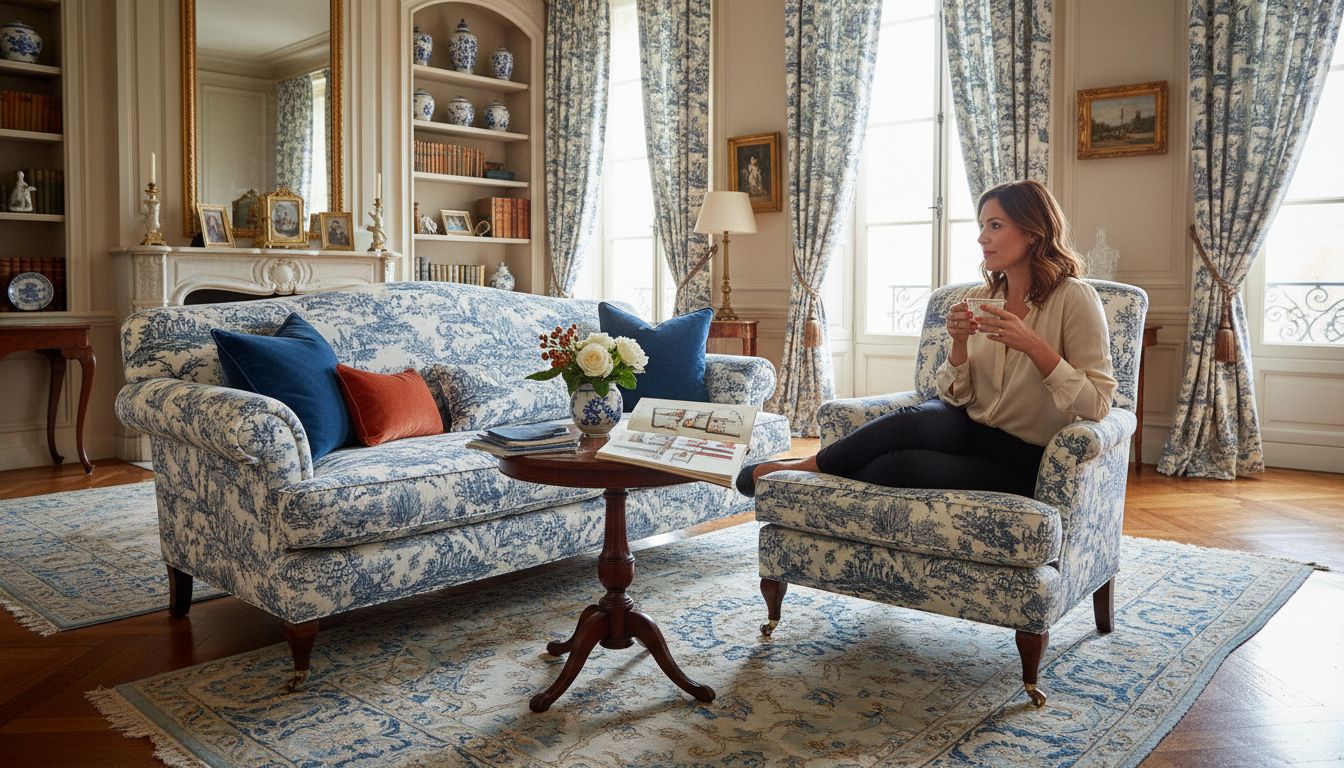
Did you know that Toile de Jouy first appeared in France over 260 years ago and remains a favorite among designers today? This timeless fabric charms people with its detailed scenes and artistic flair. Whether you appreciate history or have an eye for decor, discovering the story behind Toile de Jouy adds new meaning to its beautiful patterns and creative uses across both fashion and interiors.
| Point | Details |
|---|---|
| Historical Significance | Toile de Jouy, originating in the 18th century, is renowned for its intricate narrative designs that reflect France’s textile innovations. |
| Design Characteristics | The fabric features monochromatic patterns predominantly in blue, red, and black, illustrating detailed pastoral and romantic scenes. |
| Versatile Applications | This fabric extends its use beyond traditional upholstery, flourishing in both home decor and fashion, serving as a sophisticated design element. |
| Narrative Differentiation | Unlike other decorative fabrics, Toile de Jouy’s storytelling approach allows it to captivate audiences with its historical and imaginative themes. |
Toile de Jouy is a distinctive and elegant printed fabric with roots deeply embedded in 18th-century French textile history. According to Britannica, this fabric is characterized by cotton or linen material featuring intricate designs depicting landscapes, pastoral scenes, and human figures. Toile de Jouy literally translates to “cloth from Jouy,” referencing its precise geographic origin in the small French town of Jouy-en-Josas near Paris.
The fabric’s fascinating story begins in 1760 when Christophe-Philippe Oberkampf established a groundbreaking textile factory that would revolutionize decorative printing techniques. As noted by Homes and Antiques, Oberkampf’s factory operated until 1843, producing meticulously crafted textiles that would become legendary in design circles. His innovative approach transformed textile production, introducing sophisticated printing methods that allowed for complex, narrative-rich patterns.
Key characteristics of traditional Toile de Jouy include:
These textiles quickly transcended their functional origins, becoming coveted decorative elements in upper-class European homes. From upholstery and curtains to clothing and accessories, Toile de Jouy represented more than just fabric - it was a canvas for artistic expression and social storytelling.
Toile de Jouy stands out in the textile world through its distinctive monochromatic printing style that captures intricate narratives within its fabric design. According to World of Interiors, these prints reflect the 18th-century French fascination with detailed etchings and prints, typically featuring complex scenes against a light background. The design philosophy goes far beyond simple decoration, transforming fabric into a storytelling medium.
As highlighted by Homes and Antiques, the prints are predominantly monochromatic, utilizing a white or off-white background adorned with single-color designs. The color palette typically includes:
The subject matter of these prints is remarkably diverse, often depicting scenes that provide social commentary or romantic narratives. Popular themes include:
What makes Toile de Jouy truly remarkable is its ability to transform fabric from a mere functional material into an artistic canvas. Each design tells a story, capturing moments of 18th-century life with extraordinary detail and aesthetic sophistication. The meticulous hand-drawn quality of these prints ensures that no two pieces are exactly alike, making each textile a unique work of art.
Toile de Jouy fabrics are renowned for their signature monochromatic designs that transform textile printing into a sophisticated art form. According to World of Interiors, these traditional patterns are most commonly found in classic colors that create dramatic visual narratives against light backgrounds.
The classic color palette for Toile de Jouy includes several iconic variations:
Contemporary designers have expanded beyond the traditional monochromatic approach, experimenting with multi-colored prints while maintaining the intricate storytelling essence of Toile de Jouy. These modern interpretations often blend multiple design elements, creating more complex and visually dynamic textiles that appeal to contemporary tastes.
Interesting variations now include:
The enduring appeal of Toile de Jouy lies in its ability to balance historical craftsmanship with evolving design sensibilities.
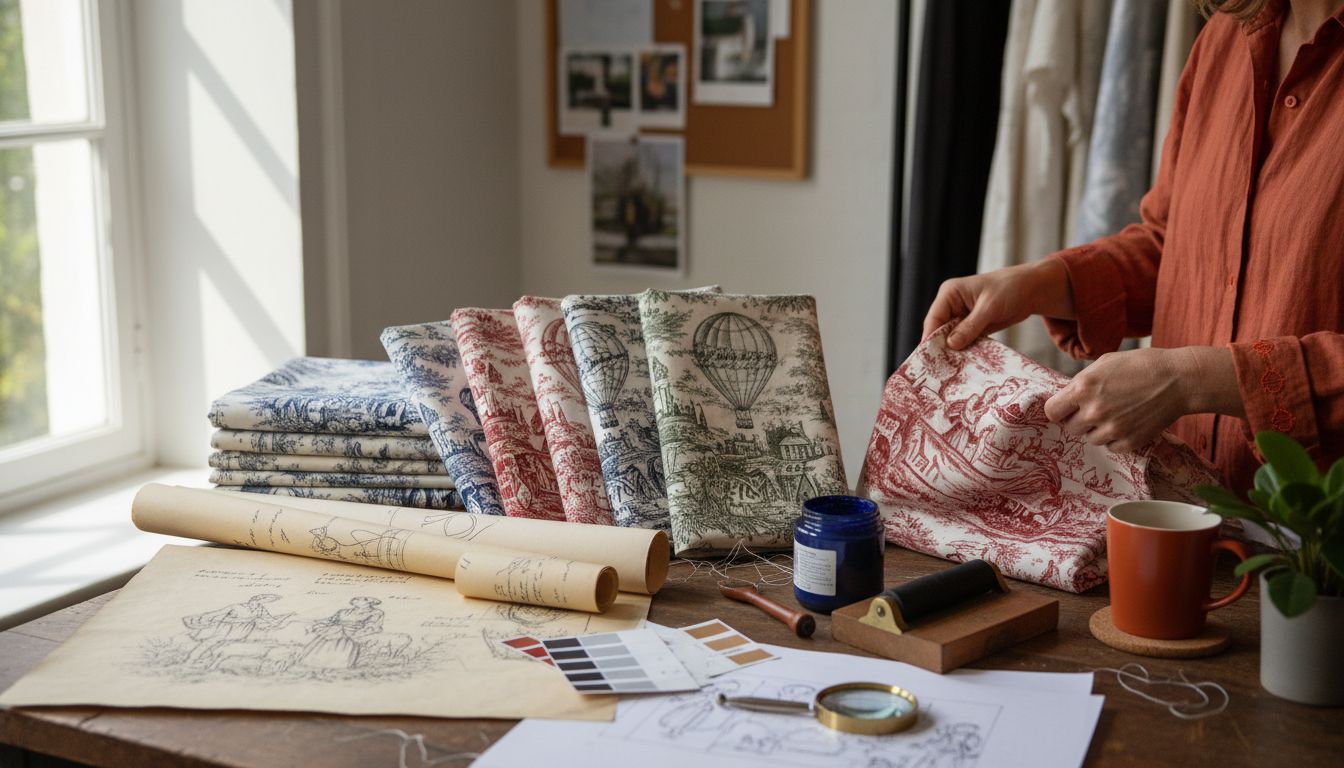 Whether used in traditional or contemporary settings, these fabrics continue to tell stories through their rich, detailed patterns and sophisticated color choices.
Toile de Jouy has transcended its historical origins to become a versatile design element embraced by both fashion designers and interior decorators. According to French Entree, this textile has found its way into numerous creative applications, demonstrating remarkable adaptability across different design contexts.
Home Decor Applications offer particularly exciting possibilities for Toile de Jouy enthusiasts:
In the realm of fashion, designers have ingeniously incorporated Toile de Jouy into clothing and accessories, creating pieces that blend historical narrative with contemporary style. Potential fashion applications include:
What makes Toile de Jouy truly exceptional is its ability to tell a story through fabric. Each design serves as a miniature canvas, transforming ordinary objects into conversation pieces that reflect artistic heritage and creative imagination. Whether used sparingly as an accent or embraced as a dominant design element, these fabrics continue to captivate designers and consumers alike with their intricate storytelling and timeless aesthetic appeal.
The origins of Toile de Jouy can be traced back to its fascinating relationship with other textile traditions, particularly the vibrant Indian chintzes that inspired its development. According to Homes and Antiques, these Indian textiles introduced sophisticated block-printing techniques that would fundamentally influence French textile design in the 17th century.
Key differences between Toile de Jouy and similar fabrics include:
Here’s a comparison of Toile de Jouy and similar decorative fabrics:
| Fabric Type | Printing Method | Typical Colors | Key Features |
|---|---|---|---|
| Toile de Jouy | Printed (monochrome) | Blue Red Black Green |
Narrative scenes Intricate detail |
| Chintz | Printed (multicolor) | Bright, varied | Floral/animal motifs Glossy finish |
| Damask | Woven | Solid or tone-on-tone | Reversible Intricate woven patterns |
| Brocade | Woven (raised) | Metallics and colors | Embossed/rich textures |
| Paisley | Printed or woven | Multicolor or monochrome | Repeating paisley motif |
The most significant distinguishing factor of Toile de Jouy is its unique narrative approach. Unlike other decorative fabrics that focus on abstract or repetitive patterns, Toile tells complex stories through its carefully crafted scenes. Each design functions like a miniature historical painting, capturing moments of daily life, mythology, or romantic encounters in exquisite detail.
Modern textile designers continue to draw inspiration from Toile de Jouy’s distinctive storytelling technique, reimagining its classic approach with contemporary printing technologies and design sensibilities. This ongoing evolution ensures that Toile remains a dynamic and compelling fabric tradition, bridging historical craftsmanship with innovative artistic expression.
Discovering the rich stories and intricate patterns of Toile de Jouy is inspiring, but finding high-quality textiles that capture this charm can be challenging. Whether you are aiming to create elegant home decor or fashion pieces that tell a unique story, the right fabric matters deeply. Toile de Jouy is more than fabric it is a narrative woven into every thread, and selecting authentic, finely printed textiles will bring sophistication and historical beauty to your creations.
Bring these timeless scenes into your next project today by exploring our wide selection of premium fabrics at Fabric-Fabric. You will find options perfect for upholstery, crafting, and apparel all carefully described to help you choose the ideal material. Don’t wait to add that classic French elegance and detailed artistry with Toile de Jouy-inspired designs. Start browsing now and transform your ideas into stunning realities.
Toile de Jouy is a distinctive printed fabric originating from the 18th century in France, characterized by intricate monochromatic designs depicting landscapes, pastoral scenes, and human figures.
Key features of Toile de Jouy include its monochromatic color schemes, detailed storytelling scenes, intricate hand-drawn quality, and predominantly scenic or figurative designs.
Toile de Jouy can be creatively used in home decor for upholstery, curtains, throw pillows, wall coverings, and table linens, adding a touch of elegance and artistic storytelling to interiors.
Unlike chintz, which is multicolored and features floral patterns, Toile de Jouy is typically monochromatic with narrative scenes. Damask is woven with complex patterns, whereas Toile relies on printed designs to convey stories.