

 Canadian Dollars

Fabric Hand Explained: Key Factors and Applications
Posted by BLG on 2025 Oct 23rd
Posted by BLG on 2025 Oct 23rd


Did you know that over 60 percent of consumers say the way a fabric feels actually sways their buying decisions? The sensation you get when you touch a fabric, also known as fabric hand, shapes comfort, performance, and even the overall look of clothing and home decor. Understanding fabric hand gives designers and makers an edge, guiding them to select the materials that truly deliver both style and satisfaction.
| Point | Details |
|---|---|
| Understanding Fabric Hand | Fabric hand is critical in textile selection, influencing comfort, performance, and aesthetics in design. |
| Key Characteristics | Factors like fiber composition, yarn structure, and surface treatment significantly affect how fabrics feel and perform. |
| Assessment Techniques | Combining sensory evaluation with technology aids in accurate fabric hand assessment, enhancing selection processes. |
| Project-Specific Selection | Choosing the right fabric hand requires aligning material properties with project goals, aesthetic desires, and user comfort. |
Fabric hand, a fundamental concept in textile design, refers to the tactile sensory experience created when a fabric is touched or held. According to Textile World, this characteristic is crucial in guiding fabric choices and manufacturing techniques across various industries.
When examining fabric hand, designers and manufacturers evaluate multiple sensory perceptions including:
As defined by textile research, hand feel encompasses the complete physical interaction between a person’s skin and the fabric surface. What makes this concept fascinating is how subjective yet scientifically measurable it can be. Tactile perception transforms fabric from mere material into an experience that influences comfort, performance, and aesthetic appeal.
Understanding fabric hand allows professionals to select textiles perfectly matched to specific applications. A quilter might prefer a soft, flexible fabric, while an upholstery designer needs a more structured material. By recognizing these nuanced qualities, creators can make informed decisions that elevate their projects from ordinary to exceptional.
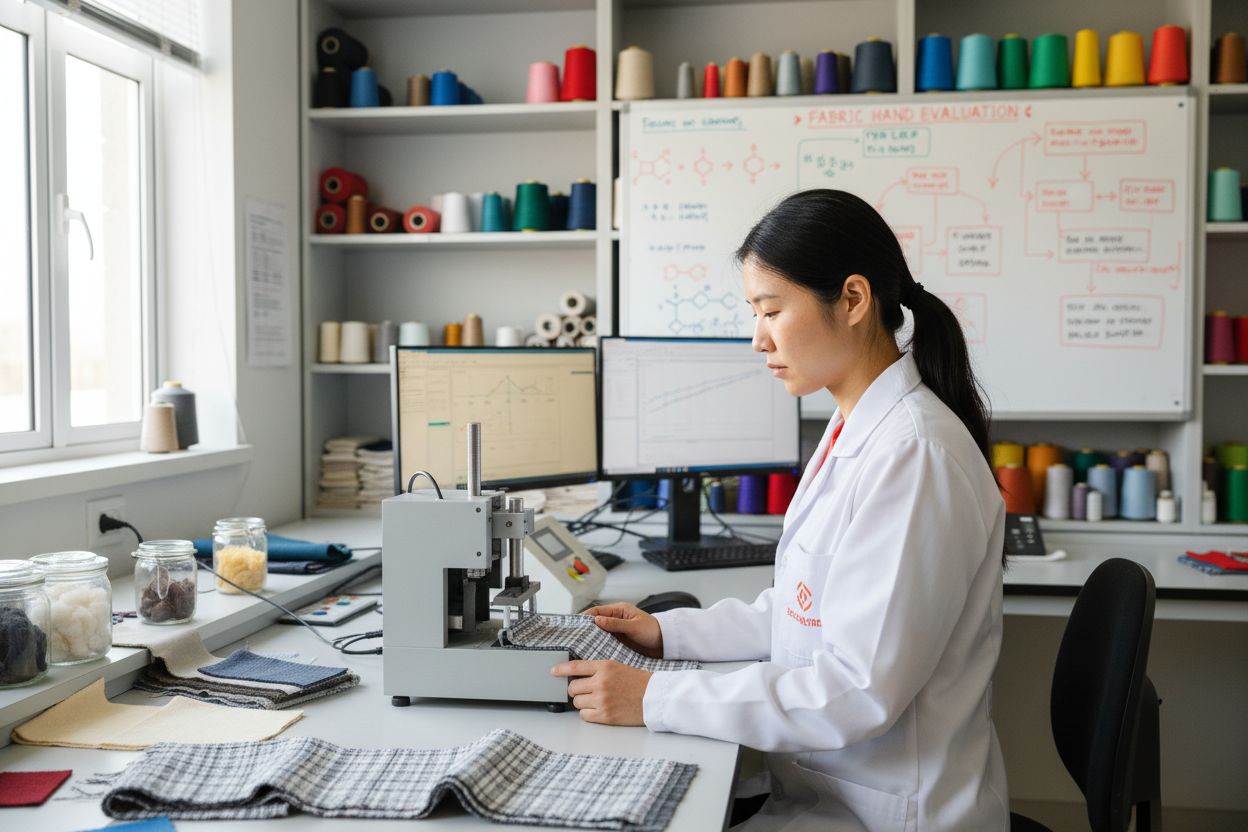
The hand of a fabric emerges from a complex interplay of multiple characteristics that determine its tactile and visual qualities. According to research from Wikipedia on textile aesthetics, fundamental factors like texture, drape, and inherent fiber properties play critical roles in defining how a fabric feels and performs.
Key characteristics influencing fabric hand include:
Here’s a summary of key characteristics influencing fabric hand:
| Characteristic | Impact on Fabric Hand | Example Effect |
|---|---|---|
| Fiber Composition | Defines base tactile qualities | Silk: smooth Linen: crisp |
| Yarn Structure | Alters texture and resilience | Tight spin: sleek Loose: soft |
| Weave/Knit Pattern | Shapes surface feel and appearance | Twill: structured Jersey: stretchy |
| Fabric Weight | Affects drape and flexibility | Heavy: firm Light: fluid |
| Surface Treatment | Modifies softness, luster, stiffness | Brushed: softer Mercerized: shinier |
Textile finishing processes are particularly significant in hand modification. As noted by Wikipedia’s textile finishing research, manufacturers employ specialized chemical and mechanical treatments to enhance fabric characteristics. These treatments can soften, stiffen, add luster, or create specific textural qualities that fundamentally alter how a fabric interacts with human touch.
Understanding these nuanced characteristics allows designers and creators to select or develop fabrics precisely matched to their project requirements. Whether seeking a crisp, structured material for tailored clothing or a soft, flowing fabric for delicate garments, recognizing the subtle influences on fabric hand empowers more intentional and sophisticated textile selection.
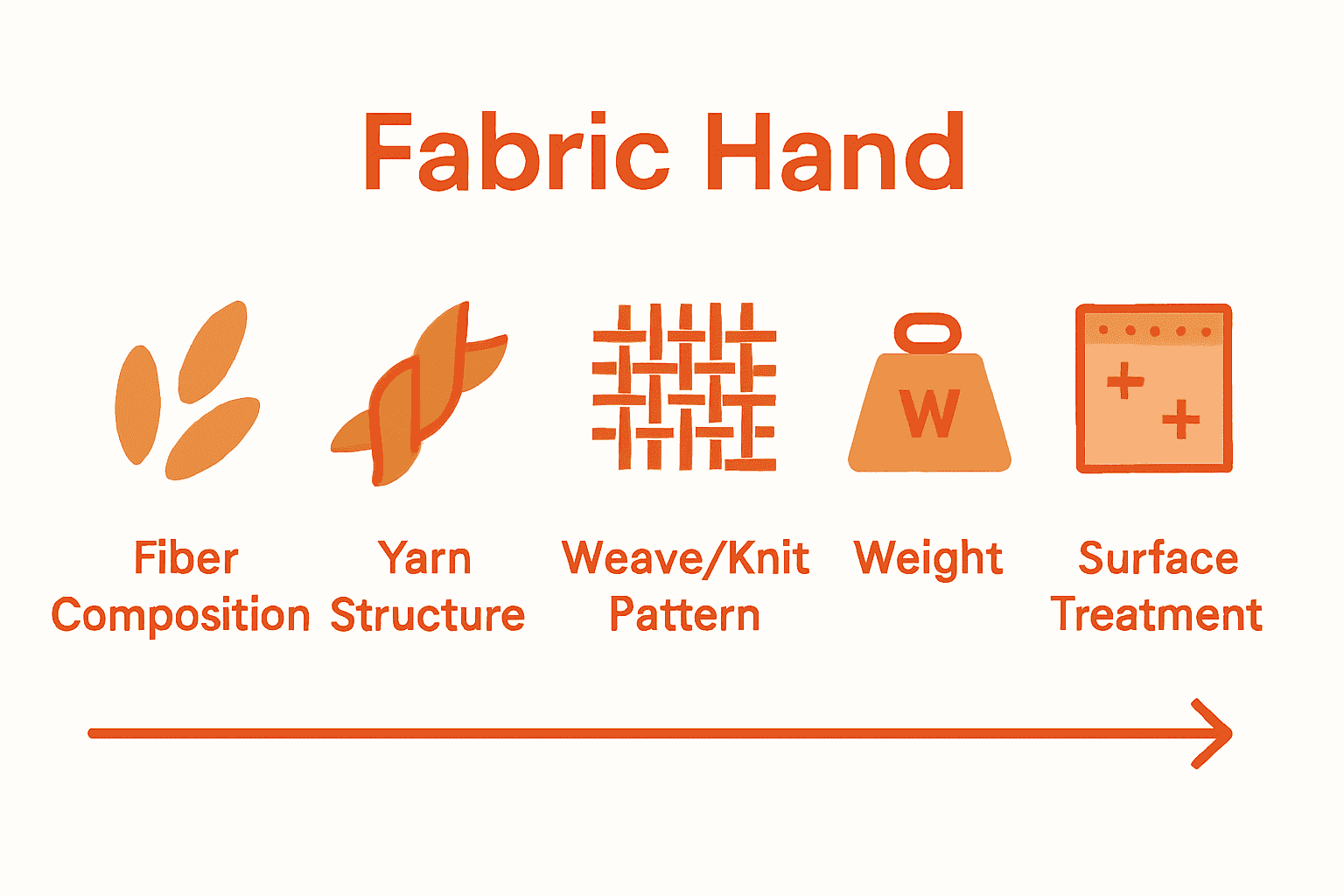
Assessing fabric hand involves a range of sophisticated techniques that blend sensory evaluation with cutting-edge technological approaches. According to Textile World, innovative devices like the TSA (Tactile Sensing Apparatus) now simulate human hand sensitivities to provide objective measurements of fabric characteristics.
Traditional and modern assessment methods include:
Recent advancements in technology have revolutionized fabric hand assessment. As research from MDPI indicates, artificial intelligence techniques like machine learning and deep learning models now offer automated, consistent evaluations of fabric properties. These sophisticated algorithms can predict handfeel characteristics with remarkable accuracy, reducing the reliance on purely subjective human assessments.
The combination of human expertise and technological innovation provides textile professionals with comprehensive insights into fabric performance.
Fabric hand plays a critical role across diverse creative disciplines, influencing design decisions and user experiences in apparel, home decor, and craft projects. According to research from the National Center for Biotechnology Information, effectively communicating fabric characteristics has become increasingly important in digital environments where physical material interaction is limited.
In different creative domains, fabric hand manifests uniquely:
Technological innovations are transforming how creators interact with fabric characteristics. Emerging technologies like Telextiles, as explored in research from ArXiv, aim to remotely transmit tactile sensations, enabling designers and consumers to experience fabric properties without direct physical contact. This breakthrough is particularly revolutionary for online shopping and remote design processes, bridging the sensory gap in digital textile interactions.
Understanding fabric hand empowers creators to make precise material selections that align with their specific project requirements. Whether designing a structured blazer, creating a soft throw pillow, or selecting the perfect quilting fabric, recognizing the nuanced qualities of fabric hand transforms creative vision into tangible, high-quality results.
Selecting the appropriate fabric hand requires a strategic approach that balances project-specific requirements with material characteristics. According to research from Springer, factors like performance, durability, and standardization are crucial considerations when incorporating fabrics into contemporary design projects.
Key considerations for fabric selection include:
Advanced technological resources are transforming fabric selection processes. Research from ArXiv highlights the development of datasets like TextileNet, which provide comprehensive categorization of textiles based on material taxonomy. These innovative tools assist designers and creators in identifying fabrics with precise hand characteristics for various applications, from fashion design to specialized craft projects.
Ultimately, choosing the right fabric hand is an art form that combines technical knowledge with creative intuition. By understanding the nuanced relationships between material properties and project requirements, creators can transform simple textiles into extraordinary design elements that not only look impressive but also feel remarkable to the touch.
Understanding fabric hand is key to choosing the right material that feels just right for your apparel, home decor, or craft projects. The article highlights common challenges like matching softness, texture, and drape to your specific needs. At fabric-fabric.com, we bring you detailed fabric descriptions and a wide range of options including silk, linen, velvet, and more. This helps you discover exactly the hand feel you want for comfort, durability, or style.
Explore our easy-to-navigate site where you can filter fabrics by intended use and tactile qualities. Don’t wait to elevate your creativity with fabrics chosen for their exceptional hand and quality. Visit fabric-fabric.com now to find fabrics that make your projects truly stand out. Take advantage of our seasonal sales and shipping offers today!
Fabric hand refers to the tactile experience of a fabric when touched. It is crucial in guiding fabric choices and manufacturing techniques, affecting comfort, performance, and visual appeal in various applications.
Characteristics such as fiber composition, yarn structure, weave or knit pattern, fabric weight, and surface treatment significantly impact a fabric’s tactile qualities and overall hand feel.
Fabric hand can be assessed through subjective touch evaluation, mechanical testing devices, digital scanning technologies, and artificial intelligence analysis for objective measurements of fabric characteristics.
To select the appropriate fabric hand, consider the project’s purpose, desired aesthetic, performance requirements, comfort level, and budget constraints, ensuring the fabric aligns with the intended use and design vision.