

 US Dollar

Which Upholstery Fabrics Actually Hold Up Over Time?
Posted by BLG on 2026 Aug 19th
Posted by BLG on 2026 Aug 19th

For heavy family use, the four most durable upholstery fabric families are solution-dyed performance synthetics, protected or pigmented leather, commercial-grade vinyl and faux leather, and high-grade microfiber blends. Each earns its spot for a different reason.
Manufacturers back the best of these with real numbers. Foundation®10, a commercial-grade woven polyester, is rated to survive 1,000,000 double rubs in Wyzenbeek testing, which is nearly 40 times a typical residential baseline. That kind of number matters for restaurants and clinics; for most homes, a fabric in the 25,000 to 50,000 range with a good cleaning code will outlast the couch’s frame.
The most durable upholstery fabrics combine a high double-rub rating with a practical cleaning code, since abrasion resistance alone doesn’t guarantee real-world lifespan.
| Point | Details |
|---|---|
| Prioritize solution-dyed fibers | Color runs through the fiber, so fading and wear stay minimal even in direct sun. |
| Check double-rub thresholds | Aim for 30,000 to 50,000 for heavy family use, 100,000+ only for commercial needs. |
| Match cleaning code to lifestyle | A W or WS code lets you clean spills confidently; X means vacuum only. |
| Weave matters as much as fiber | Tight, flat weaves resist snagging far better than loose or looped textures. |
| Sample before you buy yardage | Fabric-fabric offers swatches and performance fabric by the yard so you can test hand and cleanability first. |
Fiber name tells you less than you’d think. A “polyester” sofa can survive a decade of toddlers and dogs, or it can pill and gray within eighteen months, depending on how it’s woven, dyed, and finished. What actually predicts long life is a short list of measurable traits.
Abrasion resistance, expressed as a double-rub count, tells you how many rubbing cycles a fabric survives in a Wyzenbeek or Martindale test before it shows wear. Colorfastness matters just as much: solution-dyed fibers carry color all the way through, while topically dyed fabrics can fade or rub off with friction and sun exposure. Cleaning codes (W, S, WS, X) tell you what you’re actually allowed to clean the fabric with, and a high rub count paired with a spot-clean-only code is a trap plenty of shoppers fall into.
Weave structure changes everything else. Tight, flat weaves resist snagging from claws, zippers, and toys far better than loose or looped textures, regardless of what the fiber content label says. Backing and finish technology, especially moisture-barrier layers, stop spills from ever reaching the cushion foam, which is often the real cause of a couch’s death, not the visible fabric wear.
Pro Tip: Always ask if the cushion cover unzips and machine washes. A 50,000 double-rub fabric that can’t be laundered still traps stains and pet dander permanently.
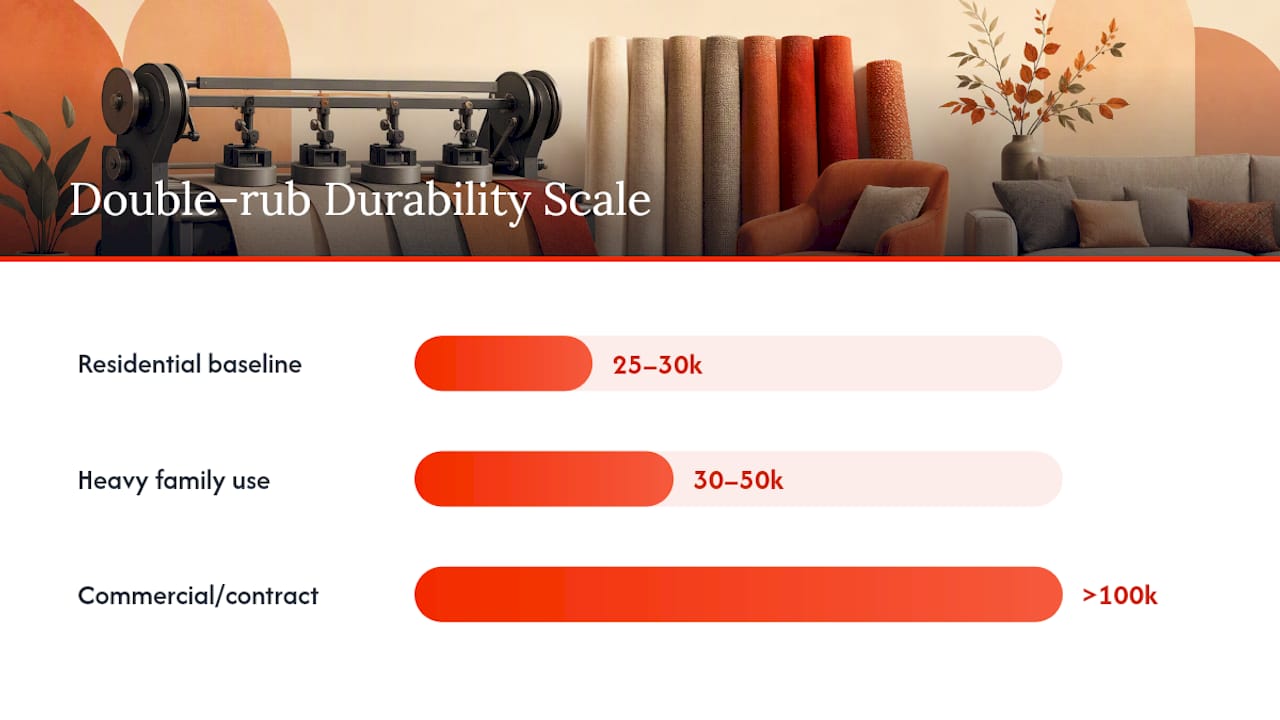
As a rough shopping guide, 25,000 to 30,000 double rubs works as a residential baseline, 30,000 to 50,000 suits heavy family use, and anything above 100,000 is built for commercial or contract settings.
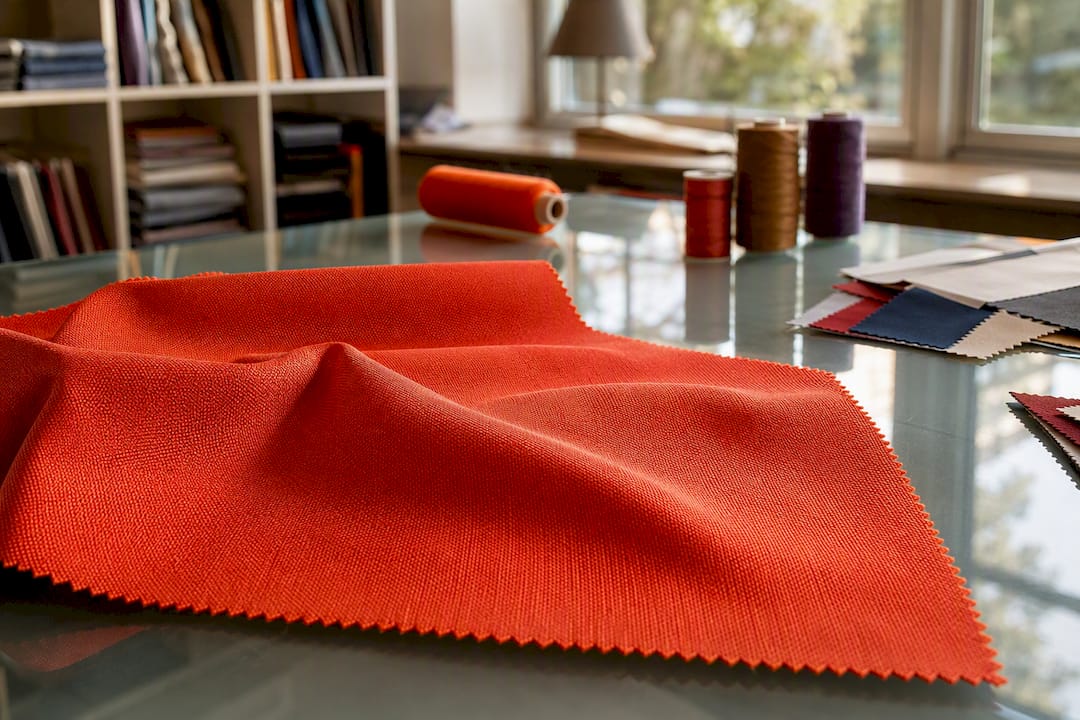
Solution-dyed performance synthetics are the workhorses of the category. Performance polyester and olefin (marketed under names like Sunbrella-style outdoor-grade textiles) resist fading, staining, and abrasion because the color and the fiber are essentially one material. They handle bleach-based spot cleaners in many cases and tolerate direct sun without bleaching out in a season. Best for: sunrooms, pet households, and anyone who wants to stop babying the couch.
Protected or pigmented leather takes a cowhide and seals it with a topical finish that resists scratches and wipes clean with a damp cloth. It won’t patina the way aniline leather does, but it also won’t stain from red wine or crayon. Cats can still snag it, and heavy scratching does show over the years. Best for: households without claw-happy pets who want a wipeable, allergy-friendly surface (leather doesn’t trap dust and dander the way fabric does).
Commercial vinyl and performance-coated faux leather go a step further. The surface is essentially sealed plastic, so it shrugs off spills, disinfectant wipes, and heavy scrubbing, which is why you see it in diners and dental offices. At home, it makes sense for a mudroom bench or a kid-heavy playroom, but it can feel less inviting for a formal living room and traps heat against skin in warm climates.
High-grade microfiber and performance poly blends split the difference between comfort and toughness. They’re dense enough to resist pilling and snagging while keeping a soft hand, which is why they’ve become a default recommendation for households with pets and kids.
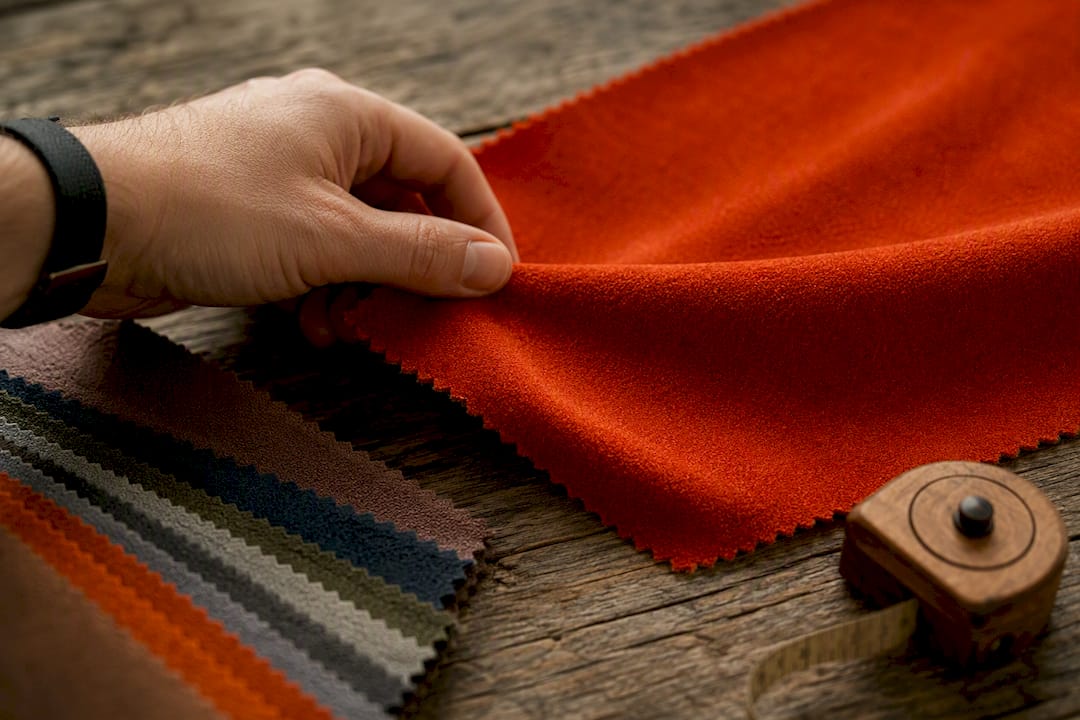
Tightly woven cotton canvas or twill can work for lighter traffic, but natural fibers need a stain guard treatment and are more vulnerable to sun fading than solution-dyed synthetics.
Skip bouclé, loose chenille, high-pile velvet, and delicate jacquard weaves for heavy-use furniture. Their looped or raised surfaces snag on claws and zippers no matter how high the lab rub count reads. A tight, flat weave outperforms a loose one even at a lower double-rub rating.
A double-rub count comes from the Wyzenbeek or Martindale test, where a mechanical arm rubs fabric against a wire screen or wool pad until it visibly wears through. Each cycle back and forth counts as one double rub, and the number on a spec sheet is how many cycles the sample survived before failing.
In practice, that maps to a rough scale: 15,000 double rubs suits decorative or occasional-use pieces, 25,000 is a reasonable residential baseline, and 30,000 to 50,000 covers heavy family use. Above 100,000 typically signals a commercial or contract-grade fabric.
The catch: abrasion testing says nothing about staining, snagging, or fading. A fabric can pass 100,000 double rubs and still show every red wine spill it’s ever met, or snag on a cat’s claw the first week. Some manufacturers now caution that extremely high rub counts don’t reliably predict real-world lifespan on their own once you’re past the six-figure range, since other failure modes take over first.
Even the toughest fabric shortens its own lifespan without basic upkeep. Vacuum weekly to keep grit from grinding into fibers, blot spills immediately rather than letting them set, rotate cushions so wear spreads evenly, and keep upholstery out of direct, prolonged sun.
Cleaning codes tell you exactly what’s safe:
Always test any cleaner on a hidden patch first. For real resilience, removable and machine-washable covers beat almost any fixed fabric, since they let you deep-clean allergens and pet dander instead of just spot-treating them. And none of it matters if the frame underneath is weak: a 50,000 double-rub fabric wrapped around a soft, low-grade frame still fails in a few years, just from the inside out.
Budget-friendly durable options tend to be performance polyester blends; premium buyers looking for a decade-plus lifespan usually land on protected leather or contract-grade textiles.
Institutional settings push fabric far harder than most living rooms ever will, which is why healthcare and senior-living designers lean on moisture-barrier technology that stops liquids and microbes from ever reaching the cushion foam. That barrier, not the abrasion count alone, is often what determines whether a chair survives years of institutional use.
Foundation®10 is a useful benchmark for what “commercial-grade” actually claims: 100% recycled polyester, 1,000,000 double rubs, GREENGUARD Gold certification for low chemical emissions, and a 10-year limited warranty. Comet’s X-Protect Sit backing makes similar claims, pairing a moisture barrier with a 10-year warranty.
For most families, this tier costs more than you need. It earns its price in extreme wear scenarios, not the average living room couch.
My own default for a heavy-use family sofa is a solution-dyed performance polyester in a tight flat weave. It cleans up fast, doesn’t fade near a window, and doesn’t feel plasticky the way vinyl can. The trade-off nobody mentions: some performance blends run slightly cooler and less “cozy” to the touch than a traditional cotton weave, so test the hand before you commit to yardage. None of it matters if the frame flexes or the foam breaks down first.
Reading a spec sheet only gets you so far. Nothing replaces running your hand over the actual weave and testing a sample for stiffness, sheen, and cleaning behavior before you commit to yardage. Fabric-fabric carries performance polyester, olefin, and heavy-duty canvas by the yard, with sample swatches available so you can check hand and color before ordering in bulk.
Start by browsing the home decor fabric category to compare weight, weave, and finish side by side. If you need something heavier for a bench seat or a coated option for a high-traffic mudroom piece, the backdrop fabrics category covers denser, more resilient textiles by the yard. Before ordering yardage, request a sample swatch, check the listed rub count and cleaning code on the product page, and pick a fabric weight that matches how the piece will actually get used at home.
What are the most durable upholstery fabrics for a house with kids and pets? Solution-dyed performance polyester or olefin with a tight flat weave and a WS cleaning code handles both fading and spills better than most alternatives.
What is the most durable fabric for upholstery on a tight budget? Performance poly blends in the 25,000 to 30,000 double-rub range deliver strong durability without the price tag of commercial-grade or leather options.
Are natural fibers ever durable enough for heavy use? Tightly woven cotton canvas or twill can work for moderate traffic, but they fade faster in sun and need a stain guard treatment that synthetics don’t require.
Does a higher double-rub count always mean a better fabric? Not by itself. A fabric can pass 100,000 double rubs and still stain permanently or snag on a pet’s claw if the weave is loose, so check colorfastness and weave structure too.
Is leather more durable than fabric upholstery? Protected, pigmented leather resists spills and wipes clean easily, but it can scratch under heavy pet use, so it fits some households better than others.