

 US Dollar

Understanding the Role of Fast Fashion Fabrics in Design
Posted by BLG on 2025 Sep 27th
Posted by BLG on 2025 Sep 27th


Fast fashion fabrics have forever changed the way clothes hit store shelves. Over 60 percent of all apparel now contains synthetic fibers like polyester. You might think the draw is just the price or fast delivery. Not quite. The bigger story is how these materials reshape design, throw off tradition, and even spark debates about the future of style and sustainability.
| Takeaway | Explanation |
|---|---|
| Fast fashion fabrics are cost-effective. | These materials are primarily made from inexpensive synthetic fibers, making them affordable for mass production. |
| Rapid production supports trend responsiveness. | Fast fashion fabrics enable manufacturers to quickly design, produce, and distribute garments that align with current fashion trends. |
| Environmental impact is significant. | The use of synthetic materials contributes to pollution, carbon emissions, and a high volume of textile waste. |
| Shift towards sustainable practices is emerging. | Growing consumer awareness is pushing brands towards adopting more sustainable and ethically produced fabrics. |
| Technological advancements are transforming fabrics. | Future developments will introduce smart and customizable fabrics tailored to individual consumer needs and preferences. |
Fast fashion fabrics represent a distinctive category of textile materials specifically engineered to support the rapid production and turnover of clothing in contemporary fashion markets. These specialized fabrics are characterized by their low production costs, quick manufacturing processes, and ability to replicate trending design styles at minimal expense.
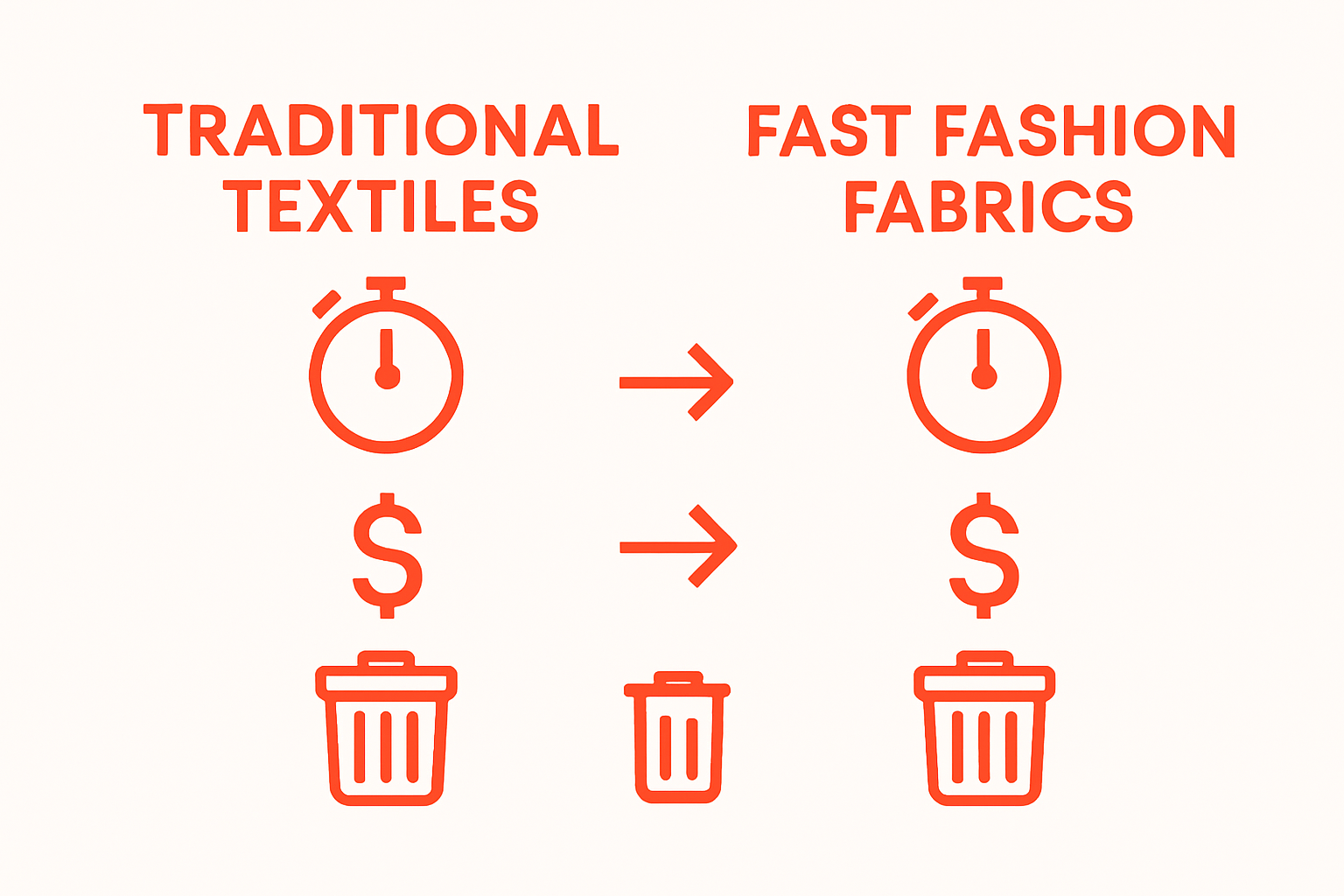
The fundamental traits of fast fashion fabrics distinguish them from traditional textile manufacturing approaches. Research from Textile Exchange reveals several critical components that define these materials:
Fast fashion fabrics typically utilize synthetic materials that offer significant manufacturing advantages. Polyester, a petroleum-based synthetic fiber, dominates this category due to its affordability and versatility. These fabrics are engineered to mimic natural fabric textures while maintaining lower production costs.
The performance characteristics of these materials prioritize immediate visual appeal and short-term wearability over long-term durability. Manufacturers focus on creating fabrics that look attractive on initial wear but may degrade more quickly compared to traditional high-quality textiles.
Sustainable Fashion Academy highlights the significant environmental challenges posed by fast fashion fabrics. These materials contribute substantially to global textile waste, with synthetic fibers requiring hundreds of years to decompose.
 The economic model underlying fast fashion fabrics creates a cycle of continuous consumption, where garments are designed to be trendy but ultimately disposable.
Understanding the role of fast fashion fabrics requires recognizing their complex ecosystem of design, production, and consumption. While offering affordable fashion options, these textiles simultaneously raise critical questions about sustainability, resource utilization, and long-term environmental impact.
The table below summarizes key characteristics that differentiate fast fashion fabrics from traditional textiles, helping clarify the unique features and priorities of these materials.
| Characteristic | Fast Fashion Fabrics | Traditional Textiles |
|---|---|---|
| Primary Material | Synthetic fibers (polyester, nylon) | Natural fibers (cotton, wool, silk) |
| Cost Efficiency | Highly cost-effective | Generally higher cost |
| Production Speed | Rapid, within weeks | Slower, may take months |
| Durability | Lower, short-term wearability | Higher, designed for longevity |
| Trend Responsiveness | Extremely responsive to trends | Slower trend adaptation |
| Environmental Impact | High (non-biodegradable, pollution) | Variable, often lower |
| Texture & Appearance | Mimics natural fabrics, varied | Unique to each fiber type |
Fast fashion fabrics have emerged as a transformative force in the global textile and apparel industry, reshaping consumer expectations, manufacturing processes, and economic dynamics. Their significance extends far beyond simple material composition, representing a complex intersection of technological innovation, economic strategy, and consumer behavior.
McKinsey Global Fashion Report reveals the profound economic implications of fast fashion fabrics. These materials have democratized fashion by making trendy clothing accessible to broader consumer segments.
By dramatically reducing production costs and accelerating design cycles, fast fashion fabrics enable brands to respond rapidly to emerging style trends.
Key economic advantages include:
Fast fashion fabrics represent more than an economic strategy they signal a technological revolution in textile production. Advanced synthetic fiber technologies allow manufacturers to create materials that mimic expensive natural fabrics at a fraction of the cost. Consumers now expect clothing that is simultaneously affordable, stylish, and functional.
The role of fast fashion fabrics in meeting contemporary consumer demands cannot be overstated. These materials provide an unprecedented level of design flexibility, allowing brands to experiment with textures, patterns, and styles without significant financial risk.
World Textile and Apparel Trade Report demonstrates how fast fashion fabrics have fundamentally restructured global textile markets. By enabling rapid production and distribution, these materials have created a dynamic ecosystem where fashion trends emerge, spread, and evolve at unprecedented speeds.
The proliferation of fast fashion fabrics has democratized fashion design, allowing smaller brands and independent designers to compete with established fashion houses. This transformation has disrupted traditional fashion hierarchies, creating more diverse and accessible fashion landscapes.
Ultimately, fast fashion fabrics represent a complex phenomenon that extends beyond mere material production. They embody the intersection of technological innovation, economic strategy, and evolving consumer expectations in a globally interconnected marketplace.
Fast fashion fabrics serve as critical catalysts in contemporary design processes, fundamentally transforming how designers conceptualize, create, and bring clothing to market. These materials are not merely passive components but active participants in shaping creative and commercial strategies across the fashion ecosystem.
Fashion Design Institute Report demonstrates how fast fashion fabrics provide unprecedented creative latitude for designers. Synthetic materials enable complex textures, intricate patterns, and color variations that traditional natural fabrics cannot easily replicate. This technological advancement allows designers to experiment with visual aesthetics and functional properties simultaneously.
Key design advantages include:
The emergence of fast fashion fabrics has fundamentally restructured design thinking. Designers now approach fabric selection with a holistic understanding of production economics, trend cycles, and consumer expectations. Synthetic materials offer remarkable versatility, allowing rapid prototyping and quick market testing of design concepts.
Modern designers must balance aesthetic aspirations with practical manufacturing constraints. Fast fashion fabrics provide a technological platform that bridges creative vision and commercial feasibility, enabling more dynamic and responsive design strategies.
Global Fashion Consumer Insights reveals how fast fashion fabrics directly influence consumer perceptions and purchasing behaviors. These materials enable designers to create clothing that meets emerging lifestyle demands: comfortable, affordable, and quickly replaceable.
The role of fast fashion fabrics extends beyond mere material selection. They represent a comprehensive design philosophy that prioritizes accessibility, adaptability, and immediate visual appeal. By reducing production barriers, these fabrics democratize fashion design, allowing more diverse voices and perspectives to enter the creative landscape.
Ultimately, fast fashion fabrics are not just materials they are transformative design tools that reshape how we conceptualize, produce, and experience clothing in a rapidly changing global marketplace.
The production of fast fashion fabrics represents a complex intersection of environmental challenges and ethical considerations. These materials have profound implications that extend far beyond their immediate aesthetic and economic value, raising critical questions about sustainability, resource consumption, and global manufacturing practices.
United Nations Environmental Programme Report highlights the significant environmental impact of synthetic fabric production. Fast fashion fabrics, primarily derived from petroleum-based materials, contribute substantially to global carbon emissions and waste generation. The manufacturing process consumes extensive energy resources and generates substantial chemical pollutants.
Critical environmental concerns include:
International Labor Organization Research reveals the complex human rights landscape underlying fast fashion fabric production. The demand for low-cost materials often translates into challenging working conditions in manufacturing regions. Workers frequently experience minimal wage protection, unsafe working environments, and limited labor rights.
The rapid production cycles of fast fashion fabrics create economic pressures that can compromise worker safety and fair compensation. This systemic approach prioritizes cost efficiency over human welfare, raising significant ethical concerns about global manufacturing practices.
Global Sustainability Consortium indicates growing consumer consciousness about the environmental and ethical implications of textile production. Increasingly, consumers demand transparency, sustainable manufacturing processes, and ethically produced clothing materials.
This emerging awareness represents a potential catalyst for systemic transformation in the fast fashion industry. By demanding more sustainable and ethically produced fabrics, consumers can incentivize manufacturers to adopt more responsible production methods, potentially reshaping the entire textile ecosystem.
The role of fast fashion fabrics extends far beyond material composition. They represent a complex global system where environmental sustainability, ethical manufacturing, and consumer expectations intersect, challenging us to reimagine our approach to textile production and consumption.
This table provides an overview of major environmental and ethical concerns linked to fast fashion fabrics, enabling readers to quickly compare the main issues discussed in the article.
| Issue Type | Specific Challenges |
|---|---|
| Environmental | High carbon emissions from synthetic production |
| Microplastic pollution released during washing | |
| Non-biodegradable waste, persisting for hundreds of years | |
| Ethical/Labor | Low wages and limited protections for factory workers |
| Unsafe working conditions and minimal labor rights | |
| Economic pressures leading to compromised worker welfare |
The landscape of fast fashion fabrics is undergoing radical transformation, driven by technological innovations, environmental consciousness, and evolving consumer expectations. Emerging trends suggest a profound reimagining of textile production, design methodologies, and material engineering.
Fibre2Fashion Technological Trends Report reveals breakthrough developments in fabric technology. Future fast fashion materials are expected to transcend traditional aesthetic and functional boundaries, incorporating advanced capabilities like temperature regulation, environmental responsiveness, and integrated digital technologies.
Key technological advancements include:
The next generation of fast fashion fabrics will prioritize comprehensive sustainability strategies. Designers and manufacturers are increasingly focusing on creating textiles that minimize environmental impact through innovative recycling processes, biodegradable materials, and closed-loop production systems.
Circular design principles are transforming fabric development from a linear consumption model to a regenerative approach. This shift involves designing textiles with their entire lifecycle in mind, ensuring materials can be easily disassembled, repurposed, or naturally decomposed.
Global Fashion Technology Insights indicates a significant trend towards hyper-personalized fabric experiences. Advanced manufacturing technologies like 3D printing, digital weaving, and custom molecular fabric engineering will enable unprecedented levels of individual customization.
Consumers will increasingly expect fabrics that not only reflect personal aesthetic preferences but also align with individual functional requirements, body metrics, and lifestyle needs. This consumer-centric approach represents a fundamental redesign of how fast fashion fabrics are conceived, produced, and experienced.
The future of fast fashion fabrics is not merely about clothing production but represents a complex ecosystem of technological innovation, environmental stewardship, and personalized consumer experiences. These emerging trends signal a transformative period where textiles become intelligent, sustainable, and deeply integrated with individual human needs.
Struggling to keep up with ever-changing trends and the distinctive challenges of fast fashion fabrics? If your design process feels limited by material constraints or you are worried about fabric performance for your projects, you are not alone. The article demonstrates how fast fashion fabrics influence everything from creative flexibility to sustainability concerns. Achieving stylish yet practical results requires access to a wide selection of materials and expert guidance.
Bring your ideas to life by exploring our extensive range of textiles at Fabric-Fabric.com. Whether you need versatile options for apparel, unique surfaces for crafts, or durable fabrics for interiors, our detailed product listings make choosing the right material easy. Shop today and discover how quality textiles can elevate your next design. Visit our homepage now to enjoy the benefits of selection, information, and seasonal savings while transforming your approach to fabric sourcing.
Fast fashion fabrics are textiles specifically designed for rapid production and turnover in the fashion industry. They typically consist of inexpensive synthetic fibers like polyester and nylon, allowing brands to create trendy clothing quickly and affordably.
Fast fashion fabrics provide designers with greater creative flexibility, enabling the experimentation of textures, colors, and patterns. They also allow for rapid prototyping and market testing due to their lightweight and versatile nature, making them crucial in contemporary design strategies.
Fast fashion fabrics pose significant environmental challenges, including high carbon emissions from production, microplastic pollution from synthetic fibers, and non-biodegradable waste that can take hundreds of years to decompose, raising sustainability concerns.
Consumer preferences drive the demand for affordable, stylish, and functional clothing. As consumers increasingly prioritize sustainability and ethical production practices, manufacturers are being encouraged to adopt more responsible methods in fast fashion fabric development.